Sintered stone is becoming one of the most popular materials for kitchen countertops, bathroom vanity tops, dining tables, wall panels, and custom furniture. It has a hard surface, high density, low water absorption, and excellent resistance to stains, scratches, and heat.
But when it comes to fabrication, many buyers and project contractors will ask the same question:
Can sintered stone be cut?
The answer is yes. Sintered stone can be cut, drilled, shaped, polished, and fabricated for many different applications. However, it must be processed with the right equipment and correct cutting method. If the cutting process is not handled properly, problems such as chipping, cracking, broken corners, or uneven edges may happen.
In this article, we will explain how to cut sintered stone properly, what tools are commonly used, and what should be avoided during fabrication.
Can Sintered Stone Be Cut?
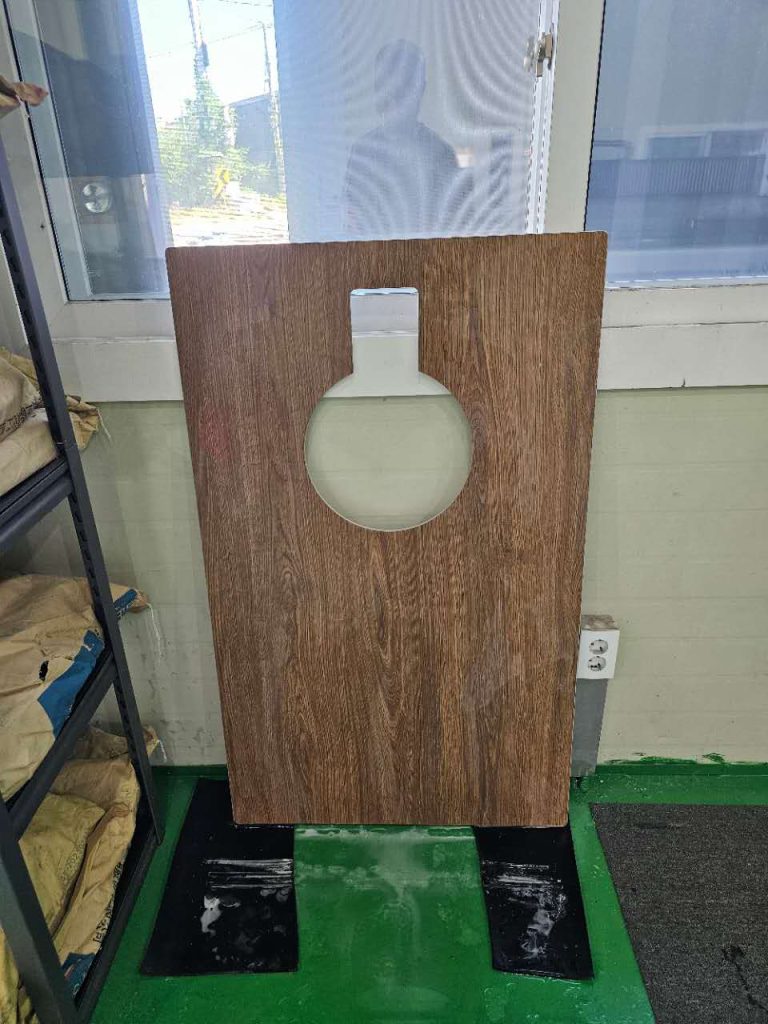
Yes, sintered stone can be cut into different sizes and shapes according to project requirements.
For example, sintered stone slabs are often cut for:
- Kitchen countertops
- Bathroom vanity tops
- Dining tables
- Reception desks
- Wall cladding
- Floor panels
- Cabinet doors
- Stairs
- Sink cut-outs
- Custom furniture pieces
However, sintered stone should not be treated like ordinary ceramic tiles. Large-format sintered stone slabs are usually bigger, denser, and more demanding during processing. Professional cutting equipment, proper support, and experienced workers are important for a good result.
For simple straight cutting, a bridge saw with a suitable diamond blade is commonly used. For more complicated shapes, such as sink holes, curved edges, or special designs, waterjet cutting or CNC processing may be required.
What Tools Are Used to Cut Sintered Stone?
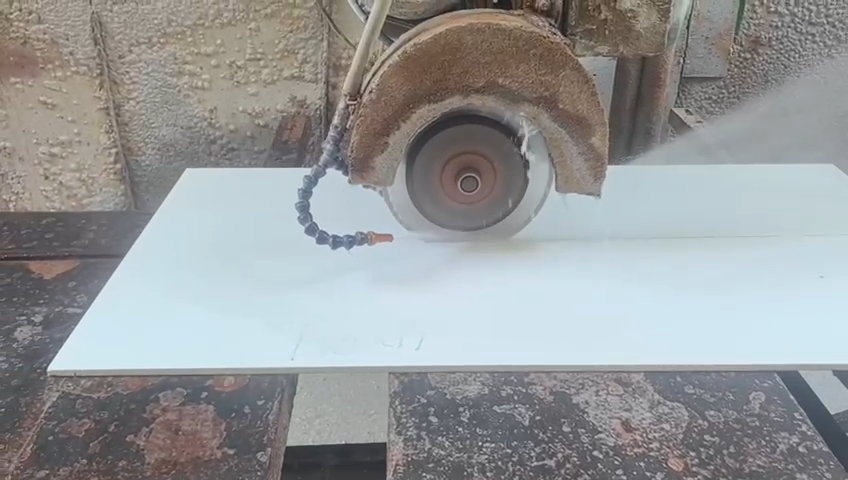
Different fabrication jobs require different equipment. The most common tools include bridge saws, waterjet machines, CNC machines, and diamond blades.
1. Bridge Saw
A bridge saw is commonly used for straight cutting. It is suitable for cutting large sintered stone slabs into countertop sizes, table top sizes, wall panel sizes, or smaller project pieces.
For straight cuts, the bridge saw should run at a stable speed. The slab must be fully supported on the cutting table to avoid vibration or stress during cutting.
2. Waterjet Cutting Machine
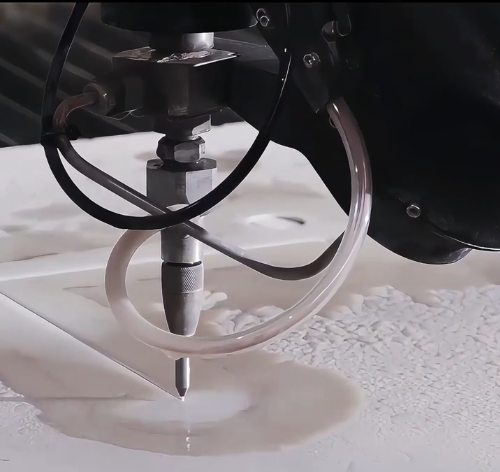
Waterjet cutting is often used for more detailed or complex cutting work. It is suitable for sink openings, curved shapes, irregular designs, and internal cut-outs.
Compared with dry cutting, waterjet cutting reduces heat and helps produce cleaner cutting edges. It is also useful when the design requires higher precision.
3. CNC Machine
CNC machines are used for precision fabrication, edge shaping, polishing, drilling, and customized processing.
For projects such as vanity tops, kitchen countertops, special furniture, or commercial reception desks, CNC processing can help achieve a more accurate and consistent result.
4. Diamond Blade
A high-quality diamond blade is very important when cutting sintered stone. The blade should be suitable for porcelain slabs, ceramic slabs, or sintered stone.
A poor-quality or worn-out blade can easily cause edge chipping, overheating, or cracking. The blade condition should be checked before cutting, especially for large-format slabs and expensive project materials.
Step-by-Step: How to Cut Sintered Stone Properly
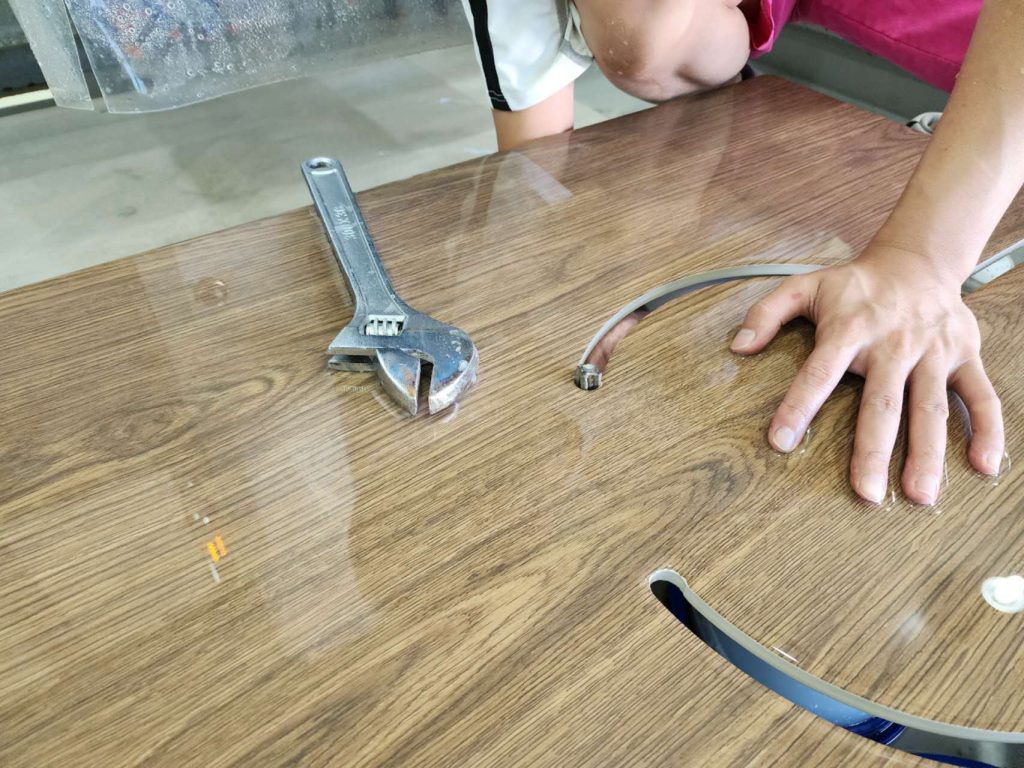
Although the actual cutting process should be handled by professional fabricators, the general process is usually as follows.
Step 1: Check the Slab Before Cutting
Before cutting, the slab should be inspected carefully.
Check the surface, corners, edges, and back side of the slab. Make sure there are no visible cracks, serious corner damage, or abnormal defects before processing.
This step is important because cutting may increase stress on the slab. If the slab already has hidden damage, it may break during fabrication.
Step 2: Place the Slab on a Stable Cutting Table
Large-format sintered stone slabs need stable and even support.
The slab should not hang too much outside the cutting table. Uneven support may create stress points during cutting, especially near corners, sink openings, and narrow strips.
Good support can reduce vibration and lower the risk of cracking.
Step 3: Measure and Mark the Cutting Line
Accurate measurement is necessary before cutting.
The cutting line should be marked clearly according to the final size requirement. For countertops, vanity tops, or furniture panels, the fabricator should also confirm the position of holes, sink cut-outs, edge details, and installation gaps.
A small measurement mistake may cause waste, especially when working with large slabs.
Step 4: Use Water Cooling During Cutting
Wet cutting is recommended for sintered stone.
Water cooling helps reduce heat, dust, and cutting friction. It also helps protect the blade and reduce edge chipping.
Dry cutting may create too much heat and dust, and it can increase the risk of cracks or poor edge quality. If dry cutting must be used for small adjustments, it should be done carefully with proper dust control and suitable tools.
Step 5: Cut Slowly and Steadily
Cutting speed is very important.
If the blade moves too fast, the slab edge may chip or crack. If the pressure is too strong, it may also damage the slab.
A stable cutting speed gives the blade enough time to cut through the dense body of the sintered stone and helps produce a cleaner edge.
Step 6: Avoid Sharp Internal Corners
For sink openings or inner cut-outs, sharp 90-degree internal corners should be avoided when possible.
Sharp internal corners can create stress concentration. Rounded corners are safer and can reduce the possibility of cracking during transportation, installation, or long-term use.
This is especially important for kitchen countertops and bathroom vanity tops.
Step 7: Polish or Finish the Edge
After cutting, the edge may need additional finishing.
Depending on the final application, the fabricator may polish, bevel, chamfer, or shape the edge. For countertops and table tops, edge finishing is not only for appearance, but also for safety and durability.
A slightly chamfered edge can help reduce sharpness and lower the risk of edge damage during handling.
Common Problems When Cutting Sintered Stone
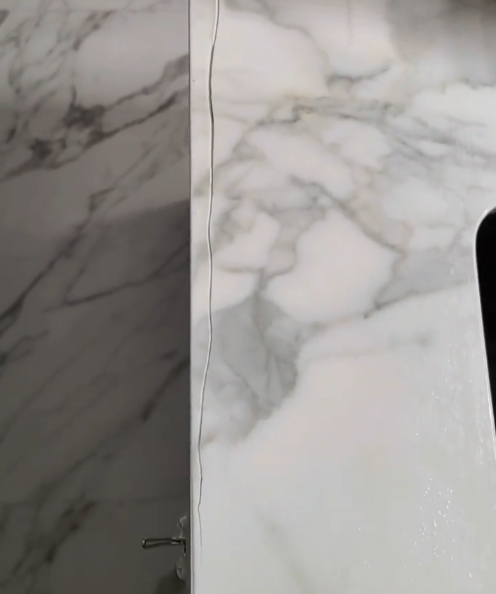
Even though sintered stone can be cut successfully, some problems may happen if the process is not controlled well.
Edge Chipping
Edge chipping is one of the most common problems.
Possible reasons include:
- The diamond blade is not suitable
- The blade is worn out
- The cutting speed is too fast
- The slab is not supported properly
- The machine vibration is too strong
To reduce chipping, use the correct blade, stable cutting speed, water cooling, and proper slab support.
Cracking During Cutting
Cracking may happen when the slab is under uneven stress.
Possible reasons include:
- Uneven cutting table support
- Wrong cutting sequence
- Too much pressure during cutting
- Sharp internal corners
- Poor handling before or after cutting
For large slabs, workers should avoid sudden movement, excessive pressure, and unsupported cutting areas.
Broken Corners
Sintered stone corners can be damaged during lifting, moving, loading, or cutting.
This is not only a cutting problem. It is also related to handling and packaging.
Before fabrication, the slab should be moved carefully with proper lifting tools. During transportation, corner protection and stable packaging are also important.
Rough or Uneven Edge
A rough edge may be caused by poor blade quality, unstable machine movement, or incorrect cutting speed.
For visible edges, additional polishing or edge finishing is usually required.
Tips to Reduce Breakage During Fabrication
To get a better cutting result, here are some practical tips:
- Use professional stone or ceramic slab cutting equipment
- Choose a suitable diamond blade for sintered stone
- Keep water cooling during cutting
- Make sure the slab is fully and evenly supported
- Avoid moving large slabs by hand without proper tools
- Do not cut too fast
- Avoid sharp internal corners for sink openings
- Use rounded corners for inner cut-outs
- Polish or chamfer the edge after cutting
- Protect the corners during handling and packaging
For project buyers, it is also important to work with experienced fabricators. Good material still needs proper processing and installation.
Is Sintered Stone Difficult to Cut?
Sintered stone is not difficult to cut for experienced fabricators with the right equipment.
However, compared with ordinary ceramic tiles, sintered stone requires more careful handling because the slabs are usually larger and the applications are more demanding. Countertops, vanity tops, and furniture panels require accurate cutting, clean edges, and good installation performance.
For this reason, both material quality and fabrication quality matter.
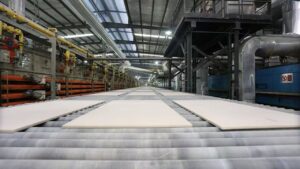
A good sintered stone slab should have stable thickness, good flatness, and a strong body. These factors can help reduce breakage during cutting and improve the final project result.
Why Slab Quality Matters for Cutting
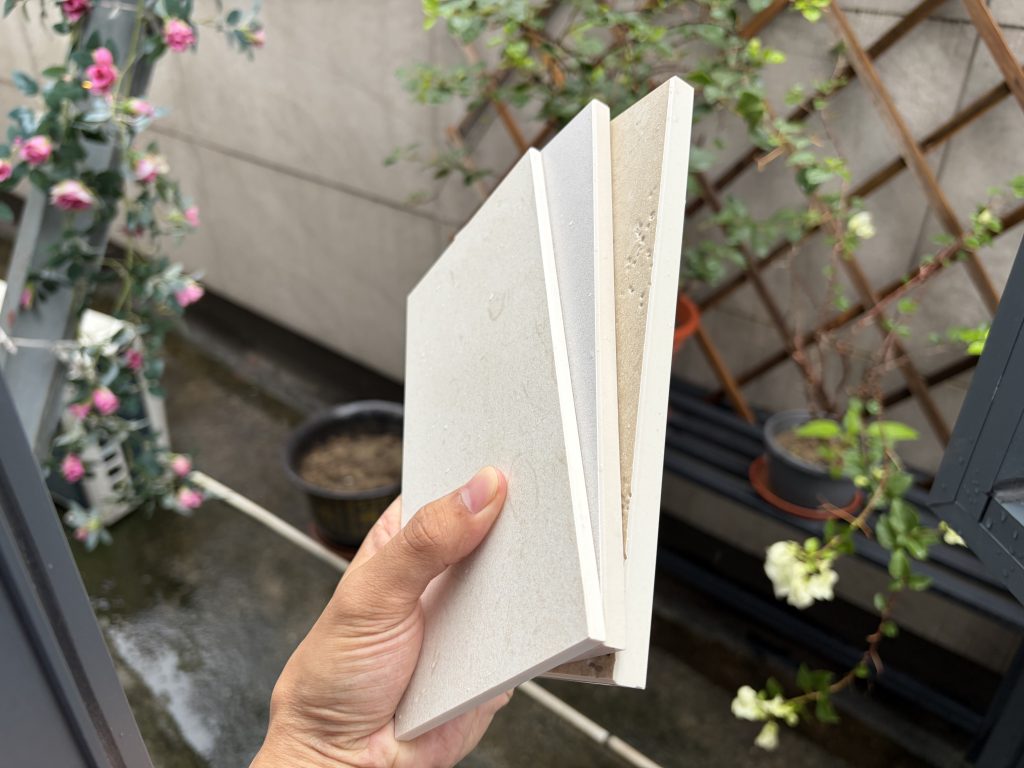
When buyers choose sintered stone, they often focus on color, texture, size, and price. These are important, but cutting performance should also be considered.
For fabricators, a good slab should be stable during cutting. If the body quality is not consistent, it may be easier to chip, crack, or break during processing.
Important quality factors include:
- Stable thickness
- Good flatness
- Strong slab body
- Consistent density
- Good edge performance
- Suitable thickness for the application
For example, kitchen countertops and dining tables usually require stronger thickness and better edge performance. Wall panels may focus more on flatness and installation stability. Different applications need different slab choices.
Cutting Sintered Stone for Different Applications
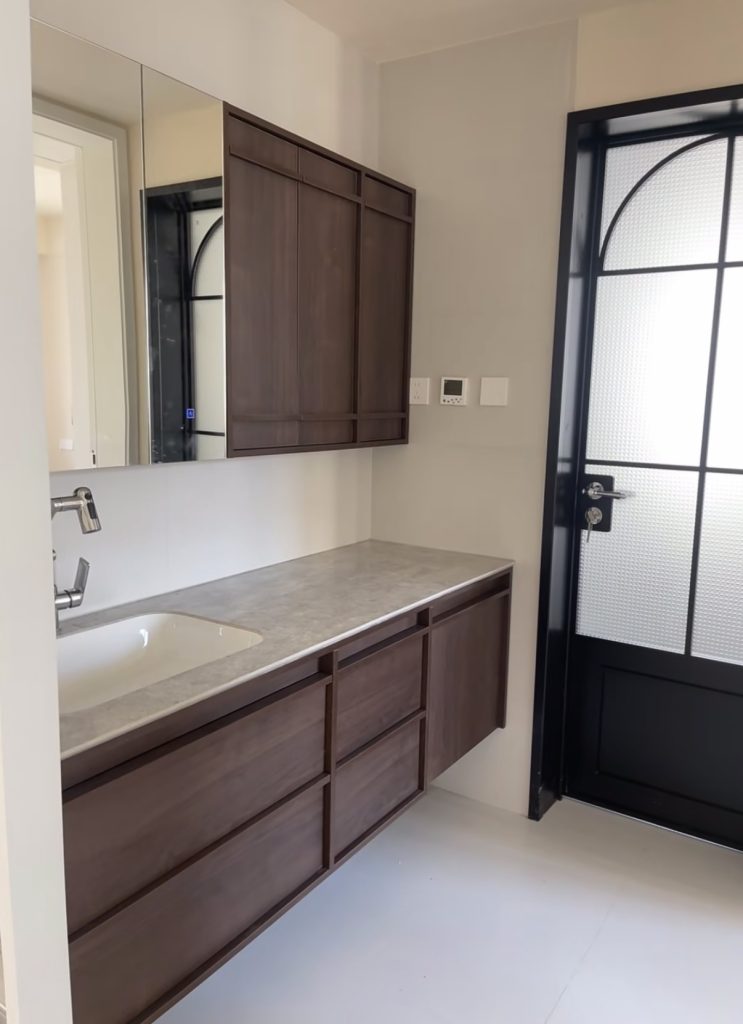
Different projects require different cutting methods.
Kitchen Countertops
Kitchen countertops usually need straight cutting, sink cut-outs, faucet holes, and edge finishing. Rounded inner corners are recommended for sink openings to reduce stress.
Bathroom Vanity Tops
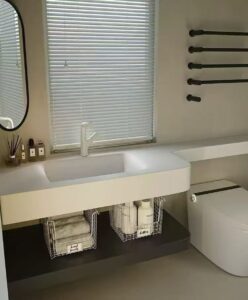
Vanity tops are usually smaller than kitchen countertops, but they still require accurate hole cutting and clean edge finishing.
Dining Tables
Dining table tops require good edge polishing and stable support. If the table top has a special shape, CNC or waterjet cutting may be needed.
Wall Panels
Wall panels usually need accurate size cutting for installation. For large wall panels, handling and transportation are very important to avoid corner damage.
Custom Furniture
For custom furniture, sintered stone may need cutting, drilling, shaping, and edge processing. The design should be confirmed before fabrication to reduce waste.
Final Thoughts
Sintered stone can be cut and fabricated for many modern interior and architectural applications. The key is to use the right tools, proper cutting method, stable support, and experienced fabrication workers.
For project buyers, choosing a cutting-friendly sintered stone slab can help reduce waste, save fabrication time, and improve the final installation result.
At BJS, we supply sintered stone slabs for countertops, table tops, wall panels, vanity tops, and custom fabrication projects. We can help buyers choose suitable sizes, thicknesses, finishes, and packaging solutions according to different project needs.