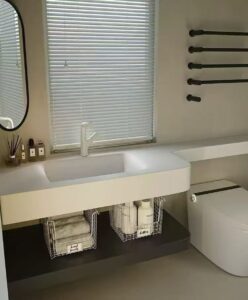
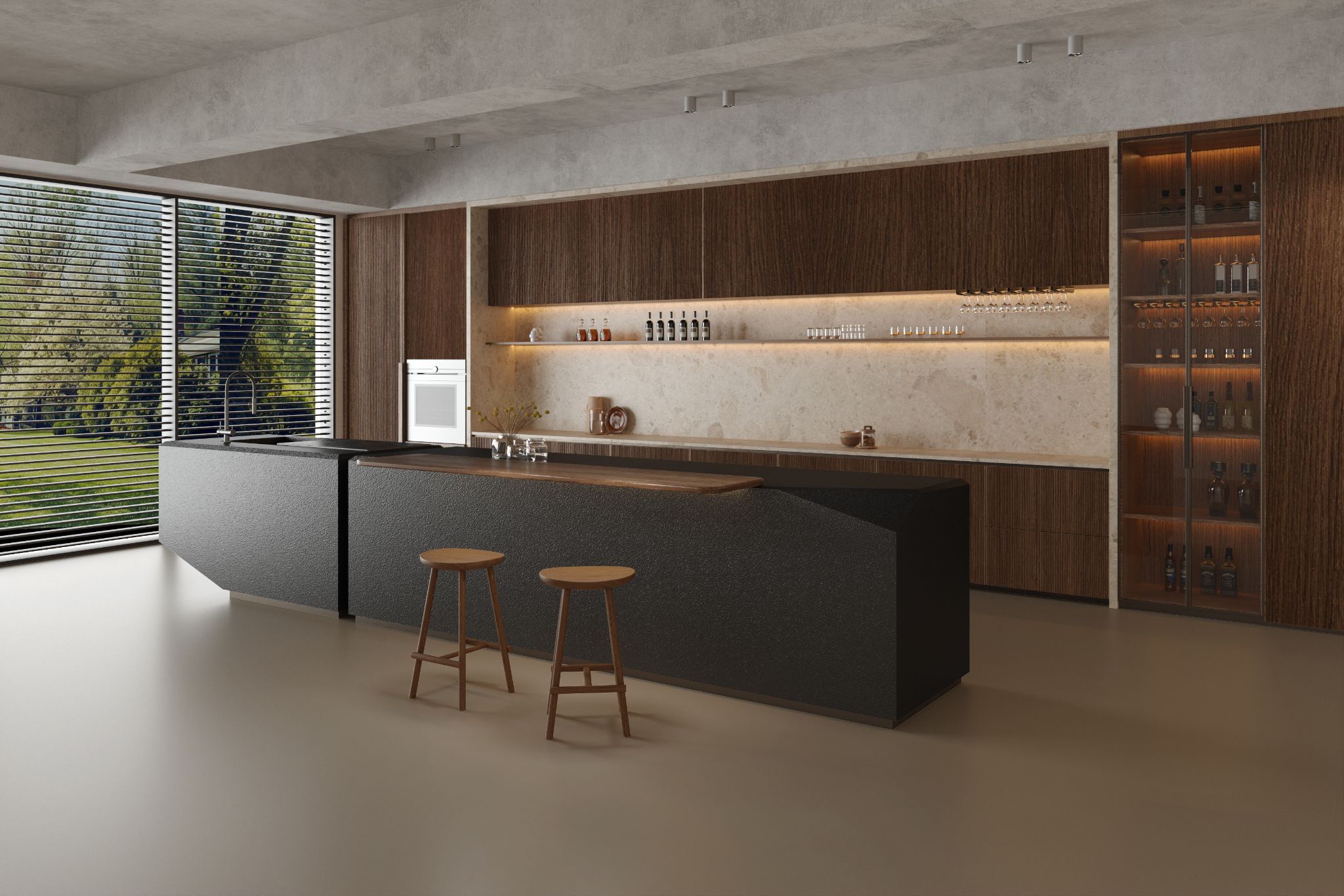
Sintered stone and quartz are two popular materials for kitchen countertops, bathroom vanities, wall cladding, and commercial interiors. From a distance, they may look similar. Both are available in marble-look designs, solid colors, and modern finishes.
However, their composition, performance, fabrication requirements, and suitable applications are different.
If you are choosing materials for a residential project, showroom, cabinet business, or stone distribution company, this sintered stone vs quartz comparison will help you make a more informed decision.
What Is Sintered Stone?
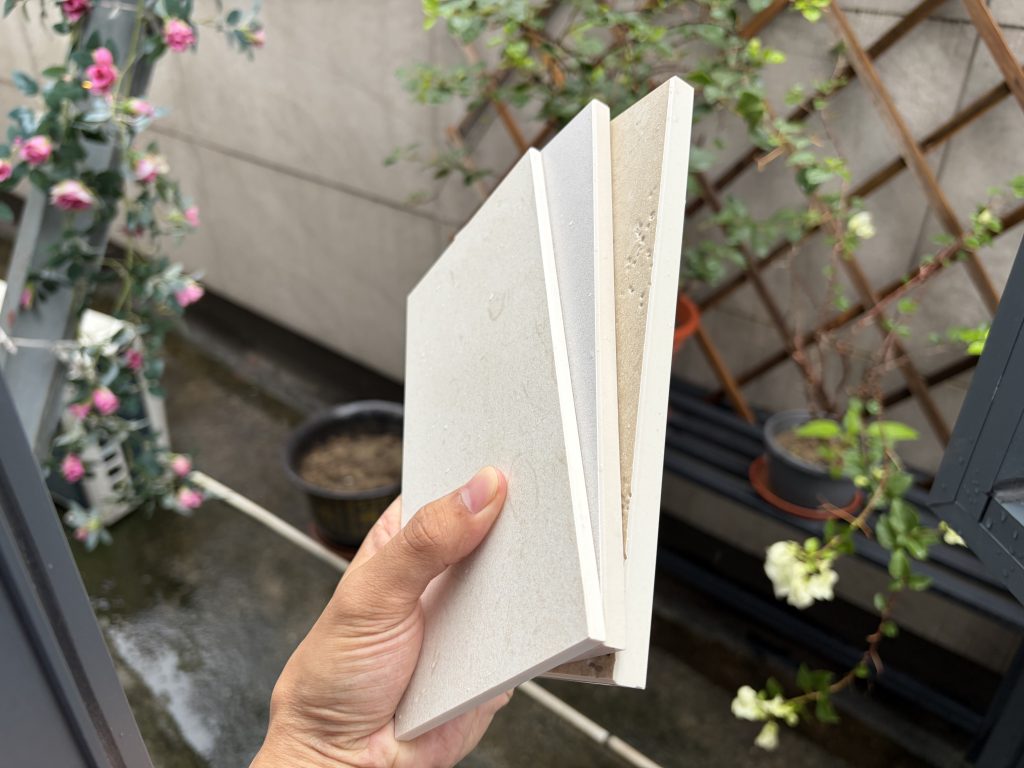
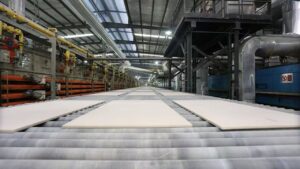
Sintered stone is an engineered surface made mainly from natural minerals. These minerals are compacted under high pressure and fired at very high temperatures.
The production process creates a dense slab without using resin as the main binding material. This gives sintered stone strong resistance to heat, stains, scratches, UV exposure, and moisture.
Sintered stone slabs are available in large formats and different thicknesses. Common applications include:
- Kitchen countertops
- Bathroom vanity tops
- Dining tables
- Interior and exterior wall cladding
- Cabinet doors
- Fireplace surrounds
- Commercial counters
- Flooring
Some manufacturers also offer full-body designs, textured finishes, book-matched patterns, and hot-bending solutions.
What Is Quartz?
Quartz countertops are usually made from ground quartz minerals mixed with resin, pigments, and other additives. The resin binds the materials together and helps create a consistent surface.
Engineered quartz is widely used for kitchen countertops and vanity tops. It is available in many colors and patterns, including designs that imitate marble and granite.
Unlike sintered stone, quartz contains resin. This difference affects its heat resistance, UV stability, and suitability for exterior use.
Sintered Stone vs Quartz: Quick Comparison
| Feature | Sintered Stone | Quartz |
|---|---|---|
| Main composition | Natural minerals compacted and fired | Quartz particles mixed with resin |
| Heat resistance | Very high | Moderate; resin can react to excessive heat |
| UV resistance | Generally suitable for outdoor applications | Usually not recommended for prolonged outdoor exposure |
| Stain resistance | High | High |
| Scratch resistance | High | Good |
| Water absorption | Very low | Low |
| Large-format availability | Widely available | More limited, depending on the manufacturer |
| Surface designs | Marble, stone, cement, wood and textured finishes | Mainly stone, marble and solid-color designs |
| Fabrication | Requires suitable tools and experienced fabricators | Familiar to many countertop fabricators |
| Repairability | Chips can be difficult to repair invisibly | Small chips may be easier to fill |
| Common applications | Countertops, walls, floors, furniture and façades | Mainly countertops and vanity tops |
Actual performance depends on the manufacturer, slab thickness, surface finish, fabrication quality, and installation method.
1. Heat Resistance
Heat resistance is one of the main differences between sintered stone and quartz.
Because sintered stone is manufactured at very high temperatures and does not rely on resin as its primary binder, it generally performs well around cooktops, fireplaces, and other heat-exposed areas.
Quartz contains resin, which can discolor or become damaged when exposed to excessive heat. Homeowners are normally advised to use trivets rather than placing hot cookware directly on a quartz countertop.
Although sintered stone has better heat resistance, using a heat pad is still a sensible precaution. Sudden temperature changes, unsupported cut-outs, or poor installation can create stress in any countertop material.
Best choice for heat resistance: Sintered stone
2. Scratch and Stain Resistance
Both materials provide good stain resistance when properly manufactured and maintained.
Sintered stone has a hard, dense surface that resists common kitchen stains. It is also highly scratch-resistant, making it suitable for busy kitchens and commercial counters.
Quartz is also resistant to stains because of its low porosity. However, strong chemicals, excessive heat, or prolonged contact with certain substances can affect the resin.
Neither material should be treated as completely damage-proof. Cutting boards and appropriate cleaning products can help maintain the surface over the long term.
Best choice for scratch resistance: Sintered stone
For everyday stain resistance: Both perform well
3. UV Resistance and Outdoor Use
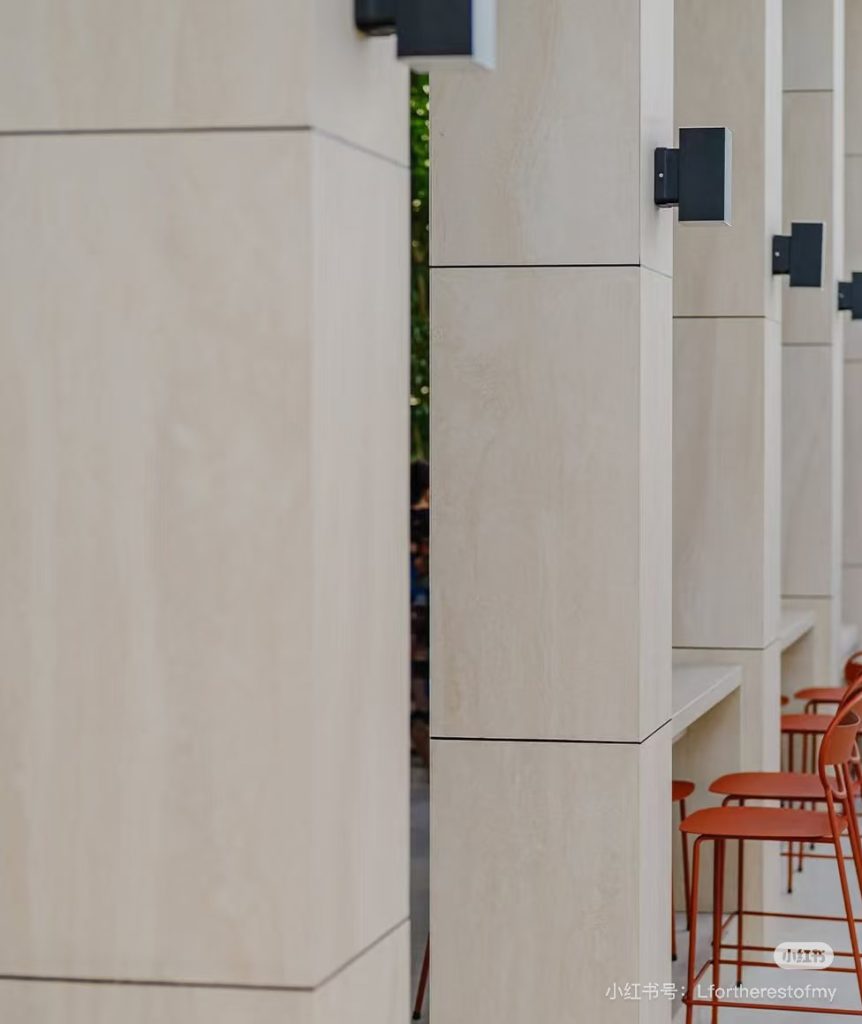
Sintered stone generally has better UV stability than quartz. It can therefore be considered for outdoor kitchens, exterior wall cladding, balconies, and other applications exposed to sunlight, provided that the specific product is approved for exterior installation.
Most engineered quartz products are intended for indoor use. Long-term exposure to sunlight may cause the resin and pigments to fade or change color.
For an outdoor project, buyers should request technical data from the supplier and confirm that the selected color, finish, adhesive, and installation system are suitable for the local climate.
Best choice for outdoor use: Sintered stone
4. Design and Surface Options
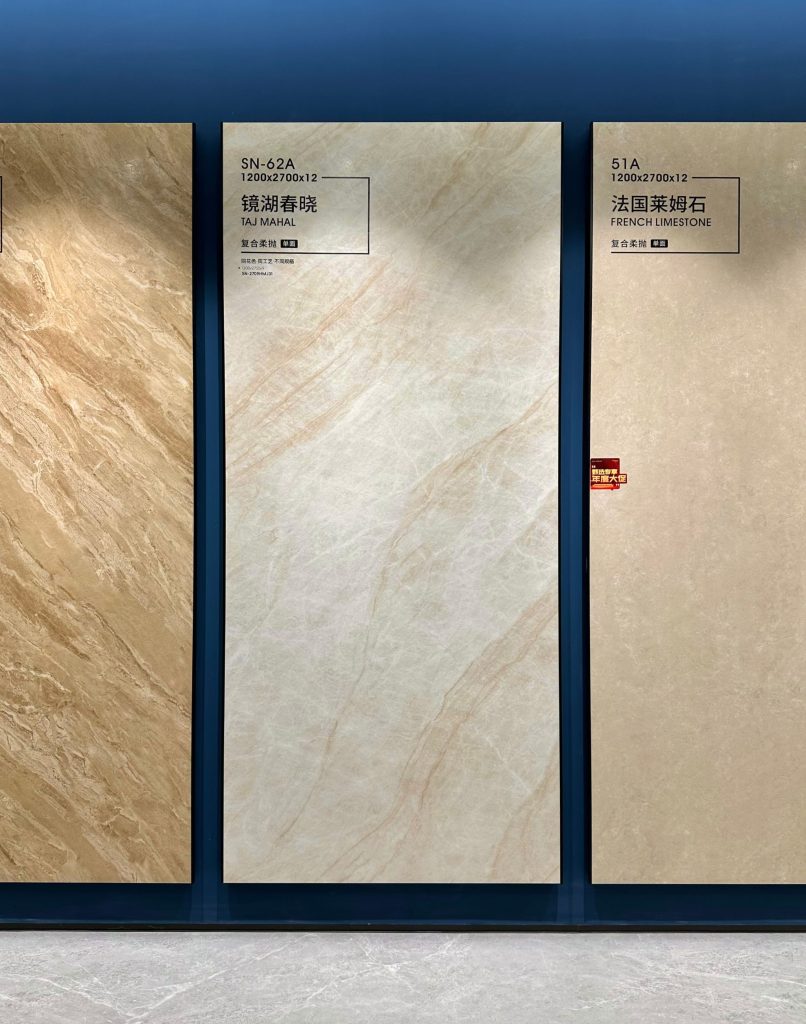
Both sintered stone and quartz can reproduce the appearance of natural marble.
Quartz often provides a consistent pattern and color across different slabs. This can be useful for large projects that require visual uniformity.
Sintered stone offers a broader range of applications and surface effects. Depending on the production technology, buyers can choose from:
- Marble-look patterns
- Stone and cement designs
- Wood-look surfaces
- Full-body sintered stone
- Carved or textured finishes
- Matte and polished surfaces
- Book-matched slabs
- Hot-bend sintered stone
Full-body sintered stone is particularly useful for countertops because the body color is closer to the surface design. This can make exposed edges and grooves look more natural after fabrication.
The final selection should be based on both the digital design and a physical sample. Screen colors cannot fully show surface gloss, texture, or color variation.
5. Slab Size and Application Flexibility
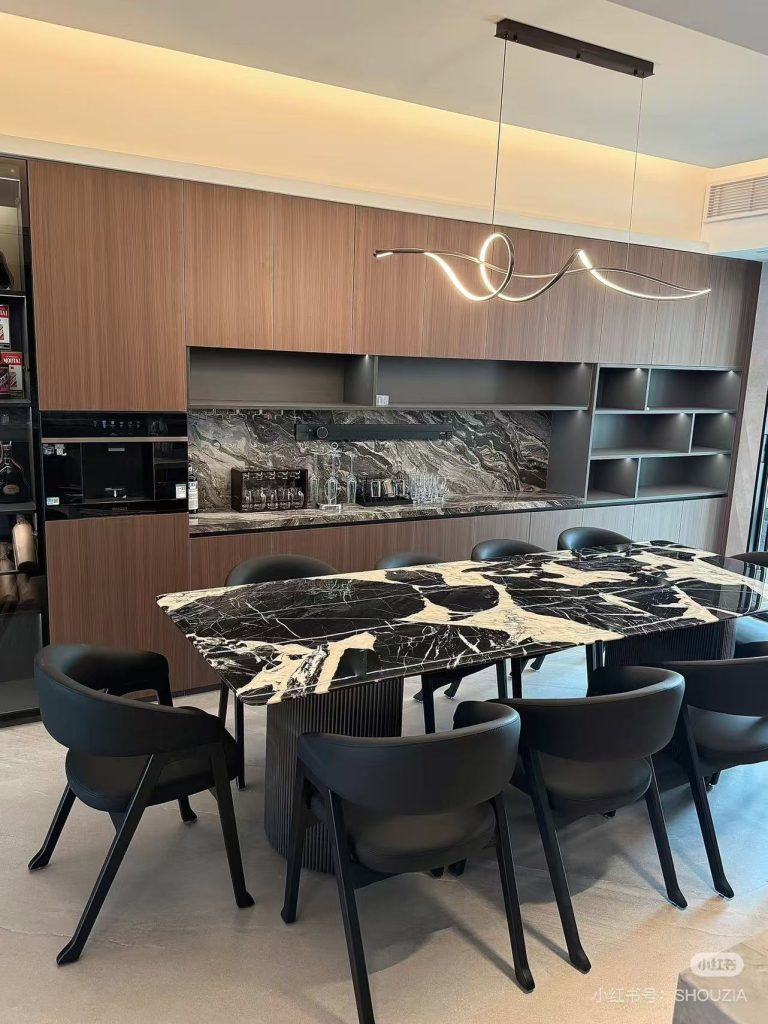
Sintered stone is commonly produced in large-format slabs. This allows designers to cover walls, floors, cabinet surfaces, islands, and countertops with fewer joints.
Quartz is commonly used as a countertop material, but slab dimensions and thickness options vary by brand and production line.
Sintered stone is usually the more flexible choice when the same design needs to be used across several applications. For example, one project may use a coordinated design for:
- Kitchen countertops
- Island panels
- Cabinet doors
- Dining tables
- Bathroom walls
- Vanity tops
- See how these application performs in real life->
Large slabs also create a more continuous visual effect. However, they require careful handling, suitable transport racks, professional cutting equipment, and experienced installers.
6. Fabrication and Installation
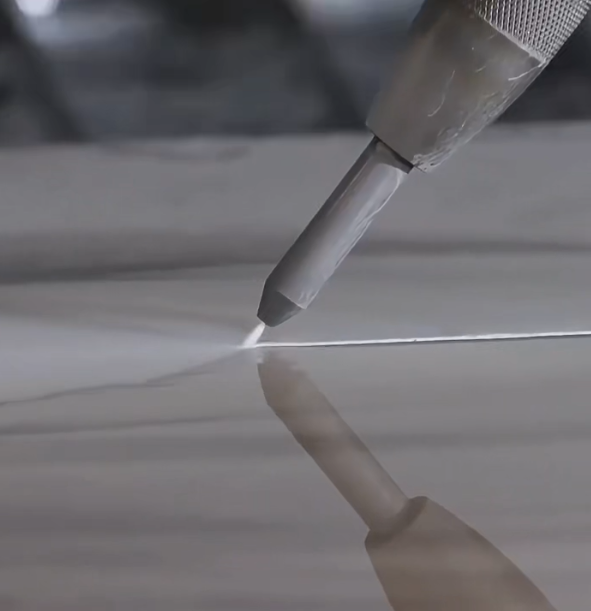
Quartz fabrication is already familiar to many stone workshops. Standard countertop tools can often be used, although proper dust-control equipment and fabrication procedures are still required.
Sintered stone requires more careful processing. Large-format slabs can be damaged by incorrect handling, unsuitable cutting speeds, poor support, or sharp internal corners.
Important fabrication practices include:
- Supporting the entire slab during handling
- Using suitable blades and drill bits
- Following the correct cutting speed
- Creating rounded internal corners
- Reinforcing sink and cooktop cut-outs when necessary
- Checking that cabinets and substrates are level
- Following the slab supplier’s fabrication manual
- Full guide for cutting the sintered stone->
A high-quality slab can still fail if it is fabricated or installed incorrectly. Importers and project buyers should therefore evaluate both the material supplier and the local fabrication team.
Easier for conventional fabrication: Quartz
More versatile when professionally fabricated: Sintered stone
7. Cleaning and Maintenance
Both materials are relatively easy to maintain.
For daily cleaning, warm water, a soft cloth, and a neutral cleaner are normally sufficient. Abrasive pads and unsuitable chemicals should be avoided unless the manufacturer confirms they are safe for the specific finish.
Neither material normally requires the regular sealing associated with many natural stones. Nevertheless, buyers should always follow the care instructions provided by the slab manufacturer.
Textured surfaces may require more attention than polished or smooth surfaces because dirt can collect in deeper surface structures.
8. Price and Total Project Cost
There is no universal answer to whether sintered stone or quartz is cheaper.
The final cost depends on:
- Brand and country of origin
- Slab size and thickness
- Surface design and finish
- Full-body or regular-body construction
- Order quantity
- Fabrication difficulty
- Edge profile and cut-outs
- Packing and transportation
- Local installation costs
Quartz may be more economical for a standard indoor countertop when local fabricators already have experience with the material.
Sintered stone may offer better value when a project requires large formats, outdoor performance, high heat resistance, coordinated wall and furniture applications, or more specialized surface effects.
B2B buyers should compare the complete installed cost rather than only the slab price.
9. Which Material Should You Choose?
Choose sintered stone if your project requires:
- High heat resistance
- Strong UV resistance
- Indoor and outdoor applications
- Large-format slabs
- Wall, floor, countertop, and furniture applications
- Full-body or textured finishes
- Low water absorption
- A modern, lightweight surface solution in selected thicknesses
Choose quartz if your project requires:
- A conventional indoor countertop
- Familiar fabrication methods
- Consistent patterns and colors
- Easier repair of some small chips
- A broad local network of quartz fabricators
For kitchen countertops, both materials can perform well. Sintered stone is usually the stronger option when heat resistance, UV stability, large formats, and application flexibility are the main priorities. Quartz remains a practical choice for standard indoor countertop projects.
Frequently Asked Questions
Is sintered stone more durable than quartz?
Sintered stone generally offers better resistance to heat, UV exposure, and scratching. Quartz also provides good durability for indoor countertops, but its resin content makes it more sensitive to high temperatures and prolonged sunlight.
Does sintered stone stain easily?
Quality sintered stone has very low water absorption and good stain resistance. Most everyday stains can be removed with water and a suitable neutral cleaner. Results can vary between finishes, so samples should be tested for commercial projects.
Can sintered stone be used outdoors?
Many sintered stone products can be used outdoors because of their UV and weather resistance. Buyers should still confirm that the selected slab, installation system, and adhesive are approved for exterior use.
Can hot pans be placed on sintered stone?
Sintered stone has excellent heat resistance, but using a trivet is still recommended. It reduces the risk associated with sudden temperature changes and protects the complete countertop system, including joints and adhesives.
Is sintered stone difficult to cut?
It can be more demanding to fabricate than conventional quartz. Proper equipment, cutting parameters, slab support, and trained workers are important, especially around sink and cooktop cut-outs.
Final Thoughts
The choice between sintered stone and quartz should be based on the application rather than appearance alone.
Quartz is a reliable option for conventional indoor countertops. Sintered stone provides greater flexibility for buyers who need large slabs, high heat and UV resistance, multiple surface finishes, and coordinated applications across countertops, walls, floors, and furniture.
BJS is a sintered stone supplier based in Foshan, China. We offer more than 4,000 designs, large-format slabs, full-body products, textured finishes, and flexible custom production starting from 500 square meters.
If you are comparing materials for a distribution business or an upcoming project, contact us to request slab specifications, samples, packing details, or a quotation.