A kitchen island is often the hardest-working surface in a UAE home. It may be used for preparation, serving, seating and socialising, while facing heat, oil, strong sunlight and frequent cleaning. The right sintered stone kitchen island countertops UAE specification should therefore consider the whole island—not only the colour.
Why sintered stone suits a UAE kitchen island
Sintered stone is a dense, manufactured surface made from mineral materials and fired under controlled conditions. For an island, its main attraction is the combination of a stone-like appearance, low routine maintenance and resistance to many everyday kitchen stresses. It can also create a coordinated island top, waterfall side and splashback when the slab pattern and layout are planned together.
Do not treat a material claim as a substitute for a project specification. Ask the supplier for the recommended use, thickness, finish and fabrication guidance for the selected product.
Start with the island’s work zones
Before choosing a slab, mark the island footprint on the floor. Include cabinet depth, seating overhang, appliance door swings and walking clearances. This simple test exposes pinch points that are expensive to correct after fabrication.
- Separate the main preparation area from seating where possible.
- Confirm the location of sinks, sockets, pop-up fittings and any cooktop before templating.
- Use a practical overhang supported by the cabinet design; do not assume a large cantilever is safe without an engineer or fabricator.
- Keep hot cookware, sharp corners and high-traffic seating in the layout discussion.
For many family kitchens, a sink or preparation zone is easier to manage on an island than a cooktop. A cooktop can put heat, splashes and pan handles next to people sitting at the counter. Follow local building requirements and the appliance manufacturer’s clearances.
Specify heat, oil and sunlight performance carefully
Island surfaces see hot pans, coffee, spices, cooking oil and acidic food. Sintered stone is often selected because it is non-porous and resistant to staining in normal use, but the exact product and finish still matter. Use trivets where the manufacturer recommends them, wipe aggressive spills promptly and avoid striking exposed edges with heavy cookware.
UAE kitchens may also receive strong daylight. If the island connects visually to an outdoor area or sits beside large windows, ask about colour stability and whether the chosen finish is suitable for the intended exposure. Matte finishes can reduce visible reflections, while darker colours may show dust or oil more readily.
Plan slab layout, joins and waterfall edges
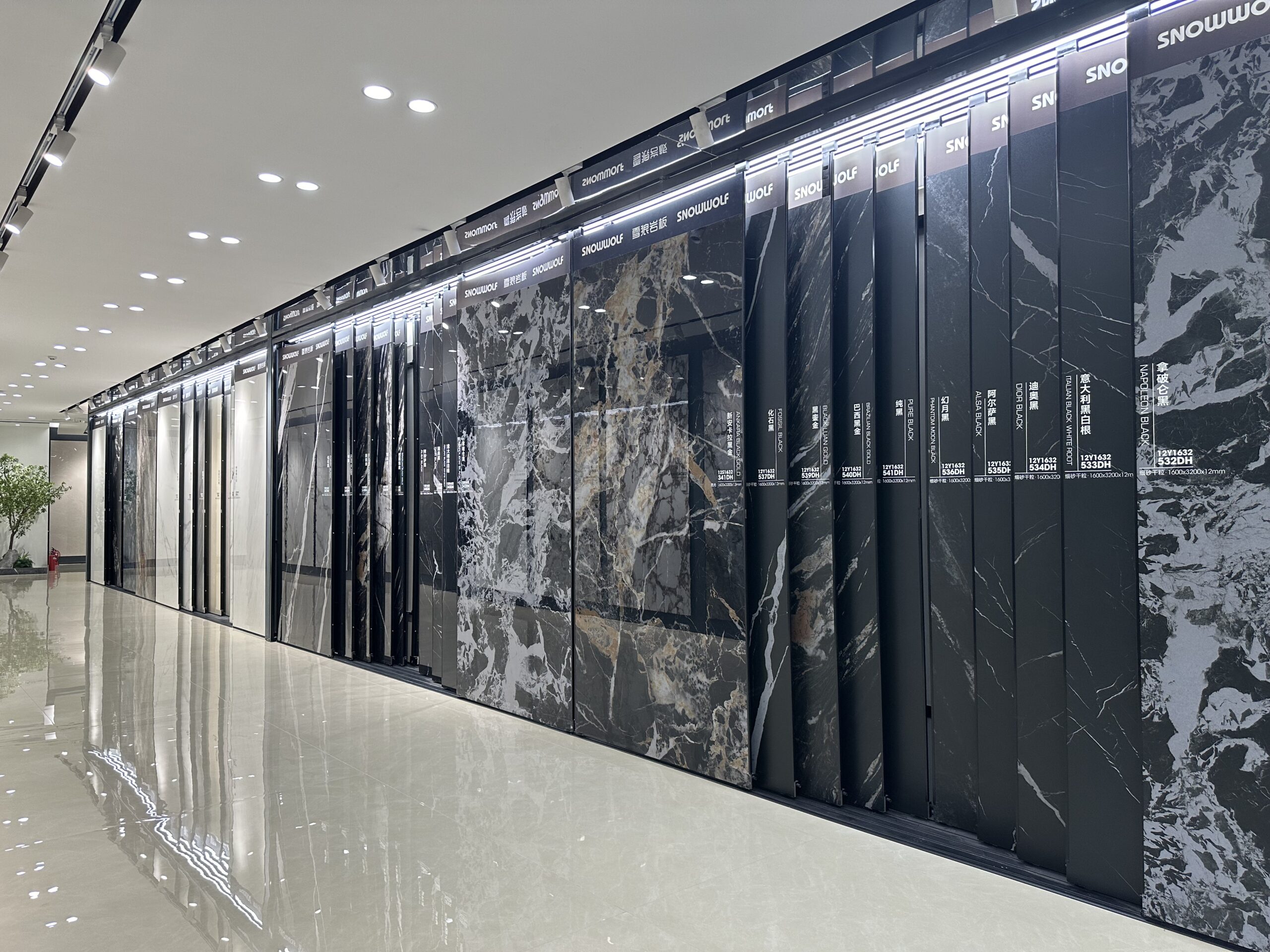
Large-format slabs can reduce visible joins, but a seamless look depends on the island dimensions, slab size, vein direction and cut plan. Request a digital or marked-up layout before production. It should show the sink or hob cut-out, overhang, joins, book-matched areas and waterfall panels.
Waterfall ends are visually strong, yet they add mitred corners and handling risk. Ask how the fabricator protects the corner, matches the pattern and supports the panel during transport. A slightly eased edge is usually more forgiving than a razor-sharp edge in a busy kitchen.
Choose an experienced fabricator and installer
Many problems blamed on the material actually begin with templating, transport or cutting. Before placing an order, ask for examples of completed large-format work and confirm that the team has the right tools, handling equipment and repair process for sintered stone.
- Confirm the final template after cabinets are level and fixed.
- Review cut-out positions and minimum edge distances.
- Clarify who is responsible for delivery, lifting, seams and wall protection.
- Get written care instructions and warranty terms for the exact slab.
In the UAE, project timing and site access matter as much as the slab. Check lift dimensions, stair access, parking, loading restrictions and whether the installation area will be ready on the agreed date.
Sintered stone compared with other island surfaces
Quartz offers consistent colour and familiar fabrication, but resin-based products have different heat and sunlight limitations. Granite provides natural variation and strong heat performance, but may need sealing. Marble offers a classic look but is more vulnerable to scratching, staining and etching. Sintered stone is a strong option when the brief prioritises a low-maintenance mineral surface, large-format design and demanding daily use—provided the fabricator is competent.
Care after installation
Use a soft cloth and the cleaner recommended for the finish. Avoid abrasive pads, unapproved chemicals and sliding heavy objects across the surface. Clean oil and strongly coloured spills rather than leaving them overnight. Keep the care sheet and product identification for future repairs or additions.
FAQ
Are sintered stone kitchen island countertops suitable for hot pans?
They are commonly chosen for heat-prone kitchen use, but follow the selected product’s instructions. Trivets and sensible handling protect the finish and edge details.
Can one slab cover the island and waterfall sides?
Sometimes. It depends on slab dimensions, thickness, pattern direction, cut-outs and wastage. A fabricator should confirm the layout before production.
What should I ask a UAE supplier?
Ask about the exact product, thickness, finish, recommended applications, fabrication experience, lead time, delivery access, installation scope, warranty and care instructions.
Plan your UAE kitchen island with BJS
For product recommendations, samples, slab planning and project support, contact BJS sintered stone sales for product recommendations, samples, and project support.