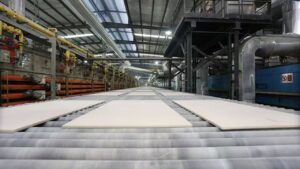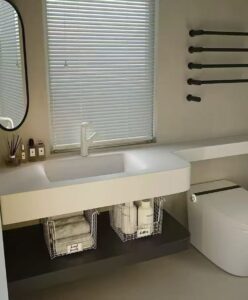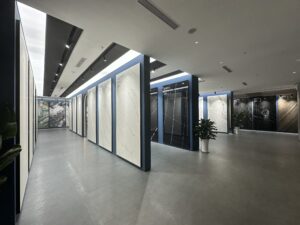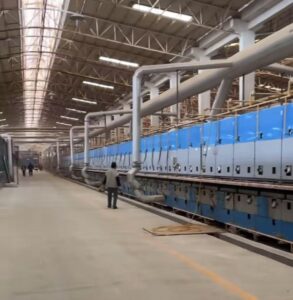
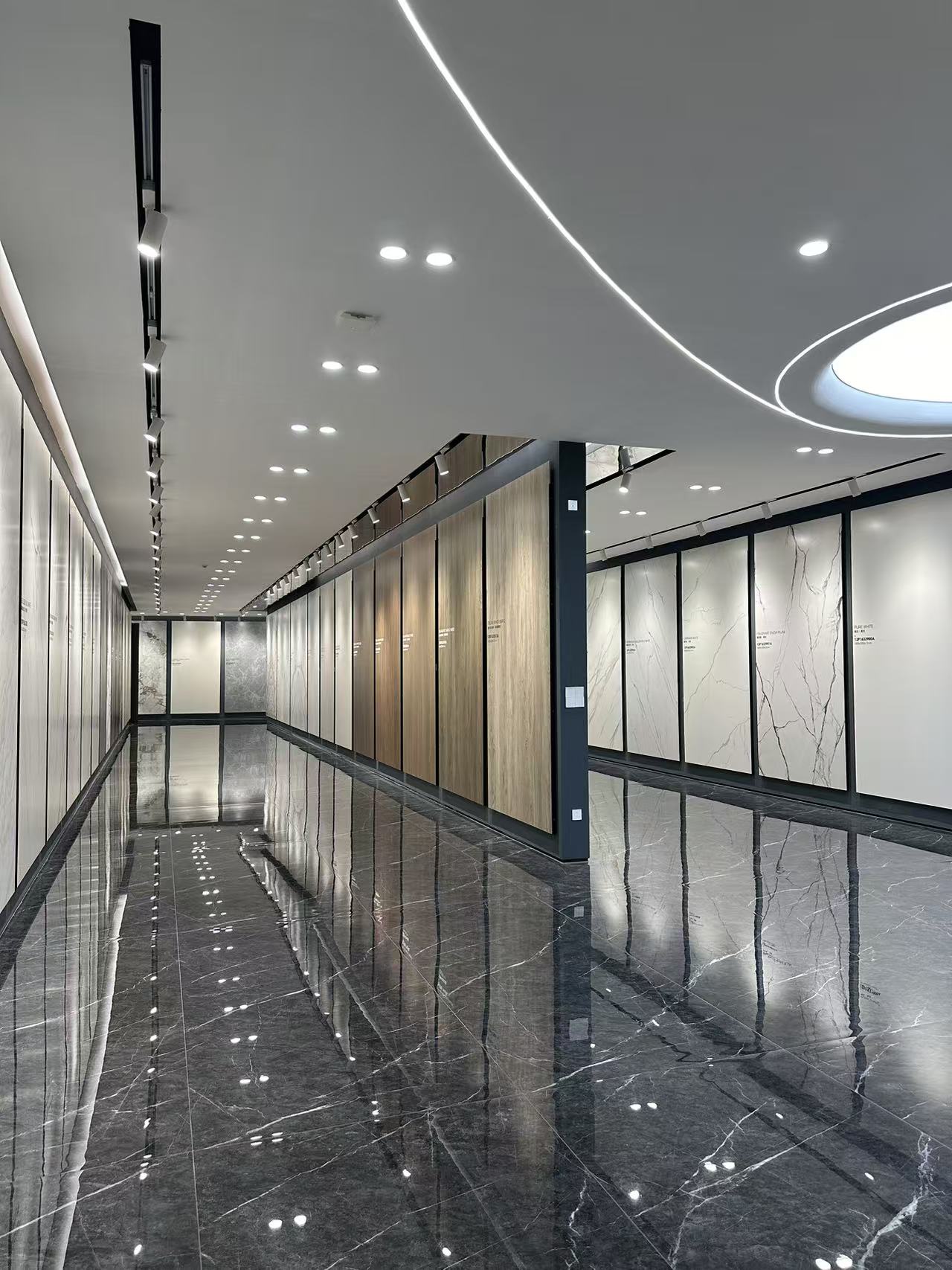
A hotel reception desk is one of the first surfaces guests see and one of the busiest surfaces staff use. In Ghana, the specification must balance a polished hospitality look with frequent contact, routine cleaning, dust, humidity, delivery conditions and dependable installation. Sintered stone can be a strong option when the slab, support system and fabrication plan are selected together.
Why consider sintered stone for a hotel reception desk?
Sintered stone gives designers a mineral-based surface with a wide range of colours, textures and large-format visual effects. It can help create a calm, premium front desk while coordinating with lobby walls, flooring, columns and signage. Its non-porous character can also simplify everyday wipe-downs, provided the exact product’s care instructions are followed.
The material is not a substitute for good design or workmanship. Reception counters still need proper support, carefully planned edges and competent handling. A desk can be damaged by impact at an exposed corner or by poor substrate preparation even when the slab itself is well made.
Five decisions to make before ordering
1. Plan the desk around the work, not only the appearance
Start with the reception workflow. Mark guest-facing height, staff working height, accessible sections, monitor positions, drawers, power points, network cables and concealed equipment. A long straight desk may suit a compact lobby, while an L-shaped or curved arrangement can separate check-in, concierge and back-office tasks. Confirm clear circulation for luggage and housekeeping before finalising the outline.
2. Approve the actual colour and pattern
Digital images are not enough for a hospitality project. Request a physical sample and, where veining is important, review a larger slab or high-resolution layout. Check how the finish looks under the lobby’s warm and cool lighting. Ask how pieces will be joined and where the pattern will continue across the front, return and worktop.
3. Specify edges and thickness deliberately
The edge profile affects both the visual weight and the risk of accidental knocks. A simple eased edge may suit a modern desk; a built-up edge can create a thicker architectural appearance. Ask the fabricator to provide an edge sample. Avoid treating nominal thickness as the whole structural design: the slab normally sits over a suitable cabinet, frame or engineered substrate.
4. Coordinate cut-outs and service access
Reception desks often require openings for power, data, card terminals, microphones, screens and lighting. Put every cut-out on an approved drawing before fabrication. Keep openings away from unsupported corners where possible, use appropriate radii, and confirm who is responsible for measuring the equipment. Include removable access panels so future maintenance does not require dismantling the desk.
5. Design for cleaning and replacement
Choose a finish that will not make fingerprints, dust or splash marks unnecessarily visible. Establish a simple cleaning routine with the hotel operator and follow the manufacturer’s recommendations; do not assume that strong bleach, abrasive powders or untested chemicals are safe. Keep the approved colour, batch information, drawings and spare pieces in the project file so a damaged panel can be matched later.
Ghana-specific project checks
For projects in Accra, Kumasi or other Ghanaian locations, confirm the full delivery route before production. Measure doorways, lifts, staircases and the final lobby path. Large slabs and assembled desk sections need protective packing and a handling plan. Agree whether fabrication happens near the project or whether finished parts are shipped in, and allow time for inspection before installation.
Humidity, dust and active construction can affect the installation environment. The building should be ready for accurate templating, and wet trades should be controlled before the desk is fitted. Ask for a written installation sequence covering the substrate, joints, sealants where applicable, wall clearance and protection during the remaining fit-out.
Questions to ask a supplier
- Can you provide the product data, finish sample and slab photos for approval?
- Who checks the site dimensions and produces the final fabrication drawings?
- How will the front elevation, returns and joins align visually?
- What support and substrate does the desk require?
- How are corners, cut-outs, packing and transport protected?
- Who coordinates installation and what documents are supplied for care?
- Can matching material or approved spare pieces be retained for future repairs?
FAQ
Are sintered stone reception desks easy to clean?
They can be practical for routine cleaning because the surface is low-absorption, but cleaning products and methods should follow the specific manufacturer’s guidance. Remove spills promptly and avoid testing chemicals on the visible face.
Can the desk have a custom shape?
Yes, custom straight, L-shaped and curved concepts can be developed, subject to the slab format, fabrication capability, support and transport route. Approve detailed drawings before cutting.
How can I reduce chipping risk?
Use an experienced fabricator, protect exposed corners, provide continuous and level support, and plan cut-outs correctly. Handling and installation are as important as the material selection.
Plan your Ghana hotel reception desk with BJS
The best result comes from coordinating the visual concept, slab selection, fabrication drawings, logistics and installation from the beginning. Contact BJS sintered stone sales for product recommendations, samples, and project support.