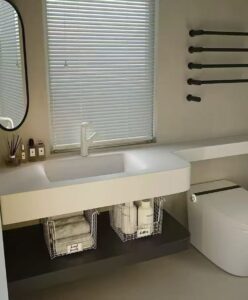
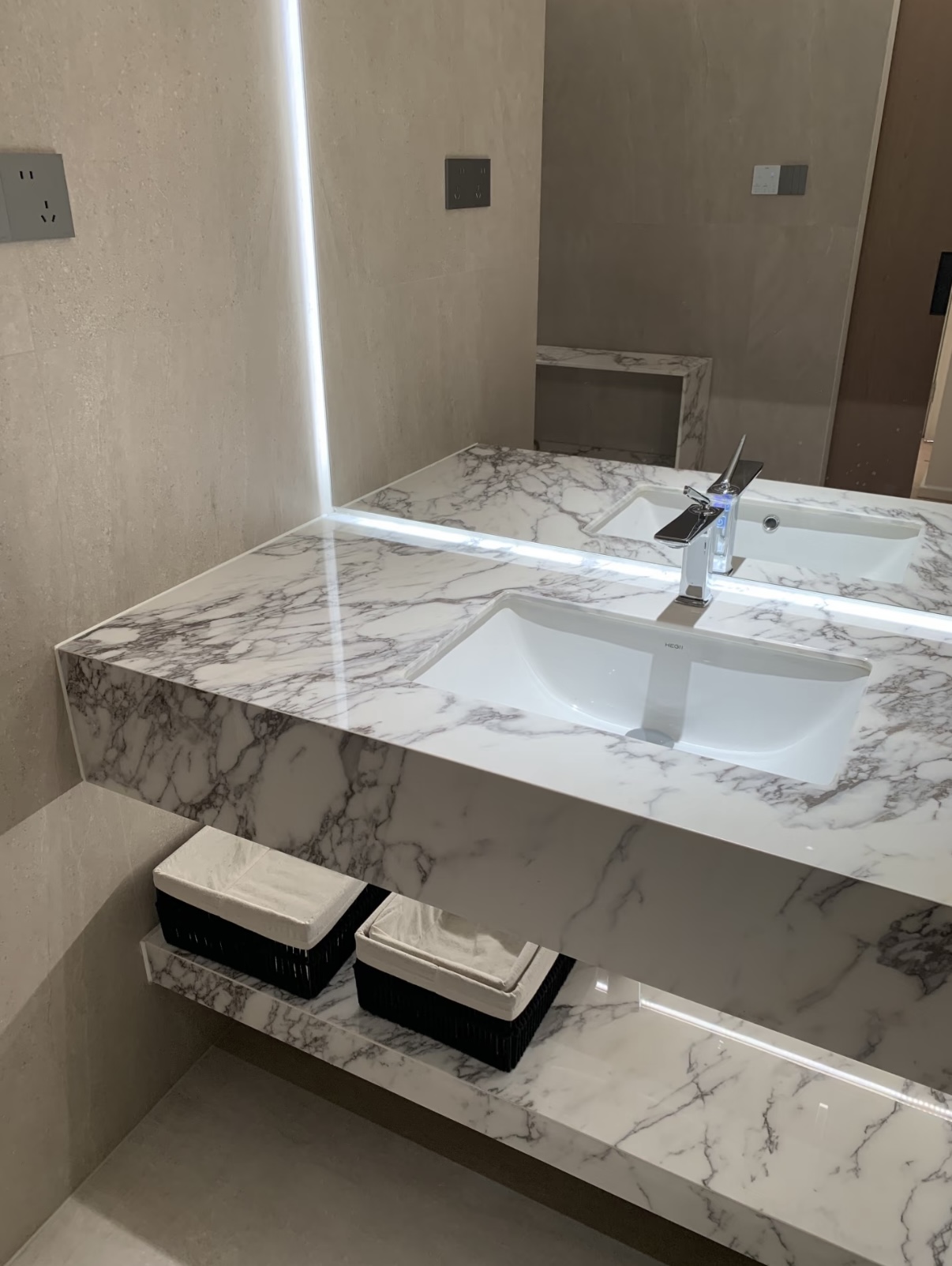
A bathroom vanity top has to fit the room, work with the sink and survive daily water, cosmetics and cleaning. In Canada, the decision also needs to account for delivery, winter handling, renovation schedules and the capabilities of the local fabricator. A sintered stone bathroom vanity top can be an excellent option, but the best result depends on the details specified before the slab is cut.
What is a sintered stone bathroom vanity top?
Sintered stone is a mineral-based surface made by combining selected raw materials with intense pressure and heat. It is supplied as slabs that can be cut and finished for vanity tops, backsplashes, shower areas and other interior applications. The product name alone does not determine the final performance: thickness, support, cut-outs, edge treatment and installation quality matter just as much.
For a bathroom project, ask for the manufacturer’s technical information and care instructions. Avoid assuming that every slab has the same thickness, finish, colour consistency or fabrication requirements.
Five decisions to make before ordering
1. Measure the vanity and the room
Confirm the finished vanity width, depth, wall position and desired overhang. Do not rely only on a catalogue dimension. Walls may be out of square, and a floating vanity may require a different support plan from a floor-mounted cabinet. The safest sequence is to install and level the cabinet first, then have the fabricator make a final template.
2. Choose the sink configuration
Decide between an integrated basin, vessel sink or undermount sink before fabrication. Each option changes the cut-out, edge appearance, faucet position and cleaning routine. An undermount sink can create a clean visual line, but the exposed cut edge must be accurately finished and compatible with the selected design. Confirm the sink model, drain location and faucet-hole dimensions in writing.
3. Specify thickness and edge treatment
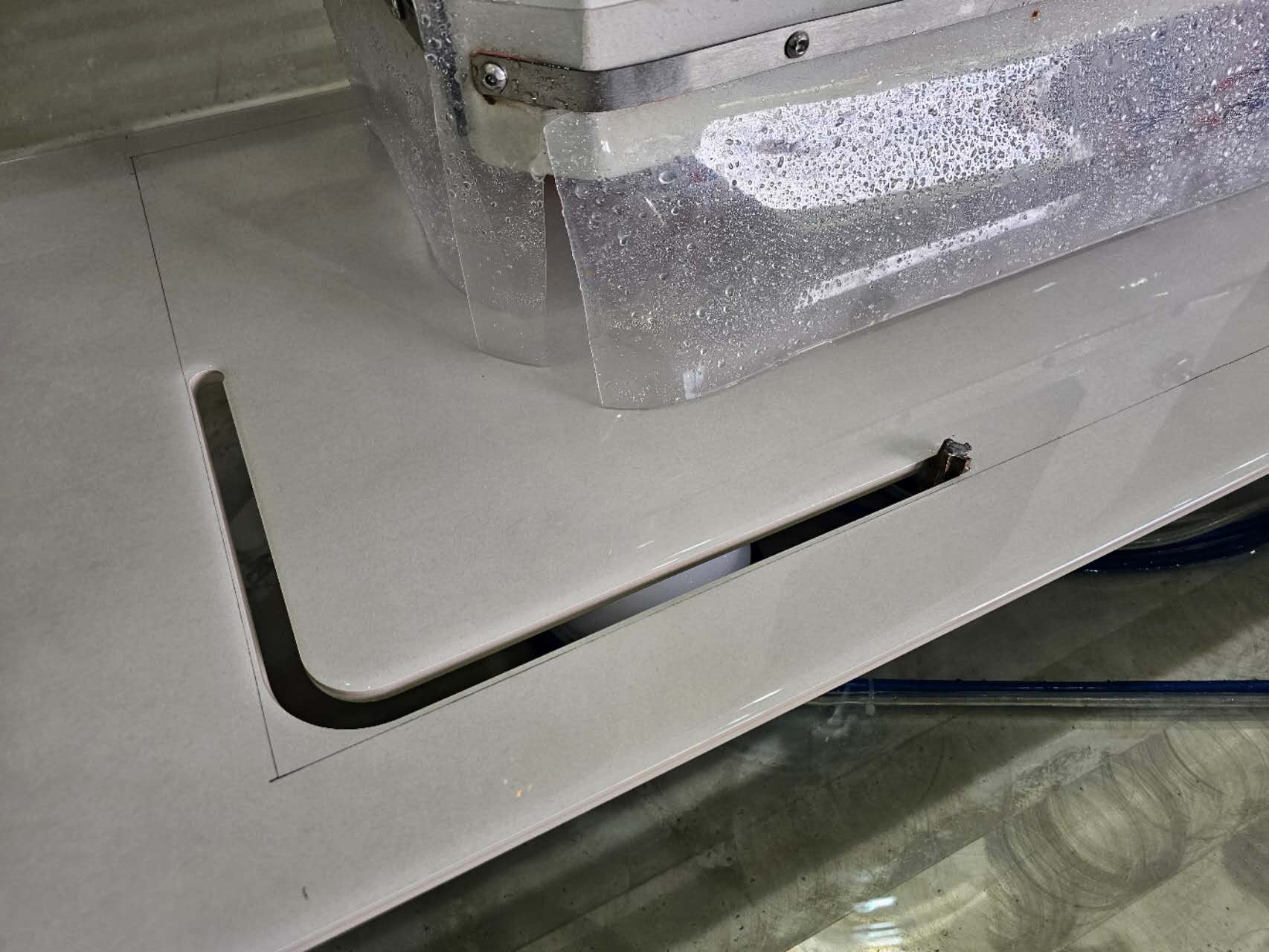
Ask whether the proposed thickness is suitable for the vanity span and sink cut-out. Also review a physical edge sample. A slab pattern may not continue through the full thickness, so an exposed edge may require a carefully fabricated build-up or may show a simpler colour. This is especially important around an undermount sink and on a vanity with visible side edges.
4. Plan splashes and wall details
Decide whether the design needs a matching backsplash, side splash, upstand or a simple sealed joint. Confirm wall tolerances, outlet locations and the position of mirrors or wall cabinets before cutting. A small drawing showing the top, sink, faucet, splash and finished edges can prevent expensive changes later.
5. Confirm fabrication, delivery and support
Ask who will template, cut, finish and install the top. Experience with sintered stone is valuable because large-format slabs can be unforgiving during handling and cutting. For a heavy top or a floating vanity, confirm cabinet support and the delivery route. Check corners and visible surfaces as soon as the piece arrives, before final installation.
Sintered stone vs quartz for a Canadian bathroom
Both materials can work well in a bathroom, but they involve different priorities. Sintered stone is often selected for a mineral appearance, low routine upkeep and resistance to many everyday bathroom conditions. Quartz is widely available and familiar to many fabricators, and its repair and edge practices may be more established in a particular local market.
Do not choose from a generic comparison chart alone. Ask about the exact product, finish, support requirements, sink cut-out, warranty and repair process. A surface that is strong in one respect can still be damaged by an impact at an unsupported corner or by poor fabrication. The right material is the one that fits the design, installer and maintenance expectations.
Canadian installation checklist
- Level and secure the vanity or support frame before templating.
- Confirm the top, sink and faucet dimensions against the final drawing.
- Protect corners and finished edges during transport and through the job site.
- Check plumbing clearance before fixing the top permanently.
- Use the adhesive, joint and support method recommended for the product.
- Inspect colour, finish, cut-outs and edge quality before final silicone and splash installation.
Cleaning and maintenance
Use a soft cloth, clean water and a suitable neutral cleaner according to the supplier’s instructions. Wipe away toothpaste, cosmetics, soap and standing water rather than allowing residue to build up. Avoid abrasive pads, aggressive chemicals and improvised polishing products. “Low maintenance” does not mean “no maintenance,” and the finish should be treated as a designed surface, not a workbench.
What should a quotation include?
Request a written quotation that separates the slab, fabrication, sink cut-out, faucet holes, edge work, backsplash or side splash, delivery, installation and any cabinet reinforcement. Ask whether templating is included and what happens if the wall or cabinet is not ready on the scheduled date. Comparing complete scopes is more useful than comparing a slab-only price.
Frequently asked questions
Can a sintered stone top use an undermount sink?
Yes, when the selected product and fabricator support that configuration. The sink model, cut-out tolerance and exposed edge finish should be approved before cutting.
Is it suitable for a floating vanity?
It may be, but the wall structure, brackets and cabinet design must be checked for the finished load. Have the installer confirm support rather than assuming the vanity box alone is sufficient.
Does it need sealing?
Requirements vary by product and finish. Follow the manufacturer’s care and installation documentation instead of applying a sealer automatically.
What if an edge chips?
Ask the fabricator about inspection, repair and replacement options before ordering. Prevention through correct support, handling and edge design is preferable to relying on a later repair.
Need help selecting a slab, finish or fabrication approach for a Canadian bathroom project? Contact BJS sintered stone sales for product recommendations, samples, and project support.