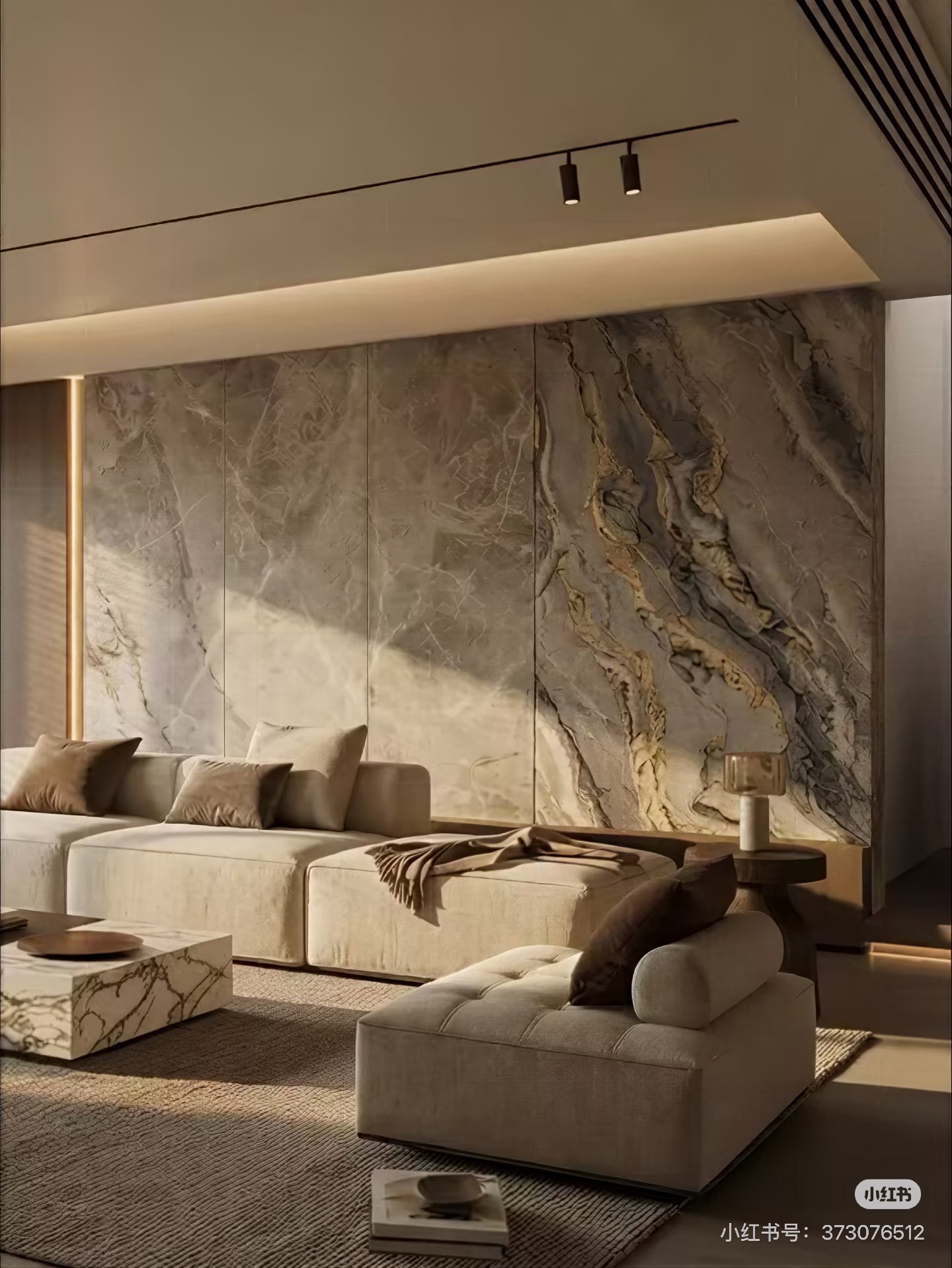
Walls are no longer just structural elements. In modern residential and commercial projects, they have become an important part of the overall design.
Sintered stone wall cladding offers the appearance of natural stone together with the practical performance required for modern interiors. Its large slab sizes, varied finishes, and relatively easy maintenance make it suitable for feature walls, bathroom walls, reception areas, building lobbies, and many other applications.
In this guide, we explain the main benefits of sintered stone wall cladding, where it can be used, and what project buyers should consider before choosing a product.
What Is Sintered Stone Wall Cladding?
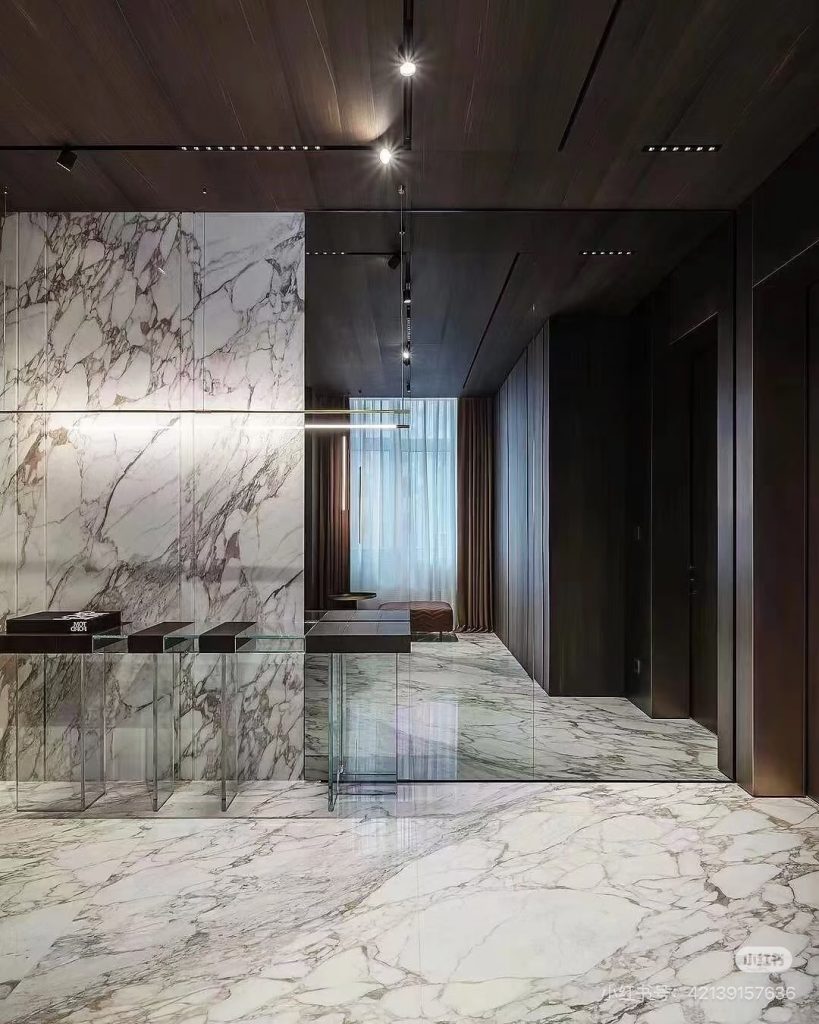
Sintered stone wall cladding involves covering an existing wall or structural surface with sintered stone slabs.
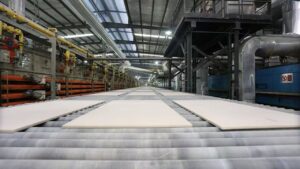
Sintered stone is manufactured by compacting natural minerals under high pressure and firing them at a high temperature. This production process creates a dense and durable surface that can reproduce the appearance of marble, limestone, concrete, metal, or other materials.
Unlike a painted wall, wall cladding adds physical texture and a more permanent decorative finish. Compared with many pieces of small-format ceramic tile, large-format sintered stone slabs can also create a cleaner appearance with fewer visible grout lines.
Why Choose Sintered Stone for Wall Cladding?
1. Large Slabs Create a More Continuous Surface
Large-format sintered stone slabs can cover a wider area with fewer joints.
This is especially useful for marble-look feature walls. The larger surface allows the veining to remain more complete, creating an effect closer to a full piece of natural stone.
For designers and contractors, fewer joints can also make it easier to create a clean and modern visual style.
However, slab size should always be selected according to transportation conditions, site access, installation equipment, and wall dimensions.
2. A Wide Range of Designs and Finishes
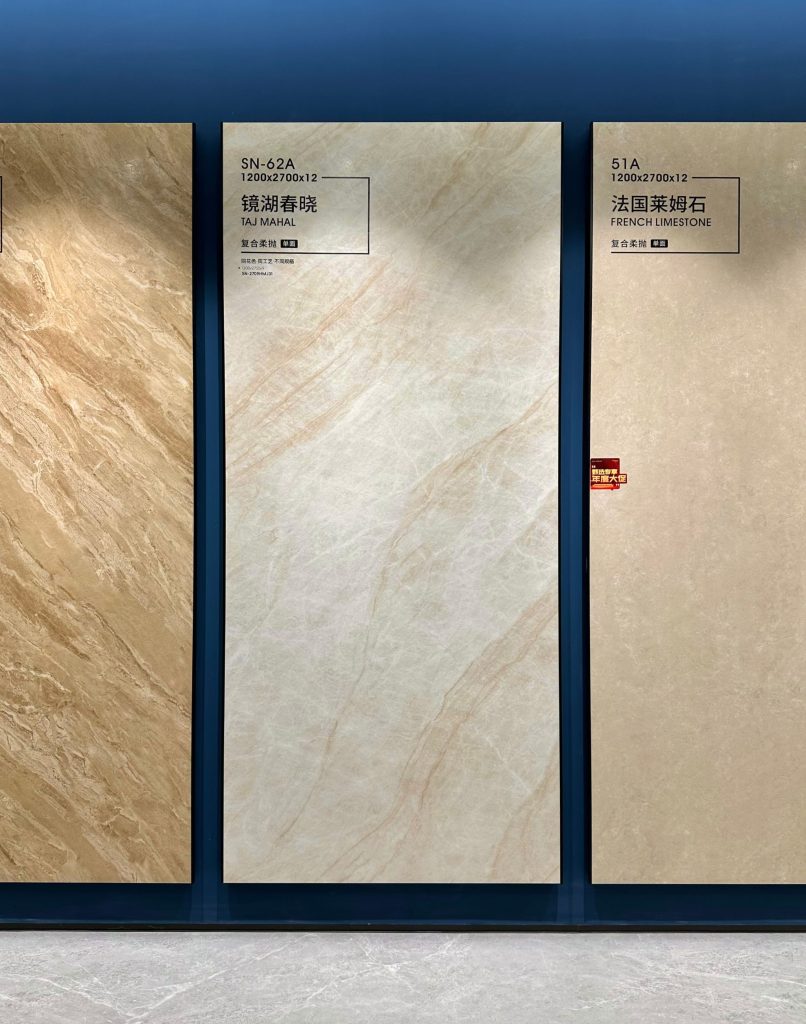
Sintered stone is available in many colors, patterns, and surface finishes. Popular options for wall cladding include:
- Marble-look designs
- Travertine and limestone styles
- Concrete-look surfaces
- Wood-look patterns
- Solid colors
- Textured finishes
- Matte and polished surfaces
- Full-body sintered stone
This variety allows designers to use sintered stone in minimalist, luxury, industrial, or natural-style interiors.
Textured finishes can add depth to a feature wall, while polished marble-look slabs are often used in hotel lobbies, living rooms, and high-end retail spaces.
3. Easy Daily Maintenance
Wall surfaces in bathrooms, kitchens, restaurants, and commercial spaces may be exposed to water, grease, dust, or stains.
The dense surface of sintered stone generally absorbs less dirt than many porous natural materials. Routine cleaning can normally be completed with water, a soft cloth, and a suitable neutral cleaner.
Maintenance requirements still depend on the selected finish. Deeply textured surfaces may require more attention than smooth surfaces because dust can collect in the surface details.
4. Suitable for High-Use Spaces
Sintered stone provides a hard surface that can resist ordinary scratches, stains, and heat when the correct product is selected and installed properly.
This makes it a practical wall cladding material for areas such as:
- Hotel reception desks and lobby walls
- Restaurant feature walls
- Retail store interiors
- Office reception areas
- Apartment entrance walls
- Kitchen backsplashes
- Bathroom and shower walls
Although wall cladding does not experience the same load as flooring or countertops, durability is still important in busy commercial environments.
5. Consistent Supply for Larger Projects
Natural stone slabs can vary significantly in color, pattern, and physical characteristics. This variation may be attractive, but it can also make material matching more difficult on projects requiring hundreds of square meters.
Manufactured sintered stone normally offers greater consistency between slabs from the same production batch. This can help contractors maintain a coordinated appearance across multiple rooms or units.
For larger projects, buyers should still confirm the production batch, shade variation, pattern allocation, and additional quantity required for cutting loss and future replacement.
Where Can Sintered Stone Wall Cladding Be Used?
Living Room Feature Walls
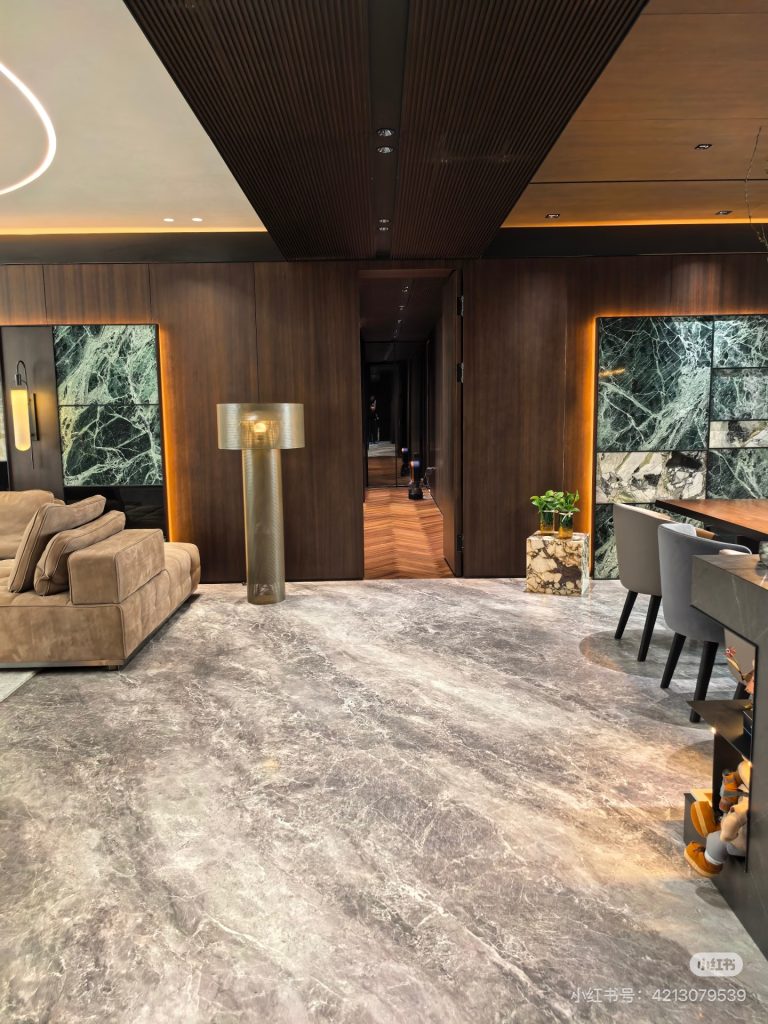
A large marble-look sintered stone slab can become the visual center of a living room.
It is often installed behind a television, fireplace, display unit, or sofa. Book-matched or continuous-vein arrangements can be used when the design needs a stronger decorative effect.
Before ordering, the slab layout should be planned according to the final wall dimensions. This helps determine where the joints and main veins will appear.
Bathroom and Shower Walls
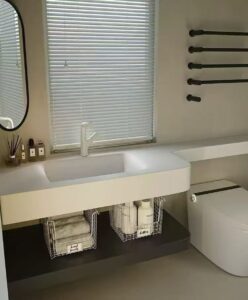
Sintered stone can create a clean bathroom surface with fewer grout lines than small tiles.
Large slabs are commonly used around washbasins, shower areas, and bathtub walls. Openings for taps, pipes, niches, and accessories must be measured and processed carefully.
The installation system, adhesive, joints, and waterproof base layer remain essential. The slab itself should not be treated as a replacement for the required waterproofing system.
Kitchen Backsplashes
Using the same sintered stone design for the countertop and backsplash can create a coordinated kitchen.
A full-height backsplash has fewer joints and is easier to clean than many small-format materials. It also allows the countertop pattern to continue vertically onto the wall.
When installing around sockets, cabinets, or windows, accurate cutting and edge finishing are important.
Commercial Lobbies and Reception Areas
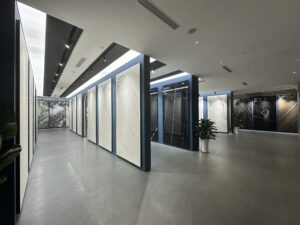
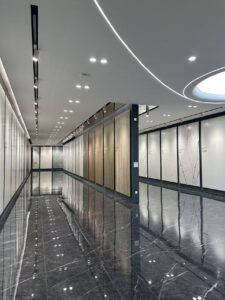
Hotels, offices, showrooms, and residential developments often use sintered stone wall panels to create a professional entrance area.
Project designers can combine plain surfaces, marble patterns, textured finishes, lighting, metal trims, and curved elements. In some designs, hot-bend sintered stone can be used to reduce sharp transitions and create curved wall details, columns, or reception counters.
The feasibility of hot bending depends on the slab, radius, fabrication method, and project design. These details should be confirmed before production.
Retail and Restaurant Interiors
Retail stores and restaurants need materials that support the brand style while remaining practical for daily use.
Sintered stone can be applied to display walls, bar fronts, columns, counters, and decorative panels. Different finishes can also be combined to separate functional areas without using completely different materials.
Exterior Wall Applications
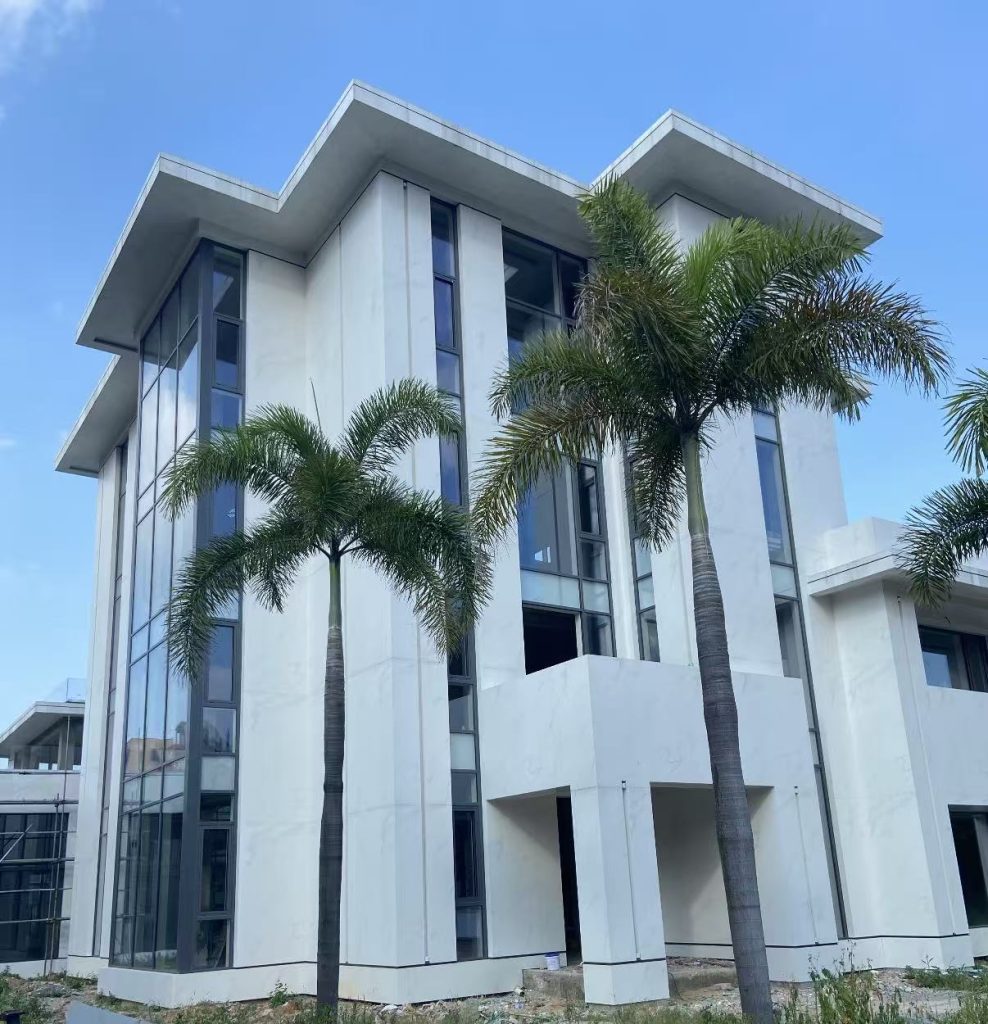
Certain sintered stone products can be used for exterior cladding when supported by an appropriate mechanical fixing or façade system.
Exterior applications require professional engineering. Wind load, building height, slab thickness, anchoring, thermal movement, local regulations, and weather conditions must all be considered.
Buyers should confirm that the selected slab and installation system are suitable for the specific exterior project. Interior wall installation methods should not automatically be used for façades.
How to Choose the Right Sintered Stone Wall Cladding
Select the Design According to the Space
Large and bold patterns can work well on open feature walls, while smaller or quieter patterns may be more suitable for compact rooms.
Ask the supplier for full-slab photographs instead of making a decision from a small sample alone. A small sample can show the color and finish, but it cannot display the complete pattern distribution.
Check the Surface Finish
The surface finish affects both appearance and maintenance.
Polished finishes can create a brighter and more reflective surface. Matte finishes offer a softer look, while textured finishes add depth and a more natural touch.
For commercial projects, samples should be examined under lighting conditions similar to those at the final site.
Confirm Thickness and Installation Method
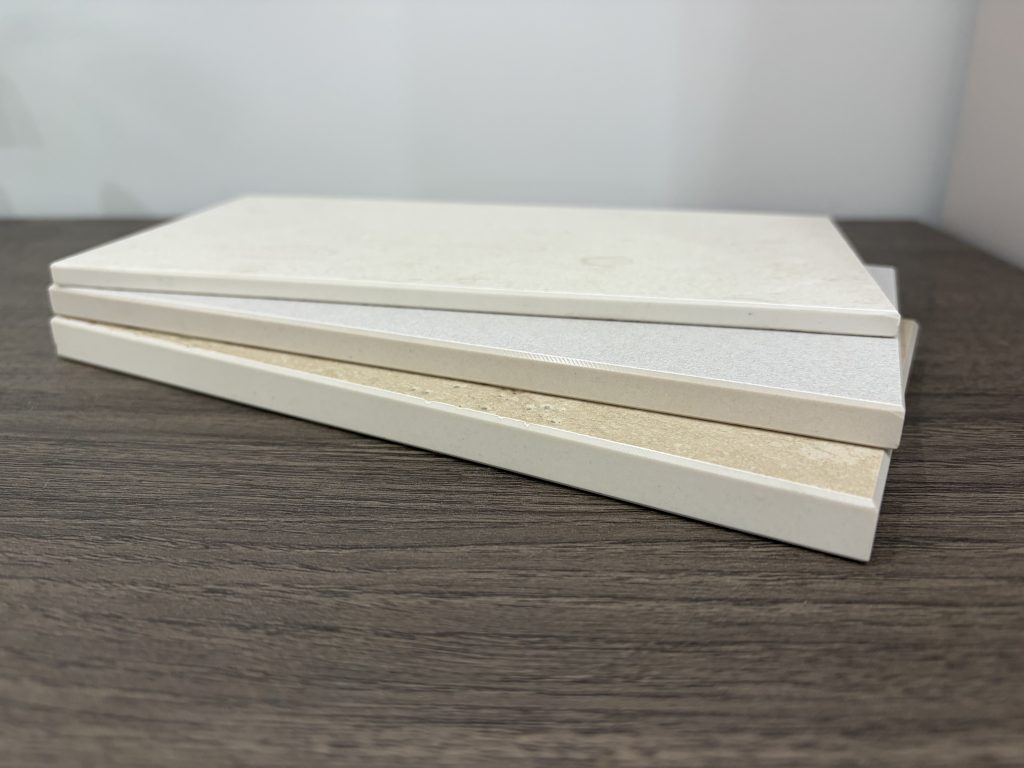
There is no single thickness suitable for every wall project.
The correct choice depends on the slab size, wall condition, fixing system, building height, application area, local standards, and fabricator experience. Large or exterior panels may require a mechanical fixing system rather than adhesive installation alone.
Always ask the contractor, engineer, and supplier to confirm the specification before placing the order.
Plan the Slab Layout Before Cutting
Good layout planning can significantly improve the final result.
The fabrication drawing should show:
- Finished wall dimensions
- Slab direction
- Joint positions
- Vein alignment
- Cut-out locations
- Edge details
- Corner treatment
- Installation sequence
For continuous-vein or book-matched walls, each slab should be numbered according to the approved layout.
Order Extra Material
Wall measurements alone are not enough to calculate the final order quantity.
Additional material may be needed for cutting loss, pattern matching, damaged pieces, color selection, and future replacement. The appropriate allowance depends on the wall design and slab layout.
It is generally safer to order replacement material from the same batch because colors and surface details may vary slightly between different production batches.
Installation Details That Should Not Be Overlooked
Even a high-quality slab can perform poorly if it is handled or installed incorrectly.
Before installation, check that the wall substrate is flat, clean, stable, and suitable for the selected fixing system. Adhesives, anchors, support frames, and joint materials should be chosen according to the slab specifications and application.
Large-format slabs require suitable lifting tools and experienced installers. Cut-outs should have properly prepared corners, and sufficient space should be allowed for movement where required.
The slabs should also be inspected before fabrication. Check the quantity, design, finish, dimensions, shade, and visible surface condition before cutting begins.
Working with a Sintered Stone Supplier

For distributors, fabricators, contractors, and project buyers, choosing a supplier involves more than comparing the price per square meter.
A reliable sintered stone supplier should be able to provide:
- Clear product specifications
- Full-slab images and physical samples
- Stable batch control
- Different surface and body options
- Fabrication and installation guidance
- Secure export packaging
- Flexible production for project requirements
- Consistent communication before shipment
BJS is a Foshan-based sintered stone factory exporter. We offer more than 4,000 designs, including full-body sintered stone and a wide range of textured finishes.
We also support flexible custom production with an MOQ starting from 500 square meters. Hot-bend sintered stone is available for selected curved wall, column, counter, and decorative applications.
Our team works with stone distributors, fabricators, cabinet factories, interior contractors, and project buyers in international markets.
Final Thoughts
Sintered stone wall cladding can change an ordinary wall into a durable and visually coordinated part of the interior.
Its large-format appearance, range of surface options, easy maintenance, and project consistency make it suitable for both residential and commercial spaces. However, the final result depends on more than the slab itself. Product selection, layout planning, fabrication, installation, and batch management should all be considered from the beginning.
If you are sourcing sintered stone slabs for a wall cladding project, send us your preferred design, required dimensions, quantity, and application. The BJS team can recommend suitable products and prepare samples or a project quotation.
Frequently Asked Questions
Is sintered stone suitable for bathroom walls?
Yes. Sintered stone is commonly used for bathroom and shower walls because its dense surface is easy to maintain. A suitable waterproof substrate, adhesive or fixing system, and professional installation are still required.
Can sintered stone be installed over an existing wall?
In some cases, yes, but the existing surface must be stable, flat, clean, and able to support the new cladding system. A contractor should inspect the wall before installation.
Is sintered stone wall cladding heavy?
Large slabs can be heavy and difficult to handle. The actual weight depends on the slab dimensions and thickness. Appropriate lifting equipment and an installation system designed for the slab weight are necessary.
Can sintered stone be used for exterior walls?
Selected products can be used for exterior wall cladding, but the application requires professional façade engineering and compliance with local building standards.
How do I choose between polished and matte wall cladding?
Polished surfaces reflect more light and can create a luxurious appearance. Matte surfaces have a softer and more understated look. The best choice depends on the design style, lighting, location, and maintenance requirements.
Can sintered stone be used for curved walls?
Selected sintered stone products can be processed using hot-bending techniques for certain curved applications. The required radius, slab design, thickness, and fabrication method should be confirmed with the supplier before production.