Which is better, quartz or sintered countertops?
Quartz currently dominates the residential kitchen market due to its predictable fabrication process and widespread availability, but sintered stone delivers superior overall performance based on extreme thermal and environmental thresholds. The decision between the two materials hinges entirely on your specific architectural layout and daily cooking habits. If your kitchen features large west-facing windows that subject the island to direct afternoon sunlight, or if you routinely transfer 400°F baking sheets straight from the oven to the counter, sintered stone is the only recommended choice.
Both materials operate at the premium end of the surfacing market, replacing natural stone with engineered consistency. Brands like Caesarstone and Silestone have established the baseline for quartz, utilizing chemical binders to hold crushed stone together. Brands like Neolith and Dekton represent the sintered category, utilizing extreme mechanical pressure and heat to fuse minerals without chemical binders. This fundamental difference in binding agents dictates every subsequent performance metric, from UV stability to impact resistance.
| Feature | Sintered Stone (e.g., Neolith) | Quartz (e.g., Caesarstone) |
|---|---|---|
| Primary Binder | None (Fused minerals) | Polymer resins |
| Heat Limit | Exceeds 1000°F | Approximately 300°F |
| UV Stability | Absolute (No fading) | Poor (Resin yellowing) |
| Impact Tolerance | Brittle edges | Moderate (Resin buffers impact) |
| Best Application | Outdoor kitchens, high-heat zones | Indoor kitchens, controlled lighting |
| Fabrication Difficulty | Extremely high (Requires specific RPM blades) | Moderate (Standard stone tooling) |
The composition that makes this material different
The physical composition of a countertop slab determines its failure points. Understanding how these materials are manufactured explains why they react differently to daily kitchen hazards. Quartz is an engineered product where ~90-93% natural quartz crystals are aggregated and bound together. The remaining percentage contains polymer resins and pigments. This resin binder acts as the structural glue, providing flexibility during fabrication, but it remains a thermoplastic material susceptible to chemical and thermal degradation.
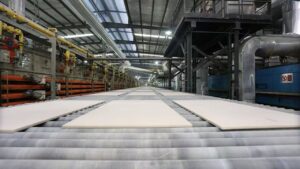
Sintered stone contains no resin. The manufacturing process utilizes a blend of natural minerals, including feldspar, silica, and natural clays. These raw materials are subjected to massive mechanical presses applying up to 400 bars of pressure, compacting the powder into a dense green state. The slabs then enter a specialized kiln where they are fired at 1200°C+. This exact temperature initiates the sintering process, where the mineral particles fuse together at an atomic level without melting entirely. The process accelerates natural metamorphic rock formation from millions of years down to a few hours.
Because the final slab lacks chemical binders, the surface is entirely inorganic. This absence of polymers is the mechanical reason sintered materials survive outdoor environments, but it also removes the microscopic flexibility that resin provides, directly influencing how the material handles kinetic impact.
| Material | Primary Ingredients | Binder | Manufacturing Process |
|---|---|---|---|
| Sintered Stone | Feldspar, silica, natural clays | None | 400 bar pressure, fired at 1200°C+ |
| Quartz | Crushed natural quartz | Polymer resins | Vacuum vibro-compaction, cured at 90°C |
| Diagnostic Attribute | Sintered Material | Engineered Quartz |
|---|---|---|
| Hot Cookware Contact | Direct placement safe | Warping or discoloration |
| Exterior Sunlight Exposure | Stable (non-fading) | Discoloration under prolonged light |
| Surface Porosity | Non-porous | Non-porous |
| Sealing Protocol | No sealing required | No sealing required |
| Internal Veining Pattern | Non-through-body printed graphics | Through-body coloration |
| Thickness Formats | Available in 1/2″ specs | Standard countertop dimensions |
| Flooring Tile Specs | 60 x 60 cm dimensions | Indoor tiles only |
| Tool Contact Artifact | Gray metal transfer marks | Polymer scuffing |
Comparing quartz and sintered countertops in the kitchen
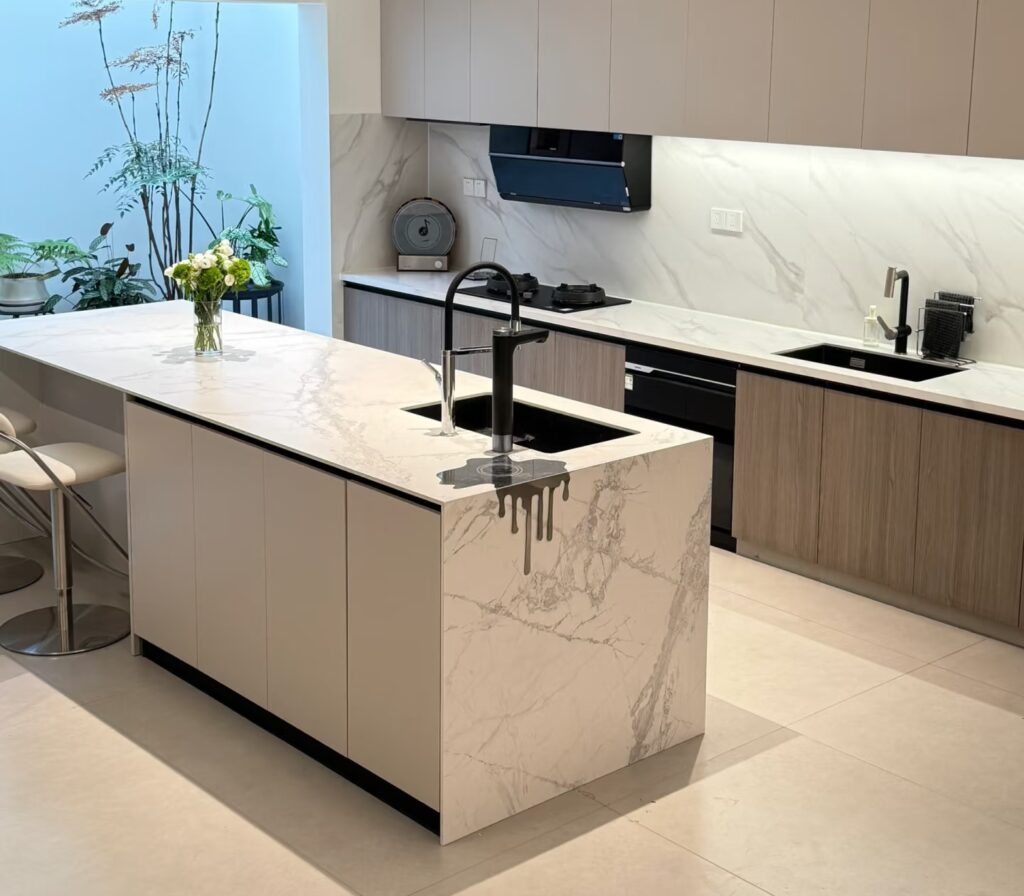
Evaluating these materials requires looking at specific kitchen stress factors: liquid absorption, thermal shock, and ultraviolet radiation. Both materials feature a non-porous surface, meaning they block liquid penetration at a microscopic level. Spilling high-staining agents like turmeric oil, red wine, or coffee will not permanently damage either material. Standard surface cleaners containing isopropyl alcohol or mild surfactants will remove surface stains without penetrating the slab.
The performance divergence occurs under heat and light stress. Because quartz contains polymers, it is not UV-resistant. Prolonged exposure to ultraviolet wavelengths from large architectural windows or outdoor patio setups degrades the polymer chains. This photodegradation causes white quartz slabs to yellow and dark slabs to develop a hazy, chalky appearance over a few years. Sintered stone is UV-resistant and maintains absolute color stability regardless of sunlight exposure.
Thermal limits present another strict boundary. We advise keeping objects above 300°F off quartz surfaces. Exceeding this threshold means heat can cause discoloration or warping. The localized thermal shock forces the resin to expand rapidly, potentially leaving a permanent yellow burn mark where the polymer melted. Because it is fired at extreme temperatures during manufacturing, sintered stone is completely immune to residential heat sources. You can place hot pans directly on the surface immediately after removing them from a 500°F broiler without using trivets or silicone mats.
| Kitchen Stress Test | Sintered Stone Performance | Quartz Performance |
|---|---|---|
| Spilled red wine left for 24 hours | Wipes clean, no penetration | Wipes clean, no penetration |
| 400°F cast-iron pan placed directly | No effect, thermal shock immune | Resin burns, permanent yellowing |
| Direct UV exposure from large windows | Color remains stable | Polymer degradation, yellowing/hazing |
| Slicing vegetables directly on surface | Dulls the steel knife, surface unharmed | Scratches possible under heavy force |
| Exposure to acidic tomato sauce | No etching, wipes clean | No etching, wipes clean |
The Chipping Debate: Why Does Hardness Not Equal Toughness?
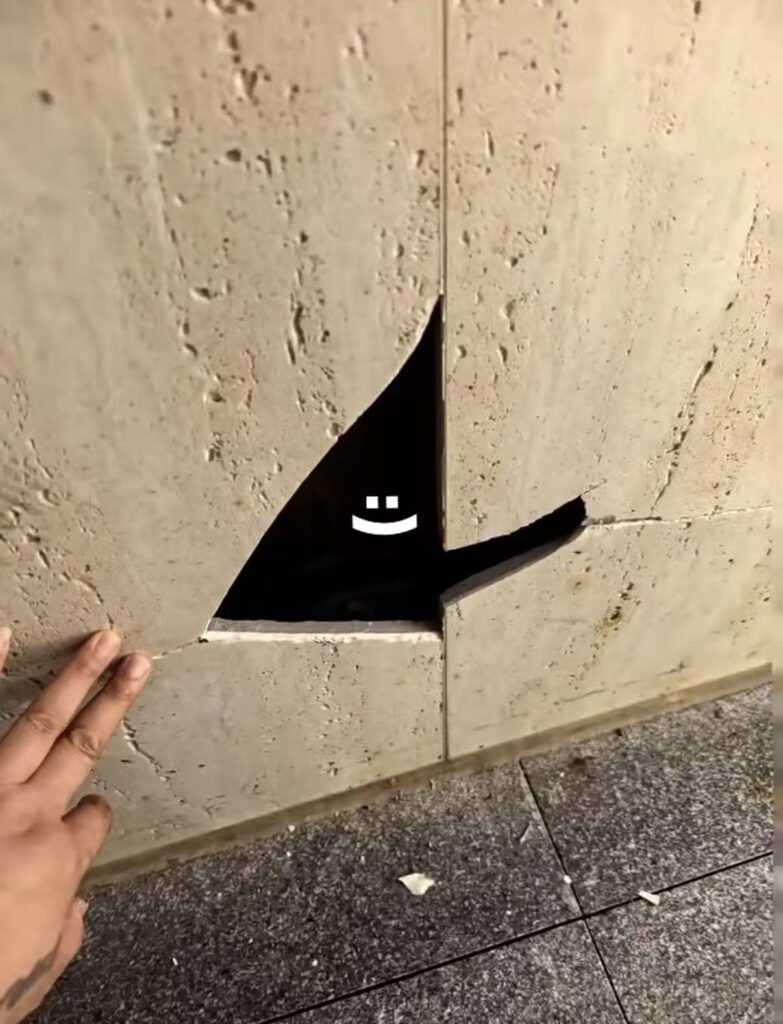
Edge durability remains the most heavily debated topic in the surfacing industry. Online community discussions reveal conflicting field data: many users report sintered stone chips easier than quartz, while other users report quartz chips easier than sintered stone. This contradiction stems from a fundamental misunderstanding of material mechanics, specifically the difference between hardness and toughness.
Hardness measures a material’s resistance to surface scratching, typically evaluated on the Mohs scale. Sintered stone registers incredibly high on this scale; sliding a steel blade across it will leave metal transfer marks rather than scratching the slab. Toughness measures a material’s ability to absorb kinetic energy before fracturing. Fabricators note quartz is tougher under impact because resin acts as a buffer. The polymer matrix provides a microscopic shock absorber when a heavy ceramic bowl hits the edge. Sintered stone lacks this resin buffer, making its crystalline structure highly rigid but brittle at 90-degree angles.
Historically, early generations of sintered slabs were characterized by not through body patterns. The surface design was printed on top, meaning any edge chip revealed a blank white or gray core, making the damage visually jarring. Modern manufacturing has introduced through-body patterns, aligning the internal core colors with the surface veining to reduce the visual impact of edge failure.
When structural failure does occur, fabricators report sintered stone is hard to repair for chips or cracks. Color-matching high-density porcelain requires specialized UV-cured acrylics, and the repair rarely blends as seamlessly as resin-based quartz repairs. To mitigate edge fracturing, never specify square, sharp corners on a sintered island. Consider utilizing a 1/8 inch or 1/4 inch radius chamfer or eased edge to distribute impact forces across a wider surface area.
| Edge Failure Metric | Sintered Stone | Quartz |
|---|---|---|
| Primary Failure Cause | Brittle fracture from blunt impact | Heavy point-load impact |
| Visual Impact of Chip | Low (if through-body), High (if printed) | Moderate (resin core usually matches) |
| Repair Difficulty | Extremely high (requires specialized acrylics) | Moderate (standard epoxy color-matching) |
| Recommended Edge Profile | 1/8″ to 1/4″ radius eased edge | Standard eased or bullnose |
| Material Parameter | Sintered Material | Engineered Quartz |
|---|---|---|
| Crystal Content | Mineral base | ~90-93% natural crystals |
| Binder Type | None | Polymer matrix and pigments |
| Sintering Temperature | 1200°C+ | Low-temp curing |
| Direct Hot Pan Placement | Allowed | Causes warping or discoloration |
| Floor Tile Dimension | 60 x 60 cm | Indoor worktop formats |
| Minimal Core Thickness | 1/2″ (countertop) | Standard manufacturing depth |
| Knife Contact Effect | Dull blade / gray transfer lines | Surface score marks |
| Maintenance Sealing | None required | None required |
Are sintered countertops better than granite and marble?
Homeowners frequently evaluate engineered surfaces against natural geological slabs. If the project parameters demand a zero-maintenance surface with absolute stain immunity, sintered stone outperforms both granite and marble on a technical level.
Marble consists primarily of calcium carbonate, making it highly reactive to acidic compounds. Common kitchen liquids with low pH levels, such as lemon juice (pH 2) or standard white vinegar (pH 2.5), will etch marble upon contact. Etching physically dissolves the polished top layer, leaving dull, rough spots that require professional repolishing to remove. Sintered stone perfectly replicates the visual depth and veining of premium Calacatta or Statuario marble but remains completely immune to acid etching.
Granite offers excellent thermal resistance, allowing users to handle hot cookware without trivets, but it fails the porosity test. Granite contains natural micro-fissures and a porosity rate ranging from 0.2% to 0.5%. This requires chemical penetrating sealants to be applied every 12 to 18 months to prevent cooking oils and dark liquids from permanently settling into the stone. Sintered stone delivers the heat resistance of granite while entirely eliminating the annual sealing maintenance schedule.
| Material | Porosity Level | Maintenance Need | Heat Resistance | Acid Etching Risk |
|---|---|---|---|---|
| Sintered Stone | Near zero (<0.05%) | None | Extreme (1000°F+) | Immune |
| Quartz | Near zero (<0.05%) | None | Low (~300°F) | Immune |
| Granite | Low (0.2% – 0.5%) | Annual chemical sealing | High (~1200°F) | Low |
| Marble | Moderate (0.5% – 2%) | Frequent sealing | Moderate (~400°F) | Extremely High |
Health and Fabrication: What is the Healthiest Countertop?
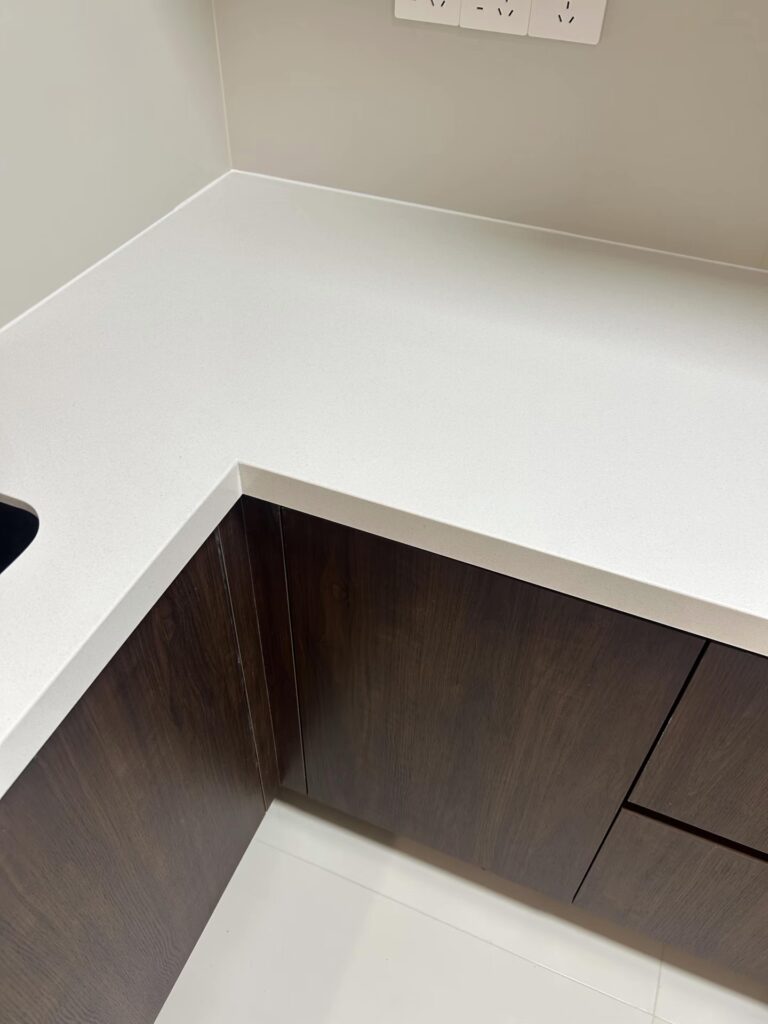
Evaluating the health impact of a countertop requires looking at both the end-user environment and the fabrication facility. For the homeowner, sintered stone is a 100% natural mineral surface containing zero volatile organic compounds (VOCs). It emits no off-gassing, making it entirely inert for indoor air quality.
The health discussion in the surfacing industry currently centers on the fabrication stage. Cutting materials with high natural quartz content produces hazardous dust. Inhalation of this crystalline silica dust poses a severe silicosis risk to fabrication workers if dry-cutting methods are used. While this poses absolutely no danger to the end-user once the slab is installed in a home, it has driven strict regulatory changes and OSHA enforcement regarding wet-cutting environments in fabrication shops.
Sintered stone fabrication presents distinct mechanical barriers. If a local contractor refuses to install sintered materials, it is usually because they lack the specific computer numerical control (CNC) tooling. Cutting a high-density sintered slab requires specialized continuous-rim diamond blades running at specific RPMs with continuous water flow to manage heat. Using standard granite bridge saws or feeding the blade too fast will cause tension release cracks, instantly splitting the entire slab. Installation requires certified fabricators who understand how to relieve the internal stress of the slab before making sink cutouts.
| Fabrication Requirement | Sintered Stone Protocol | Quartz Protocol |
|---|---|---|
| Cutting Tooling | Continuous-rim diamond blades, specific RPM | Standard granite/engineered stone blades |
| Silica Dust Risk | Low to Moderate (depends on specific mineral mix) | Extremely High (requires strict wet-cutting) |
| Tension Release | Relief cuts mandatory to prevent slab splitting | Not typically required |
| Installer Certification | Highly recommended (e.g., Neolith certified) | Standard masonry experience sufficient |
Specifications, Pricing, and Final Verdict: Which Material Should You Choose?
The final specification depends on dimensional requirements, project budget, and application environment. Sintered stone is manufactured in multiple formats to serve different architectural needs. For standard residential kitchen countertops, a 1/2″ thickness is the industry standard, providing sufficient structural integrity for standard cabinet spans and overhangs. For vertical applications like cabinet cladding, shower walls, or fireplace surrounds, manufacturers produce a 3 mm ultra-thin profile, drastically reducing the dead load on the structure. For flooring applications, standard formats typically include 60 x 120 cm or 60 x 60 cm tiles, allowing for seamless integration across large spaces.
Regarding project budgets, market feedback indicates sintered stone is more expensive than quartz in the final installed price. While the raw material cost per square foot might appear competitive on a distributor’s price sheet, the specialized diamond tooling, slower cutting feed rates, and higher risk of fabrication breakage drive up the labor and waste costs significantly. Conversely, market feedback indicates quartz is cheaper than sintered stone for standard indoor kitchen layouts because fabricators can process the resin-bound slabs rapidly using existing machinery.
| Thickness / Format | Best Application | Material Option |
|---|---|---|
| 1/2″ (12mm) Slab | Standard kitchen countertops, islands | Sintered Stone / Quartz |
| 3 mm Ultra-thin Slab | Cabinet cladding, wall panels, fireplace surrounds | Sintered Stone |
| 2cm – 3cm Slab | Heavy-duty countertops, commercial bars | Quartz (Standard sizing) |
| 60 x 120 cm or 60 x 60 cm | Large format floor tiling, patio decking | Sintered Stone |
Choose quartz if you are building an indoor kitchen, have a strict fabrication budget, and do not plan to place hot cookware directly on the counters. It remains a highly reliable, stain-resistant surface for controlled environments.
Specify sintered stone if you are designing an outdoor kitchen, have a space with heavy UV exposure from unshaded windows, or demand the absolute highest heat resistance available. It is the superior technical material for users willing to pay the premium fabrication costs to secure a surface that will not burn, fade, or require chemical sealing.
Frequently asked questions
What is the healthiest countertop?
Sintered stone is among the healthiest countertop choices available. Unlike quartz surfaces that contain polymer resins and pigments, sintered stone is composed purely of natural minerals subjected to intense heat exceeding 1200°C+ during production. This process yields an inert, resin-free product. Its dense, non-porous surface prevents liquid absorption, eliminating harboring grounds for bacteria without requiring chemical sealants. Additionally, its high heat resistance allows direct contact with hot cookware without releasing synthetic fumes or experiencing resin warping, ensuring a clean food-preparation environment.