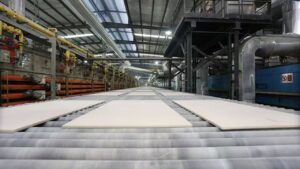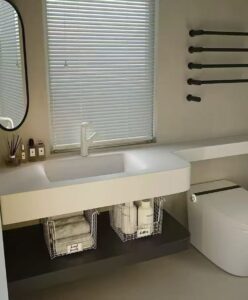

Sintered stone is a manufactured surface made from selected mineral materials that are compacted under pressure and fired at high temperature. The process creates a dense slab with a natural-stone appearance and a wide range of colours, patterns and finishes. It is used for kitchen worktops, bathroom surfaces, wall cladding, furniture, hospitality interiors and other demanding applications.
For buyers in the Middle East, Australia, Canada, Central Asia and Ghana, the right choice depends on more than appearance. Slab format, thickness, finish, fabrication capability, installation details and project conditions all affect the final result.
How is sintered stone made?
Manufacturers begin with mineral raw materials, prepare and blend them, then form the material into a slab. Pressure and heat consolidate the particles and develop the surface structure. Digital decoration can reproduce stone-inspired veining and other design effects, while controlled firing helps produce a consistent finished surface.
Exact recipes and performance vary by product. Ask the supplier for the technical data sheet for the specific collection rather than assuming that every sintered slab has identical properties.
What are the main benefits?
- Design flexibility: large-format slabs can create coordinated worktops, splashbacks, walls and furniture surfaces.
- Low day-to-day maintenance: a dense, non-porous-style surface is easy to clean when correctly installed and cared for.
- Resistance for practical interiors: sintered stone is commonly selected for surfaces exposed to everyday wear, heat and moisture. Always confirm the tested performance of the exact slab.
- Consistent supply options: a professional manufacturer can help match colours, finishes, sizes and repeat orders across a project.
These advantages explain why sintered stone appears in both residential renovations and commercial specifications. They do not remove the need for careful handling: a strong finished surface can still be damaged at corners or edges during transport, cutting or installation.
Where can you use sintered stone?
Common applications include kitchen countertops, islands, vanity tops, shower walls, backsplashes, dining tables, reception desks, feature walls and ventilated exterior cladding systems designed for the application. In hot or sunny regions, confirm the suitability of the selected colour, adhesive system and installation method with the project team.
For kitchens, buyers should consider cooking habits, sink and hob cut-outs, overhangs, edge details and the experience of the fabricator. For walls and furniture, check panel weight, support, joints and access to the installation area before ordering.
Sintered stone compared with quartz and porcelain
“Sintered stone,” “porcelain” and “ceramic” may overlap in everyday sales language, but they are not automatically interchangeable. Quartz surfaces typically contain engineered stone aggregate and resin, while porcelain and sintered products use different mineral compositions and manufacturing routes. Natural stone has its own variation, maintenance and sealing requirements.
The practical comparison should focus on the complete system: appearance, slab thickness, intended use, edge profile, fabrication tools, installation support, warranty and local availability. A cheaper slab may not be the better value if the installer is unfamiliar with the material or replacement supply is difficult.
What should you check before buying?
- Application: tell the supplier whether the slab is for a countertop, wall, vanity, table or exterior use.
- Technical data: request documented information for water absorption, thermal behaviour, stain resistance, dimensions and recommended care.
- Fabrication: use a fabricator experienced with the product. Confirm cutting discs, polishing guidance, corner radii and support requirements before work begins.
- Slab inspection: review colour, veining, finish, thickness, flatness and batch consistency. Keep approved samples for comparison.
- Logistics: plan A-frame storage, lifting, transport and site access. Large slabs need suitable handling equipment and trained installers.
- Aftercare: follow the supplier’s cleaning instructions and avoid treating the surface as indestructible.
Online homeowner discussions often focus on whether sintered surfaces chip or whether an installer can cut them successfully. These concerns are best addressed before purchase by selecting a capable fabricator, agreeing the design details and confirming the installation method in writing.
Frequently asked questions
Is sintered stone suitable for kitchen worktops?
It can be suitable for kitchen worktops when the selected product is rated for that use and fabricated and installed according to the manufacturer’s instructions. Confirm cut-out, support and edge requirements with the fabricator.
Does sintered stone need sealing?
Many products are designed for low-maintenance use, but care requirements vary. Ask for the product-specific care guide and do not apply a sealer unless the supplier recommends it.
Can sintered stone be cut on site?
Cutting should be planned with an experienced fabricator using the correct tools, dust control and support. On-site work is not automatically appropriate for every slab or project.
How do I choose a reliable supplier?
Look for clear technical documents, stable colour and size options, responsive sample support, packaging and logistics guidance, and a track record of helping fabricators and project teams.
Plan your project with BJS
The best sintered stone result starts with the right product matched to the right application and installation team. Contact BJS sintered stone sales for product recommendations, samples, and project support.