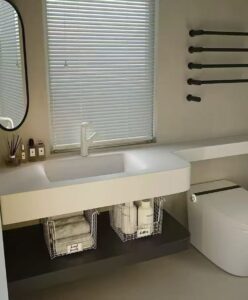

Designing an outdoor kitchen in Australia involves more than choosing a colour. The benchtop must cope with heat from a barbecue, food and drink spills, strong sunlight, rain, dust and daily cleaning. Sintered stone outdoor kitchen benchtops are worth considering because they combine a stone-like appearance with a dense, low-porosity surface suited to demanding applications.
This guide explains what to check before ordering, where sintered stone can perform well, and which fabrication details matter as much as the slab itself.
Why outdoor kitchen benchtops need a different checklist
An indoor kitchen is usually protected from direct weather. An Australian outdoor kitchen may face intense sun, coastal air, sudden rain, temperature changes and airborne grease from grilling. That makes long-term performance a system question: surface, substrate, cabinetry, drainage, appliances and installation must work together.
Start by identifying the exposure level. A covered alfresco area has different requirements from a fully open barbecue zone. Tell the fabricator whether the benchtop will be exposed to direct UV, pooling water, frost in a colder region, salt air or frequent commercial-style cooking.
What sintered stone can offer outdoors
- Heat resistance: the surface is commonly selected for areas near hot cookware and barbecue preparation. Always follow the slab supplier’s guidance for direct contact and appliance clearances.
- Low porosity: a dense surface helps reduce absorption of oil, sauces and drinks, making routine wiping easier than with many porous materials.
- UV stability: outdoor colour retention matters. Confirm the specific collection’s outdoor suitability rather than assuming every finish has identical performance.
- Scratch and stain resistance: useful for busy preparation areas, but knives, abrasive cleaners and dragging heavy appliances can still damage a finished surface.
- Design flexibility: large-format slabs can support clean islands, waterfall ends and matching splashback or wall applications when the fabricator has the right equipment and experience.
Five design checks before you order
1. Choose thickness and support together
Thickness is not just a visual choice. Outdoor islands, overhangs and sink or barbecue cut-outs need adequate support. Ask for a support drawing showing spans, brackets, substructure and overhang limits. Do not rely on a slab to bridge unsupported gaps.
2. Plan cut-outs around the appliance schedule
Confirm the final models for the grill, sink, tap, power points and refrigerator before fabrication. Replacement appliances may have different dimensions later, so keep records of the cut-out sizes and leave practical access for maintenance.
3. Treat water management as part of the benchtop design
Outdoor surfaces should not be designed with nowhere for rain or wash water to go. Coordinate falls, drip edges, joints, wall connections and the cabinet base with the builder. Good drainage protects the entire outdoor kitchen, not only the slab.
4. Match the slab to the cabinetry and climate
A premium surface cannot compensate for open, poorly sealed cabinetry. Ask how doors, internal boxes, fixings and ventilation will handle moisture and heat. In coastal or high-rain locations, material selection and detailing deserve extra attention.
5. Confirm edge details and maintenance instructions
Edges around sinks and barbecue openings are high-use areas. Review the edge profile, corner radius, joint position and cleaning method before approving the shop drawing. Keep the care guide with the project documents.
How does it compare with other outdoor benchtop materials?
Granite offers a natural appearance and can be durable, but some varieties require sealing and may be more vulnerable to staining when maintenance is neglected. Concrete can be highly customisable, yet cracking, sealing and colour variation should be discussed. Stainless steel is practical for commercial-style kitchens and easy to sanitise, but it gives a different visual character and can show scratches. Sintered stone is a strong option when you want a refined stone appearance with a dense, easy-care surface; the best choice still depends on exposure, design, budget and local fabrication capability.
Maintenance questions to ask a fabricator
- Which cleaning products are approved for this exact finish?
- Is the selected slab and finish suitable for the planned outdoor exposure?
- How will joints, sink rims, barbecue cut-outs and wall connections be sealed?
- What support is required below the slab and around overhangs?
- What happens if an appliance needs replacing in five or ten years?
FAQ
Can sintered stone be used for an outdoor kitchen?
It can be suitable for many outdoor kitchen applications, provided the specific product, finish, support structure and installation details are approved for the exposure conditions.
Does an outdoor sintered stone benchtop need sealing?
Many sintered stone surfaces are selected for low absorption and do not need the same sealing routine as porous natural stone. Follow the manufacturer’s care instructions for the exact product.
What is the most important installation detail?
Reliable support around spans and cut-outs is critical. A qualified fabricator should coordinate the slab with the appliance schedule, cabinetry and drainage plan.
Plan your outdoor kitchen surface with BJS
Contact BJS sintered stone sales for product recommendations, samples, and project support. Share your location, exposure level, slab dimensions, appliance schedule and preferred look so the team can help you shortlist a suitable option.