When you’ve spent years handling different surface materials — from natural marble to quartz composites — you start to recognize that each one carries its own personality. Some are beautiful but delicate; others are tough but lack refinement. Then, one day, I came across sintered stone, and it completely redefined how I thought about surfaces.
At first glance, these slabs look like polished nature’s best work — veins that run deep, textures that feel authentic, and a surface that can take nearly anything you throw at it. But what truly fascinated me wasn’t just how it looked, but how it was made. Beneath that refined exterior lies a complex scientific process that mirrors the forces of nature, only accelerated and perfected by technology.
Traditional stones like granite or marble take thousands, even millions of years to form deep underground through heat and pressure. Sintered stone, on the other hand, is born in a matter of hours — inside a high-tech manufacturing chamber that replicates those same geological conditions. It’s nature’s process, but supercharged by human precision.
Understanding what goes into these slabs — the minerals, the heat, the pressure, the molecular bonding — gives you a new respect for the material. It’s not just another engineered surface; it’s a product of raw geological matter brought to perfection through science. In design projects, I’ve seen this material thrive in environments that would quickly wear down others: outdoor kitchens under harsh sun, countertops near blazing stovetops, even commercial walls that endure constant contact and cleaning. Its ability to maintain form and beauty over time isn’t a coincidence — it’s the direct result of its composition and the scientific method behind its creation.

What Exactly Is Sintered Stone?
If you’ve ever stood in front of a sintered stone slab, you might have wondered: is it natural, or is it man-made? The truth is, it’s a fascinating blend of both worlds — created from nature’s raw minerals, yet perfected through human innovation.
Sintered stone starts with the same ingredients that form natural rock — minerals like quartz, feldspar, silica, clay, and natural oxides. But instead of waiting for the earth to do its slow work over millennia, manufacturers use an advanced method called sintering to recreate those natural conditions in a controlled environment. Imagine nature’s geological process compressed into just a few hours.
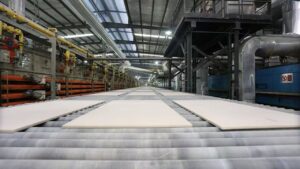
In my early days of exploring surface materials, I visited a production facility — and it was eye-opening. Fine mineral powders were carefully layered, compacted, and then subjected to incredible heat and pressure. The machines roared like furnaces of the earth itself. When the slabs finally emerged, they were dense, flawless, and unyielding — a kind of engineered perfection you rarely see in natural materials.
The process itself is almost poetic. Under immense pressure (often exceeding several hundred bars) and temperatures of more than 1,200°C, the mineral particles fuse at the molecular level. This isn’t melting — it’s transformation. The particles bond tightly without any resins or binders, forming a solid mass with no pores, no weak spots, and no need for chemical additives.
What results is a surface that feels like stone, looks like stone, but behaves far beyond what most natural stones can achieve. It doesn’t stain, fade, or scratch easily, and it can handle heat that would scorch marble or quartz. Many people confuse sintered stone with porcelain, and it’s true — they share some similarities. But the difference lies in the density, thickness options, and scale of the slabs. Sintered stone slabs are often larger, thicker, and more uniform in structure. It’s this combination of raw natural materials and sophisticated production technology that gives the material its unmatched versatility and endurance.
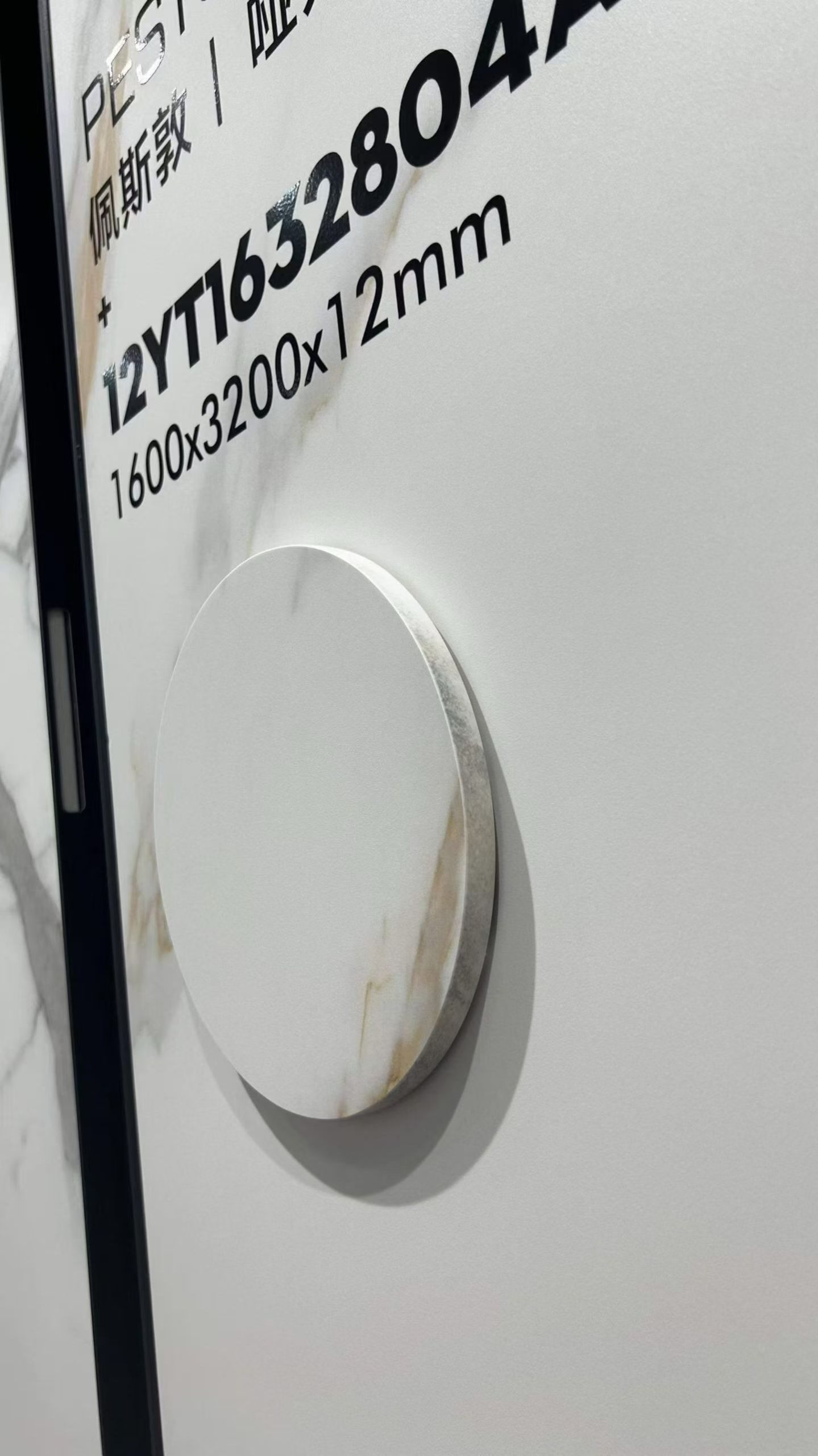
The Core Material Composition of Sintered Stone
When you hold a slab in your hands, it feels heavy, solid, and somehow “honest.” That sensation comes from what it’s made of — not synthetic fillers or resins, but pure minerals that have existed in the earth for millions of years. The science of sintered stone begins right here, with its composition.
Quartz — The Backbone of Strength
Quartz gives the surface its remarkable hardness. One of the hardest minerals in nature, it provides structural integrity to the slab. Because quartz grains bond tightly during the sintering process, they form a dense network that resists scratches and abrasion — even from metal utensils or tools.
Feldspar — The Fusion Agent
Feldspar acts as the “glue” that binds the minerals during the high-temperature phase. When exposed to extreme heat, it softens slightly, promoting fusion without melting the entire mass. This reaction gives the stone its seamless crystalline structure — tough yet elegant.
Silica and Clay — The Texture Balancers
Silica contributes to density and thermal stability, while clays like kaolin help achieve a consistent texture and prevent microcracks. These components make the surface smooth and resistant to expansion or contraction under temperature changes.
Natural Oxides — The Artists’ Palette
Metallic oxides such as iron, titanium, and cobalt provide coloration and visual depth. Whether you’re looking at a marble-inspired white slab or a concrete-style grey finish, the hues come from these natural minerals, ensuring color stability and resistance to fading over time.
No Resins, No Polymers — Pure Mineral Purity
Unlike engineered quartz or composites, sintered stone contains no resins or chemical binders. This makes it heat-resistant, UV-stable, and recyclable — a major advantage for both performance and sustainability.
In practice, this composition makes a world of difference. When fabricators cut or polish the slabs, there’s a distinct sound and feel — crisp, solid, and unmistakably natural. It’s the sound of purity, a reminder that sintered stone isn’t just “another surface”; it’s a product of mineral and machine working in harmony.
The Science of Sintering — Nature Recreated by Technology
If you’ve ever watched molten lava cool and harden into solid rock, you’ve witnessed sintering in its natural form — nature’s way of transforming loose minerals into something dense and unbreakable. What’s remarkable about sintered stone is that this very process has been recreated and refined through technology, giving us a material that carries the beauty of nature and the precision of science.
The sintering process starts with finely ground minerals, carefully blended in precise ratios. These powders are compacted under immense pressure — often exceeding 400 to 500 bars — removing air pockets and creating a tightly packed layer, similar to how sediment becomes stone under the weight of the earth over centuries.
Next comes thermal bonding. The compacted material is placed in a kiln reaching over 1,200°C. At this point, the minerals don’t melt entirely — their molecules begin to migrate and fuse at the contact points, a process called solid-state diffusion. This is the heart of sintering. It creates a dense, non-porous slab with no weak spots, capable of resisting moisture, stains, and bacteria.
Compared to porcelain tiles, sintered stone goes further — higher temperatures, larger slabs, and tighter control over pressure and composition. The result is a surface that’s harder, stronger, and more versatile for indoor and outdoor applications. It’s nature’s craftsmanship, accelerated and perfected by science.

Performance Benefits Driven by Its Composition
Understanding the science is one thing — but the real impact is seen in performance. I’ve tested sintered stone in kitchens, bathrooms, and outdoor spaces, and its capabilities never fail to impress. Every component and every stage of its creation translates into tangible benefits.
Scratch and Impact Resistance
The fused mineral structure makes it incredibly hard. Knife cuts, furniture, even heavy tools — the surface remains unscathed. This durability isn’t just theoretical; it’s something you can feel every day.
Heat and Cold Tolerance
It can handle hot pots straight from the oven and remain stable under freezing conditions. Unlike resin-based surfaces, there’s no warping or discoloration.
Stain and Chemical Resistance
Its dense, non-porous surface repels coffee, wine, oil, and acidic substances. Spills wipe away effortlessly, making it ideal for busy kitchens and commercial spaces.
UV Stability
Mineral-based coloring ensures that surfaces won’t fade over time, making it perfect for outdoor installations and bright interiors.
Hygienic and Low Maintenance
No sealants or chemical treatments are needed. Cleaning is simple, and the surface naturally resists bacteria and mold.
Structural Stability and Versatility
Thin yet strong slabs can be fabricated in a variety of sizes, offering creative freedom for countertops, wall panels, furniture, and more. Its strength allows for installations that other materials simply can’t support.
The Sustainability and Innovation Aspect
Beyond beauty and performance, sintered stone is a responsible choice. Made from natural minerals, it contains no toxic resins or binders. Modern production is energy-efficient, minimizes waste, and even recycles defective slabs back into new batches.
Its long lifespan reduces replacement needs, cutting environmental impact. And at the end of its life, it’s fully recyclable — something few alternatives can claim.
Innovation continues to push the boundaries: lighter slabs, improved energy efficiency, digital production, and even surfaces that can interact with their environment in innovative ways. For designers and homeowners, this means longevity, environmental responsibility, and a forward-thinking material all in one.
Conclusion: The Science of Beauty and Durability Combined
Sintered stone isn’t just another surface. It’s the result of nature’s raw minerals, fused through science into a material that is durable, beautiful, and sustainable. From its hardness and heat resistance to its UV stability and recyclability, every property is a direct reflection of its composition and the precision of the sintering process.
I’ve seen it elevate kitchens, outdoor spaces, and architectural projects — not only performing flawlessly but also enhancing the design narrative. It’s a material that bridges the gap between science and aesthetics, between natural elegance and engineered perfection.
For anyone seeking a surface that marries performance, longevity, and responsible design, sintered stone isn’t just an option — it’s a statement. It’s a testament to what’s possible when human ingenuity learns from the earth, respects it, and refines it for the modern world.