
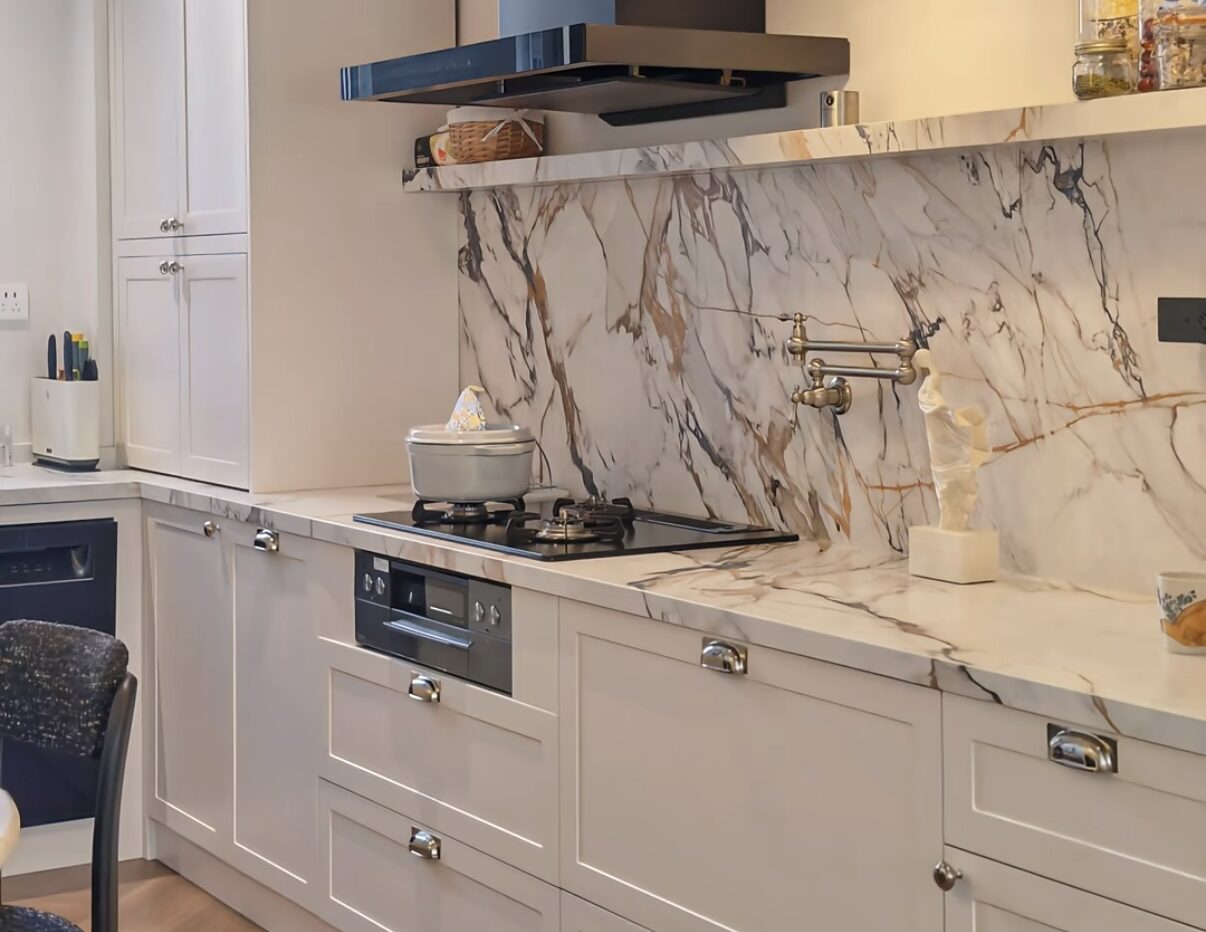
When choosing materials for countertops, wall cladding, bathroom vanities, dining tables, or commercial spaces, marble is often one of the first materials people think of. It looks natural, elegant, and timeless. However, in recent years, sintered stone has become a strong alternative, especially for projects that require durability, easy maintenance, and a more stable supply.
So, between sintered stone and marble, which one should you choose? The answer depends on your project, budget, application, and maintenance expectations. In this article, we will compare both materials from several practical angles.
1. What Are Sintered Stone and Marble?
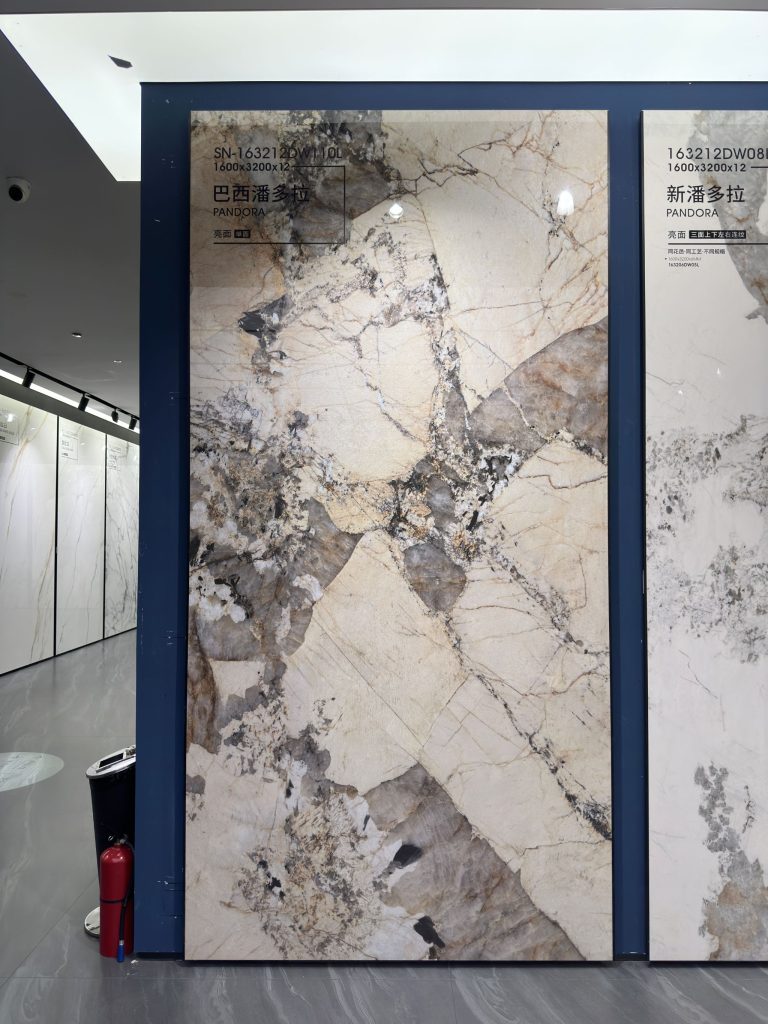
Marble is a natural stone formed over millions of years. Each slab is unique, with natural veins, colors, and patterns created by the earth. This is one of the biggest reasons why marble is loved in luxury interiors. No two pieces are exactly the same.
Sintered stone, on the other hand, is an engineered surface material made from natural minerals. These minerals are pressed under high pressure and fired at high temperatures to create a dense and durable slab. Although it is man-made, sintered stone can imitate the look of marble, natural stone, concrete, terrazzo, wood, and many other materials.
The main difference is that marble is natural and porous, while sintered stone is manufactured to be more compact, stable, and resistant to daily wear.
For projects where natural uniqueness is the top priority, marble still has strong appeal. But for projects that require consistent color, easier maintenance, and better performance, sintered stone is often a more practical choice.
2. Appearance: Natural Beauty vs Modern Consistency
Marble has a classic beauty that is difficult to replace. Its natural veining, depth, and soft texture give spaces a luxurious and artistic feeling. This is why marble is widely used in hotels, villas, high-end apartments, and decorative feature walls.
However, because marble is a natural material, every slab may have color differences, vein variations, cracks, or natural imperfections. For some designers, this is part of its charm. For large projects, however, this can also make color matching more difficult.
Sintered stone offers a different advantage: consistency. Since the pattern and color are controlled during production, it is easier to maintain a stable look across multiple slabs. This is especially useful for large commercial projects, kitchen countertop production, furniture manufacturing, and wall cladding where batch consistency matters.
Another benefit is design flexibility. Sintered stone can be produced in marble looks, solid colors, travertine looks, cement looks, wood looks, and luxury stone patterns. Some designs also support book-matching or continuous vein effects, which can create a high-end visual result.
If you want a completely natural and unique appearance, marble is attractive. If you want a marble-like look with more control over color and pattern, sintered stone is usually easier to manage.
3. Durability: Which Material Performs Better in Daily Use?
Durability is one of the biggest reasons why many homeowners, contractors, and fabricators choose sintered stone.
Marble is beautiful, but it is relatively soft compared with many modern surface materials. It can be scratched, stained, or etched by acidic substances such as lemon juice, vinegar, wine, or some cleaning chemicals. In busy kitchens, bathrooms, restaurants, and commercial spaces, this can become a maintenance issue over time.
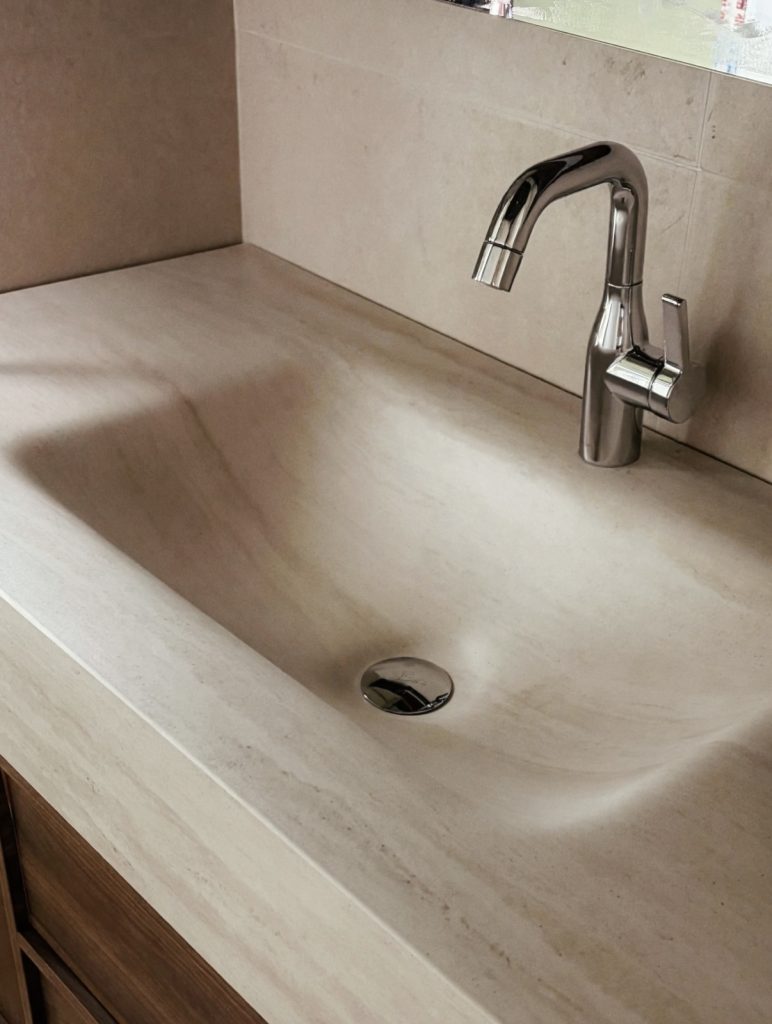
Sintered stone is designed for higher resistance in daily use. It usually performs well against scratches, stains, heat, moisture, and UV exposure. This makes it suitable for kitchen countertops, bathroom vanities, tabletops, wall panels, floors, outdoor areas, and commercial surfaces.
For example, in a kitchen, sintered stone is less likely to absorb oil, coffee, sauce, or wine. In a bathroom, it is more resistant to moisture and cleaning products. In commercial spaces, it can better handle frequent use and cleaning.
This does not mean sintered stone is impossible to damage. Like any large-format slab material, it still needs proper handling, cutting, fabrication, and installation. Edges, corners, sink cutouts, and transportation all require professional care. But after proper installation, sintered stone is generally easier to live with than marble in high-use environments.
4. Maintenance and Cost: Which One Is Easier to Own?
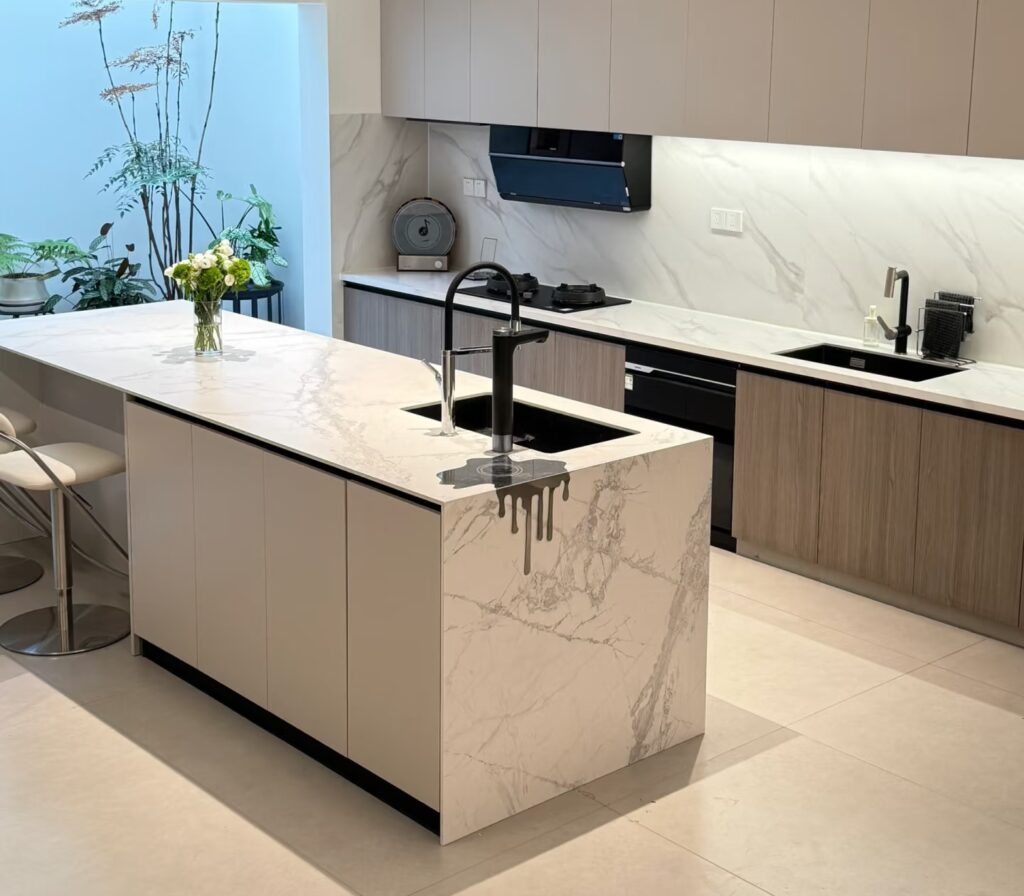
Marble usually requires more maintenance. Because it is porous, it may need sealing to help protect the surface from stains. It also needs careful cleaning. Acidic cleaners or harsh chemicals can damage the surface finish. Over time, marble may need polishing, repair, or professional maintenance to keep it looking good.
Sintered stone is much easier to maintain. In most daily situations, it can be cleaned with water, mild detergent, and a soft cloth. It does not usually require sealing, and it is less sensitive to common household stains.
From a cost perspective, marble can vary greatly depending on the type, origin, rarity, slab size, and quality. Some natural marble is extremely expensive, especially rare colors or premium blocks. Besides the material cost, buyers also need to consider installation, sealing, maintenance, and possible repair costs.
Sintered stone also has different price levels depending on size, thickness, surface finish, body type, design, and production quality. However, it often provides better cost control for large-scale projects because the supply is more stable and the design can be repeated across batches.
For importers, distributors, and contractors, this matters a lot. A material that looks good but is difficult to maintain may create complaints later. A material with stable quality, stable supply, and easier maintenance is often better for long-term project use.
5. Best Applications: When to Choose Sintered Stone and When to Choose Marble
Both materials have their place. The best choice depends on where and how the material will be used.
Marble is a good choice when the project requires natural luxury, unique veining, and a premium artistic feeling. It is suitable for decorative feature walls, luxury hotel lobbies, villa interiors, fireplace surrounds, and spaces where the visual effect is more important than heavy daily use.
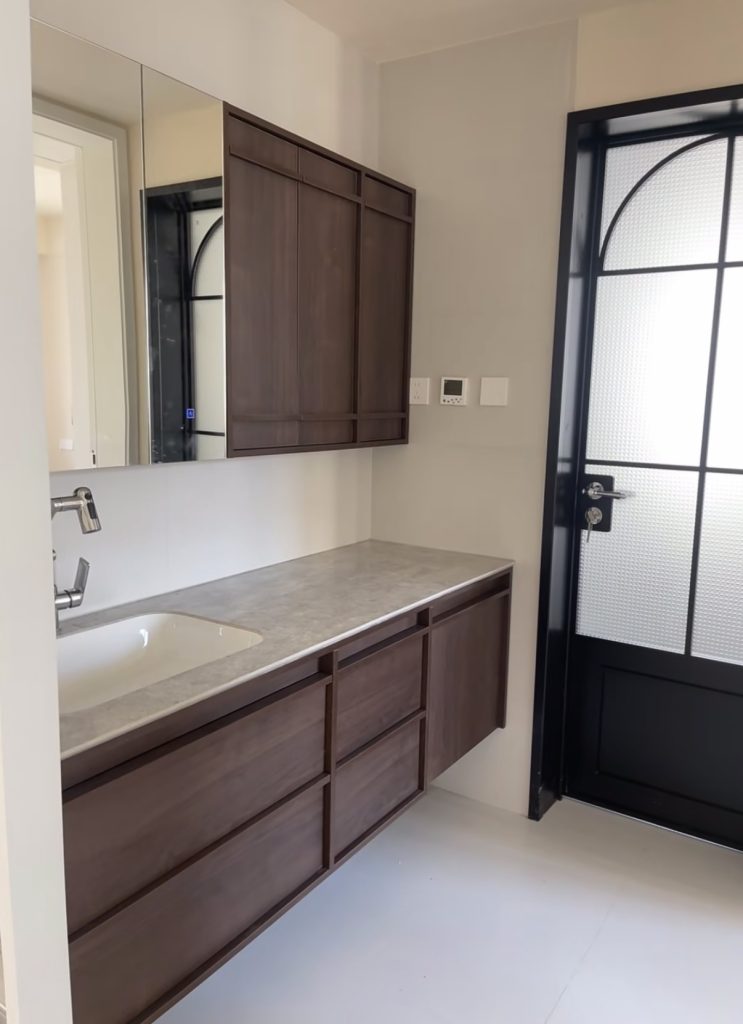
Sintered stone is a better choice for areas that need durability, easy cleaning, and stable performance. It is especially suitable for kitchen countertops, bathroom vanity tops, dining tables, cabinet surfaces, wall and floor cladding, outdoor facades, commercial counters, restaurants, showrooms, and high-traffic spaces.
For kitchen countertops, sintered stone is often more practical because it resists stains, heat, and daily cleaning better. For bathroom spaces, it performs well because it does not absorb moisture easily. For commercial projects, it helps reduce long-term maintenance problems.
For buyers who like the look of marble but worry about staining, scratching, maintenance, or cost, sintered stone marble-look slabs can be a strong alternative. They can create a similar high-end visual effect while offering better practical performance.
Conclusion: Which One Should You Choose?
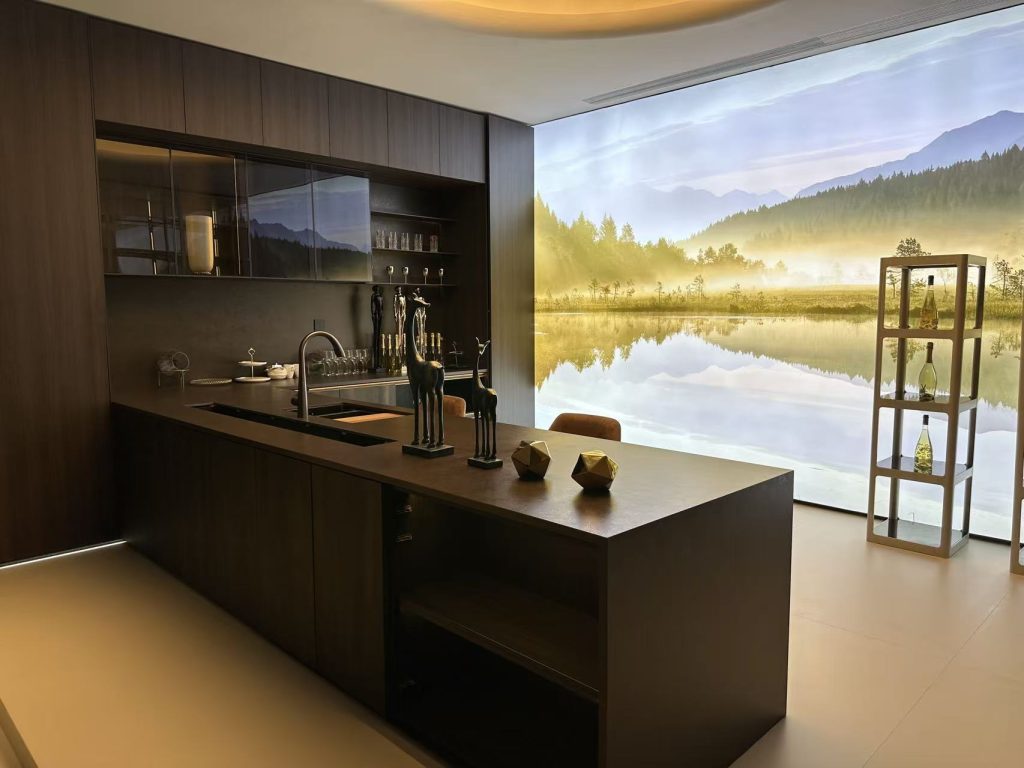
If your priority is natural uniqueness and classic luxury, marble is still a beautiful choice. It brings a sense of natural art that engineered materials cannot completely replace.
But if your priority is durability, low maintenance, color consistency, and better performance in daily use, sintered stone is usually the more practical option. It is especially suitable for modern residential projects, commercial spaces, kitchen countertops, bathroom vanities, furniture, and large-scale construction projects.
In short, marble is beautiful, but it needs more care. Sintered stone gives you a similar high-end look with easier maintenance and stronger performance.
Before making a final decision, consider where the material will be used, how often it will be cleaned, how much maintenance the user can accept, and whether the project needs natural uniqueness or stable consistency.