
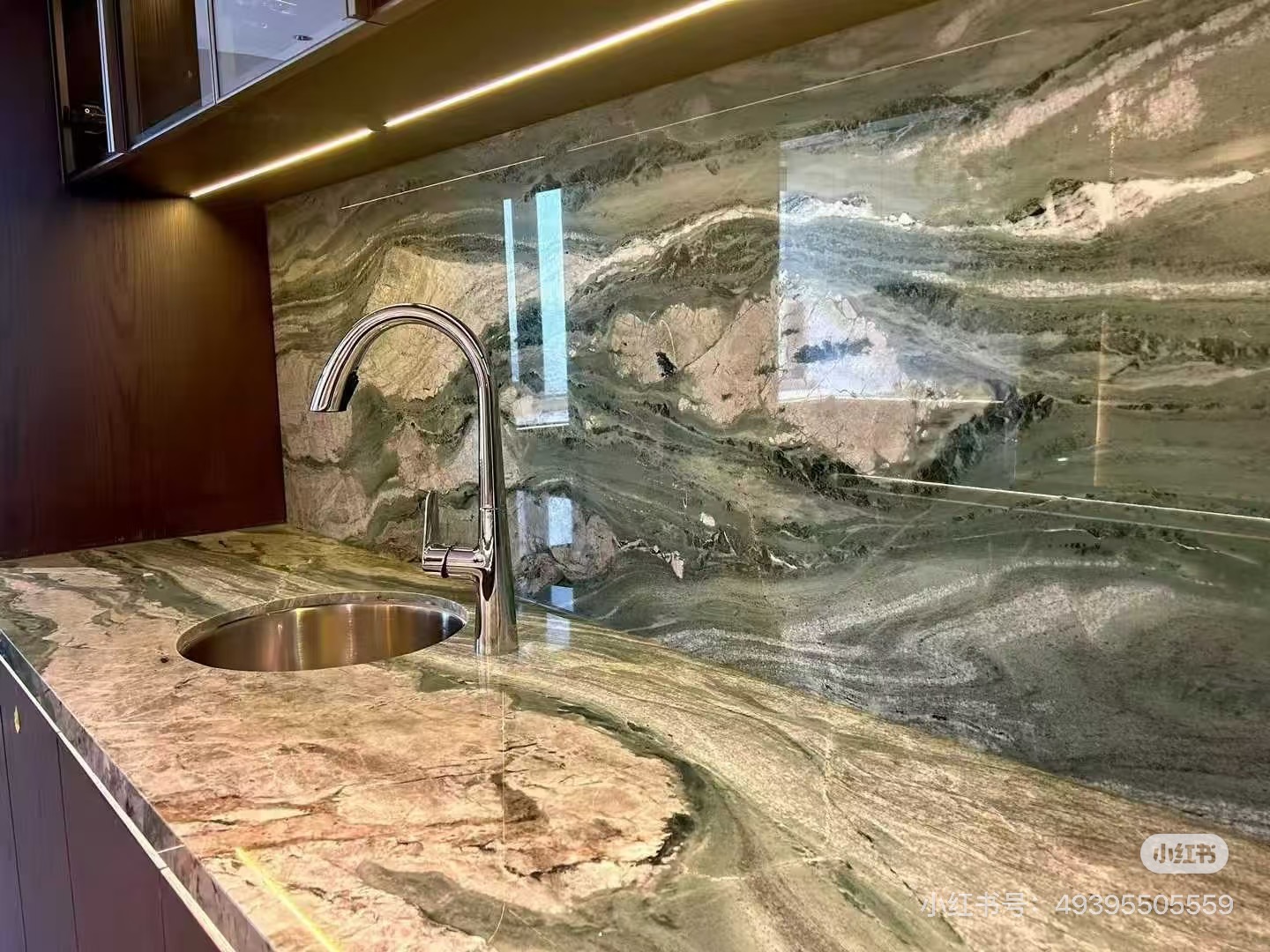
Choosing the right surface material is important, but choosing the right color is what determines how that material will actually look in a finished space. With a wide range of solid shades, marble-inspired patterns, concrete effects, wood looks, and natural stone textures, sintered stone offers designers and homeowners far more flexibility than many traditional materials.
However, more choices can also make the selection process more difficult. A color that looks attractive in a showroom may appear completely different under warm lighting, beside dark cabinets, or across a large wall.
This guide explains the most popular sintered stone colors, how different colors affect a space, and how to choose the right sintered stone slab color for kitchens, bathrooms, living rooms, commercial interiors, and outdoor areas.
What Colors Does Sintered Stone Come In?
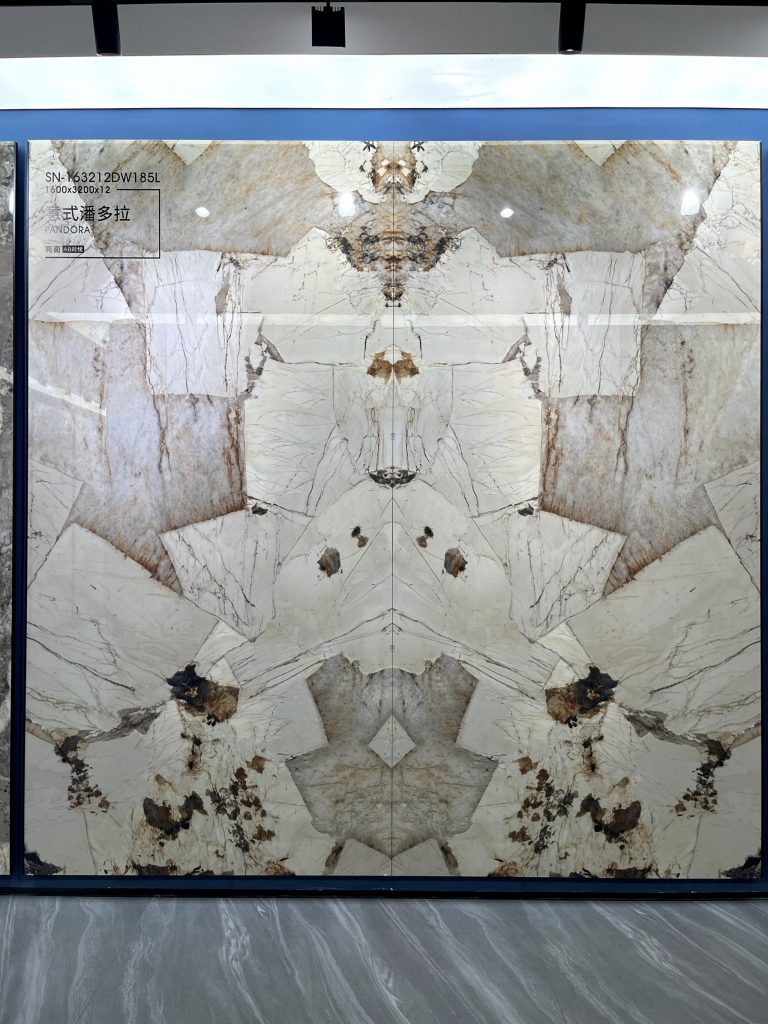
Sintered stone is manufactured using natural mineral materials, high pressure, and high-temperature firing. Unlike natural stone, which is limited by the colors and patterns found in individual blocks, sintered stone can be produced in a much wider and more consistent range of designs.
The most common color groups include white, grey, black, beige, brown, green, blue, and other decorative shades. These colors may be presented as solid surfaces or combined with patterns that replicate marble, travertine, limestone, concrete, metal, or natural wood.
White Sintered Stone
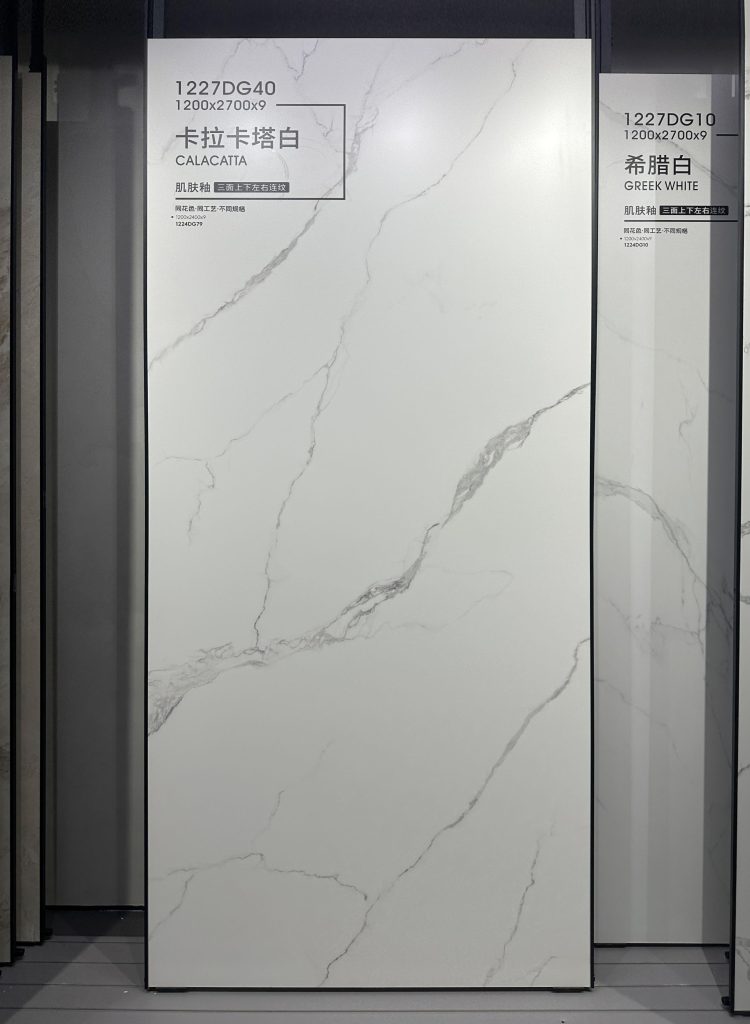
White remains one of the most popular sintered stone colors, especially for kitchen countertops, bathroom walls, dining tables, and feature walls.
Available options range from pure white and warm ivory to Carrara-style grey veins and Calacatta-style gold veins. White surfaces reflect light and can make a room feel brighter, cleaner, and more spacious.
For a minimalist appearance, choose a plain white or lightly textured surface. For a more luxurious effect, select white sintered stone with bold grey, brown, or gold veining.
Grey Sintered Stone
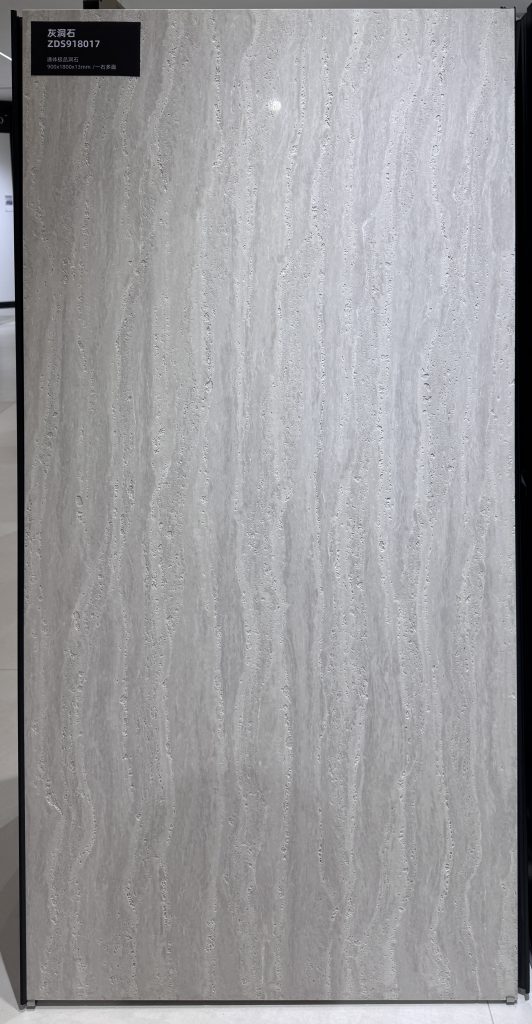
Grey is one of the most versatile sintered stone slab colors. It works well with white, black, wood, metal, and many neutral cabinet finishes.
Light grey creates a soft and modern atmosphere, while darker charcoal shades provide a stronger architectural appearance. Concrete-look grey is especially popular in modern kitchens, offices, retail stores, and industrial-style interiors.
Grey surfaces are also practical because they are generally better at visually concealing dust, water marks, and minor daily-use residue than pure white or polished black surfaces.
Black Sintered Stone
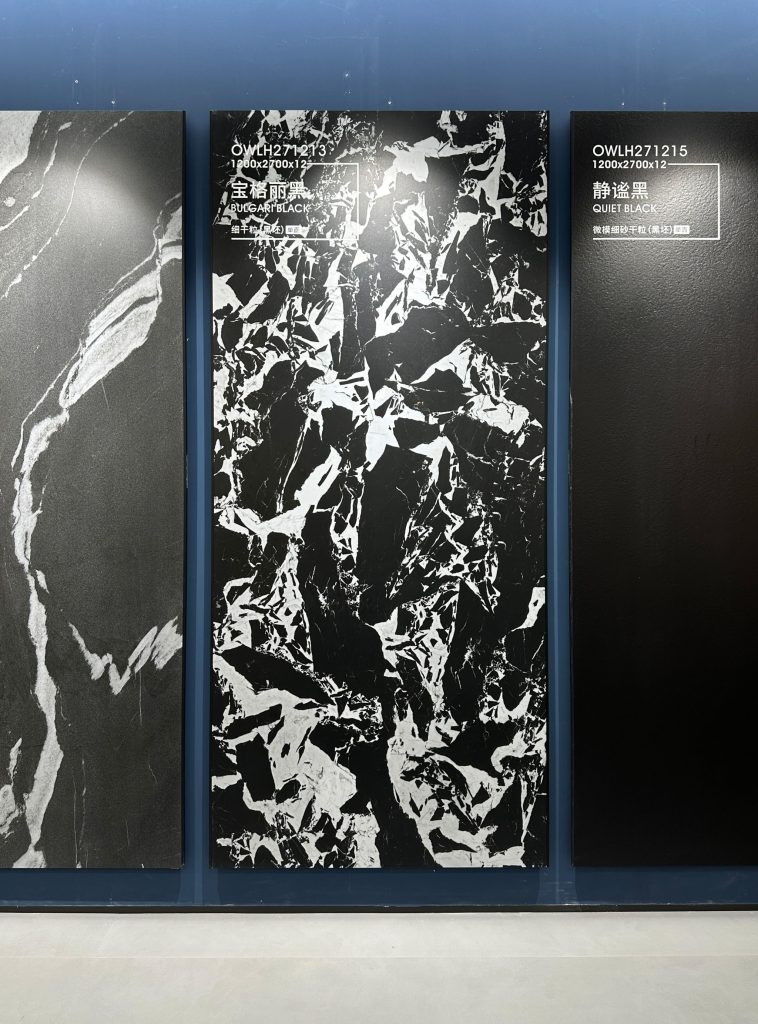
Black sintered stone creates contrast and visual impact. It is commonly used for kitchen islands, reception counters, dining tables, TV walls, bathrooms, and luxury commercial interiors.
Popular designs include solid black, black marble with white veins, and black stone with gold or copper details. These patterns can make a surface the focal point of a room.
However, dark polished surfaces may show fingerprints, dust, and dried water marks more easily. For busy spaces, a matte or textured black finish may be more practical than a high-gloss finish.
Beige and Cream Sintered Stone
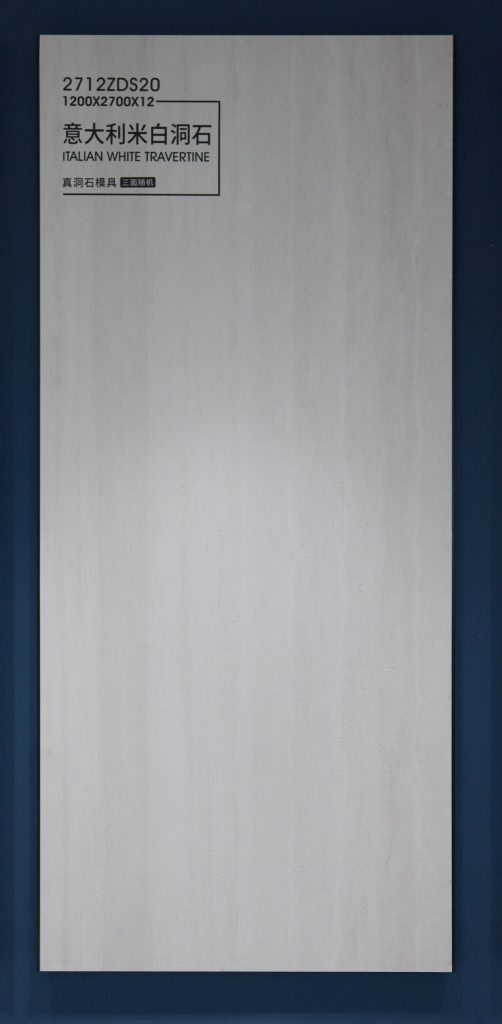
Beige, ivory, cream, and sand-colored slabs create a softer and warmer atmosphere than white or grey.
These colors work particularly well in living rooms, bedrooms, hotels, villas, bathrooms, and Middle Eastern-style interiors. Travertine-look and limestone-look sintered stone are also commonly produced in warm beige tones.
Beige sintered stone can be paired with warm wood, bronze, brass, cream-colored furniture, and natural fabrics to create a comfortable and elegant space.
Green, Blue, and Statement Colors
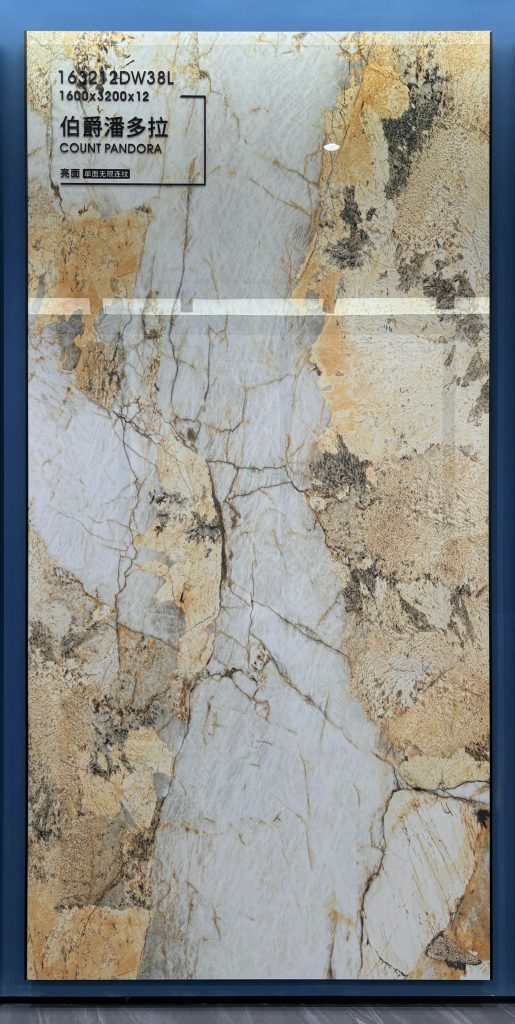
Green, blue, burgundy, rust, and other statement colors are becoming increasingly popular for projects that require a distinctive visual identity.
Emerald green stone patterns work well on kitchen islands, bathroom vanities, bar counters, and feature walls. Blue sintered stone can create an ocean-inspired or contemporary appearance, while red and rust tones are suitable for restaurants, boutiques, and artistic interiors.
These colors are usually most effective when used as accents rather than across every surface in the room.
How to Choose the Right Sintered Stone Color
The best color is not simply the most attractive slab in a catalog. It should match the size, lighting, furniture, application, and overall design concept of the space.
Consider the Size of the Room
Light-colored surfaces generally make a room feel larger and more open. White, cream, light beige, and soft grey are therefore suitable for small kitchens, compact bathrooms, and narrow commercial areas.
Dark colors can make a large room feel more sophisticated and defined. Black, dark grey, brown, or deep green slabs are often more successful in spacious interiors with good natural or artificial lighting.
Pattern scale is equally important. A slab with large dramatic veins may look impressive on a full-height wall or large island but may lose its intended effect when cut into a small vanity top.
Evaluate the Lighting
Lighting can significantly change the appearance of sintered stone colors.
Warm lighting may make white slabs appear creamier and can strengthen beige, brown, and gold tones. Cool lighting can emphasize grey, blue, and white details. Direct sunlight may reveal subtle colors and textures that are less visible in a showroom.
Before confirming a large order, review a physical sample under the actual lighting conditions of the project whenever possible.
Match the Cabinets and Furniture
A countertop or wall surface should work with the other materials in the room.
White sintered stone pairs well with natural wood, black, green, blue, or grey cabinets. Black slabs create strong contrast with white or light wood cabinetry. Grey surfaces can be combined with both warm and cool color schemes.
Beige sintered stone is particularly suitable for oak, walnut, cream, and bronze finishes. Green or blue slabs usually look best when surrounded by neutral cabinets that allow the stone pattern to remain the main visual feature.
Best Sintered Stone Colors for Kitchens
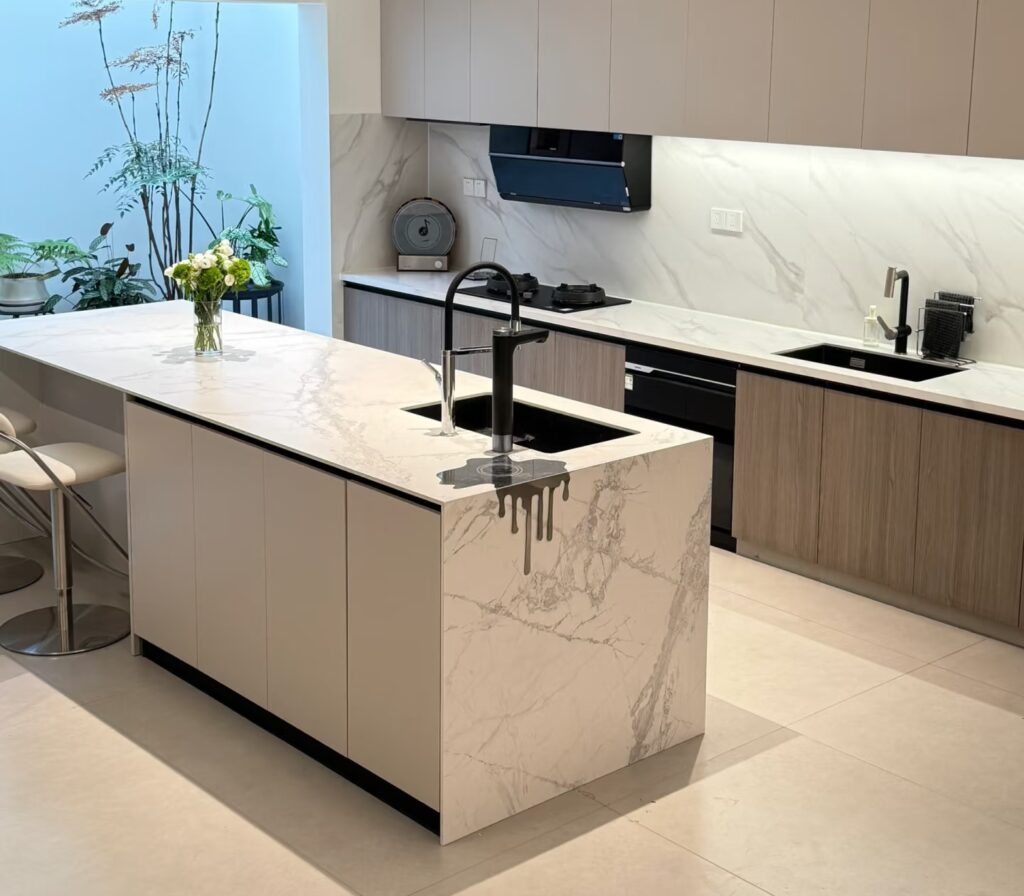
Kitchen surfaces need to balance appearance with daily practicality.
White marble-look sintered stone is a popular option because it creates a clean and high-end appearance without the maintenance concerns commonly associated with natural marble. Warm white and light grey are especially suitable for small kitchens because they reflect light and make the room feel more open.
For modern kitchens, concrete grey, charcoal, or solid black can create a stronger minimalist effect. Black marble-look sintered stone with white or gold veins is often used on large islands to create a focal point.
Busy family kitchens may benefit from beige, grey, or patterned surfaces. Compared with plain solid colors, natural-looking patterns can better conceal crumbs, fingerprints, and minor water marks between cleaning.
When choosing sintered stone countertop colors, also consider the backsplash. Using the same slab for the countertop and backsplash creates a continuous, coordinated appearance. Alternatively, a contrasting backsplash can add more depth to the kitchen design.
Best Sintered Stone Colors for Bathrooms
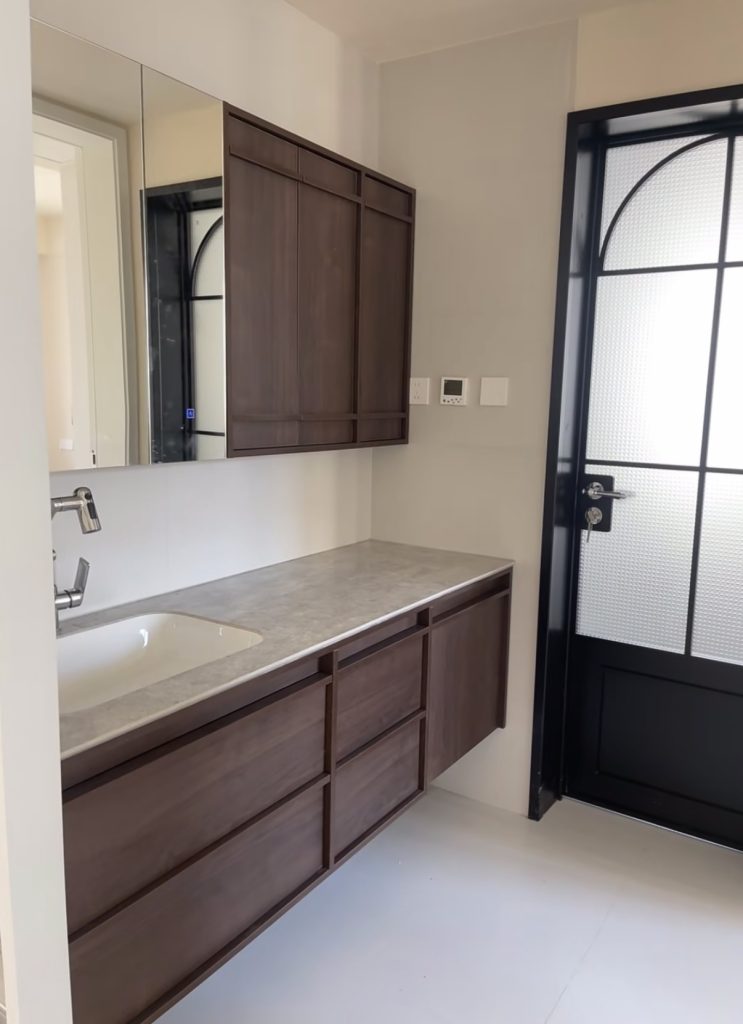
White, light grey, beige, and travertine-look slabs are among the safest choices for bathrooms.
White surfaces create a bright and hygienic appearance, while beige and cream tones produce a warmer, spa-like atmosphere. Light grey works well in modern bathrooms and can be combined with black faucets, glass partitions, and wood-look cabinets.
For a more decorative bathroom, green, blue, or high-contrast marble patterns can be used on the vanity top or one feature wall.
When selecting bathroom slabs, color should not be the only consideration. The surface finish also matters. Textured or slip-resistant finishes may be more appropriate for wet floors, while polished slabs are often used on walls and vanity tops.
Best Colors for Living Rooms and Bedrooms
Living rooms usually contain larger visible surfaces, so the selected color should remain comfortable over time.
Cream, beige, light grey, and soft stone patterns are suitable for floors and large wall applications. They create a neutral background that can be updated with furniture, curtains, and decorative accessories.
For TV feature walls and fireplaces, stronger marble patterns or darker colors can create more visual impact. Black, green, brown, or heavily veined white slabs work well when they are used as a controlled focal point.
Bedrooms generally benefit from softer colors such as warm white, light beige, taupe, and low-contrast grey. These tones create a calmer atmosphere than very dark slabs or highly dramatic patterns.
Best Colors for Commercial Spaces
Commercial projects can use sintered stone colors to reinforce a brand identity or influence how customers experience the space.
Hotels often use beige, cream, white marble, or dark decorative stone to create a premium atmosphere. Restaurants may prefer warm brown, travertine, wood-look, or textured stone designs. Offices frequently use grey and concrete-look slabs for a clean, professional appearance.
Reception desks, retail counters, and display walls are suitable locations for stronger colors. A black, green, blue, or gold-veined slab can attract attention without overwhelming the entire interior.
For commercial applications, it is also important to consider cleaning frequency, traffic volume, and whether replacement slabs may be required in the future.
How Surface Finish Changes the Color
The same sintered stone color can look very different depending on its surface finish.
A polished finish reflects more light, making colors appear deeper and veins more visible. It is often selected for kitchen countertops, feature walls, dining tables, and luxury interiors.
A matte finish produces a softer and more understated appearance. It reduces reflections and is commonly used in contemporary kitchens, bathrooms, and commercial spaces.
Textured surfaces can replicate the touch of natural stone, slate, wood, or carved material. The texture creates shadows that add depth to the color, but deeply textured surfaces may require more attention during cleaning.
The finish should therefore be selected together with the color rather than treated as a separate decision.
Consider Slab Size and Vein Direction
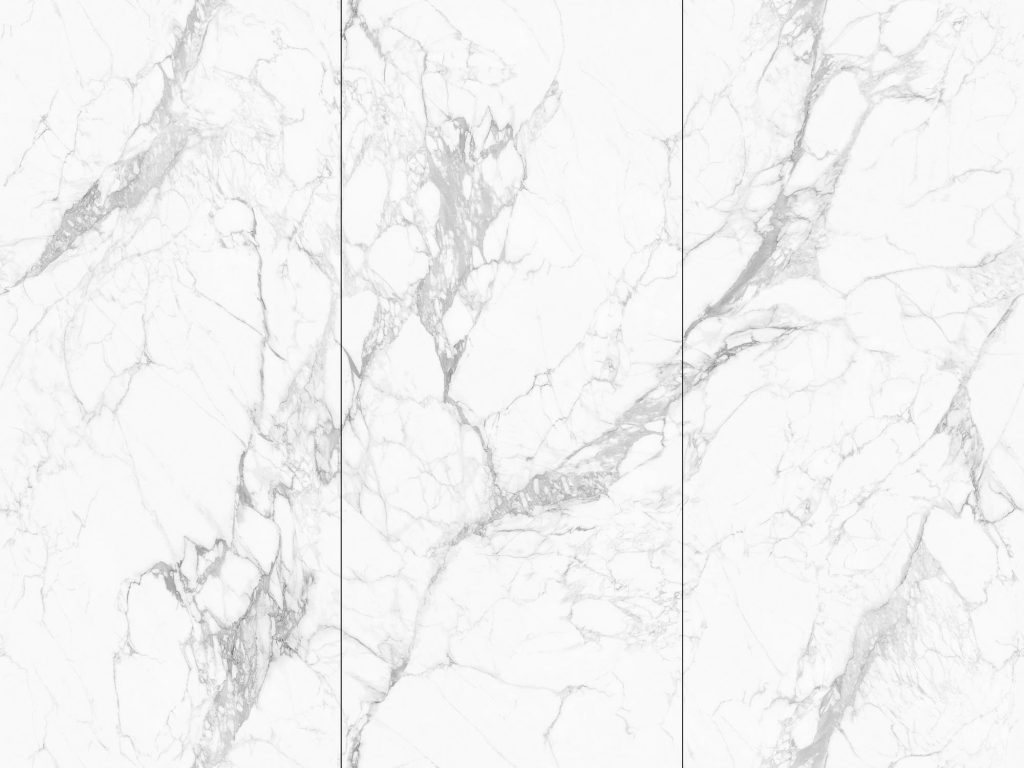
Large-format sintered stone allows patterns to be displayed with fewer joints, but the vein position must be planned carefully.
Horizontal veins can visually widen a wall or countertop, while vertical veins can make a space feel taller. For feature walls, islands, and reception counters, continuous-vein or bookmatched slabs can create a more dramatic result.
Before cutting the slabs, fabricators should prepare a layout showing where the veins will appear on each finished piece. This is especially important when several slabs are installed next to each other.
Common Mistakes to Avoid
One of the most common mistakes is choosing a color based only on a website image. Screen settings, photography, and lighting can all affect the appearance of the slab.
Another mistake is ignoring the size of the finished product. A large vein may look excellent on a complete slab but may not appear balanced on a small countertop.
Buyers should also avoid selecting a color without considering the surrounding cabinets, flooring, walls, and lighting. A surface should be viewed as part of the complete space rather than as an isolated product.
For larger projects, slabs should preferably come from the same production batch. Although sintered stone is generally more consistent than natural stone, slight differences between batches may still occur.
Final Thoughts
There is no single best sintered stone color for every project. White and light grey are versatile choices for bright, modern interiors. Beige and cream create warmth, while black and dark grey provide contrast and sophistication. Green, blue, and other statement colors are ideal for creating distinctive focal points.
The final choice should consider the room size, lighting, cabinetry, furniture, surface finish, slab layout, and cleaning requirements.
Before placing an order, review physical samples, confirm the production batch, and prepare a cutting or vein layout for large installations. With the right planning, sintered stone can deliver both long-term practicality and a coordinated visual result across kitchens, bathrooms, living areas, commercial interiors, and outdoor spaces.
BJS offers sintered stone slabs in a wide range of colors, patterns, sizes, and surface finishes. Contact us to request a color catalog, physical samples, detailed slab images, or recommendations based on your project requirements.