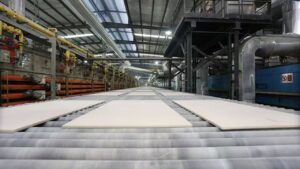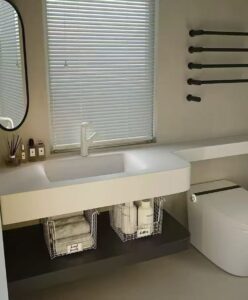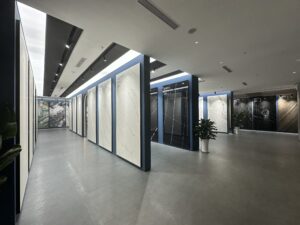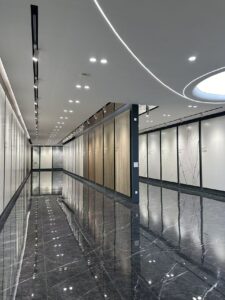
For residential and hospitality projects, bathroom walls need to handle daily moisture, frequent cleaning and demanding installation conditions. Sintered stone bathroom wall panels in Ghana can create a clean, continuous finish with fewer grout lines than small-format tiles, but the result depends on planning and fabrication as much as on the slab itself.
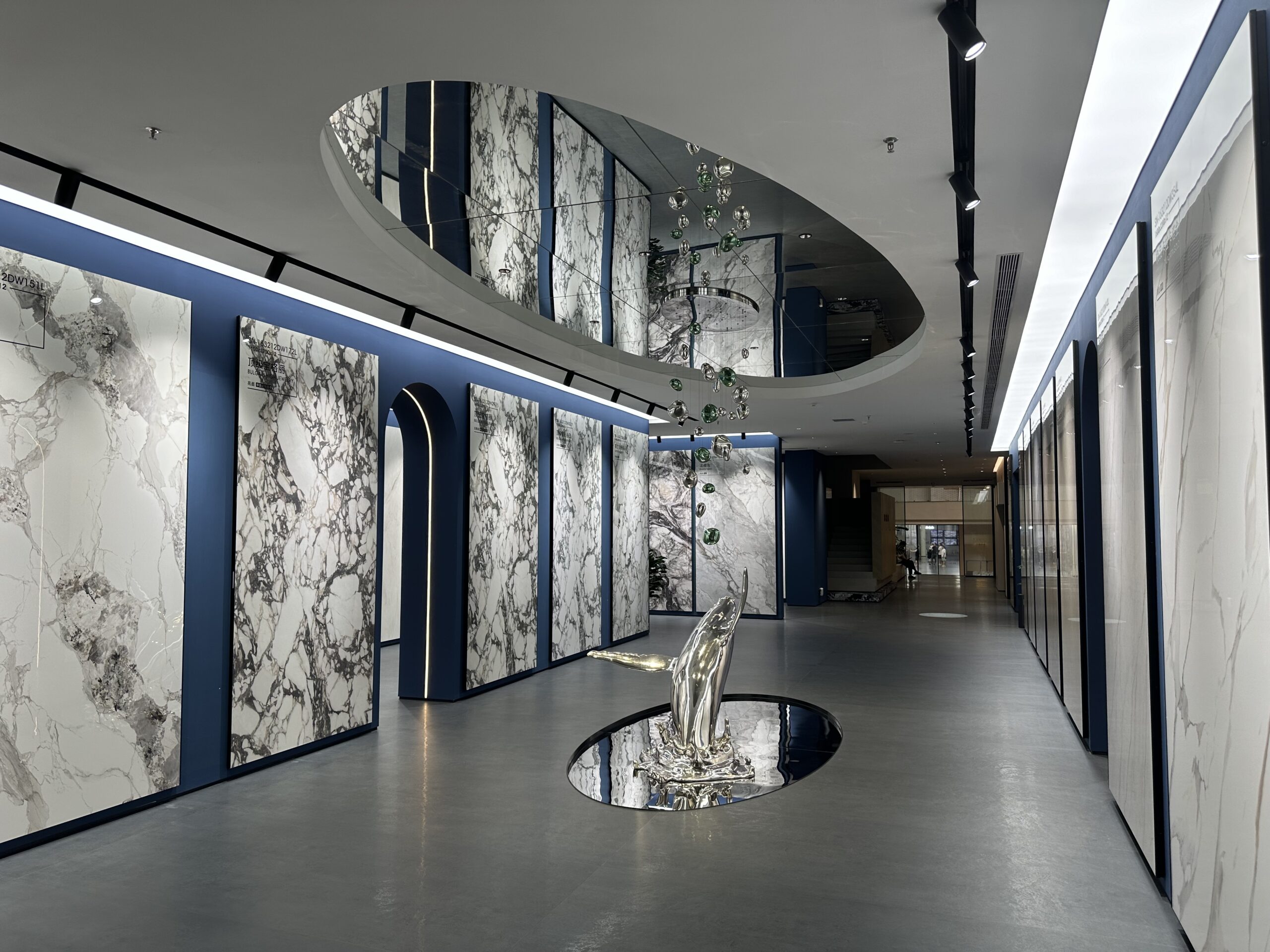
Why use sintered stone on bathroom walls?
Large-format panels can make a compact bathroom feel calmer because fewer joints interrupt the surface. They are also useful around vanity walls, shower surrounds and feature walls where a consistent stone look matters. Sintered stone is a manufactured mineral surface, so colour, finish and technical performance should be confirmed from the exact collection and batch you plan to order.
In Ghana, also consider the practical conditions of the building: ventilation, water exposure, transport access and the availability of an installer experienced with large slabs. A good material can still fail if the substrate is uneven or penetrations are measured late.
1. Select the slab for the room
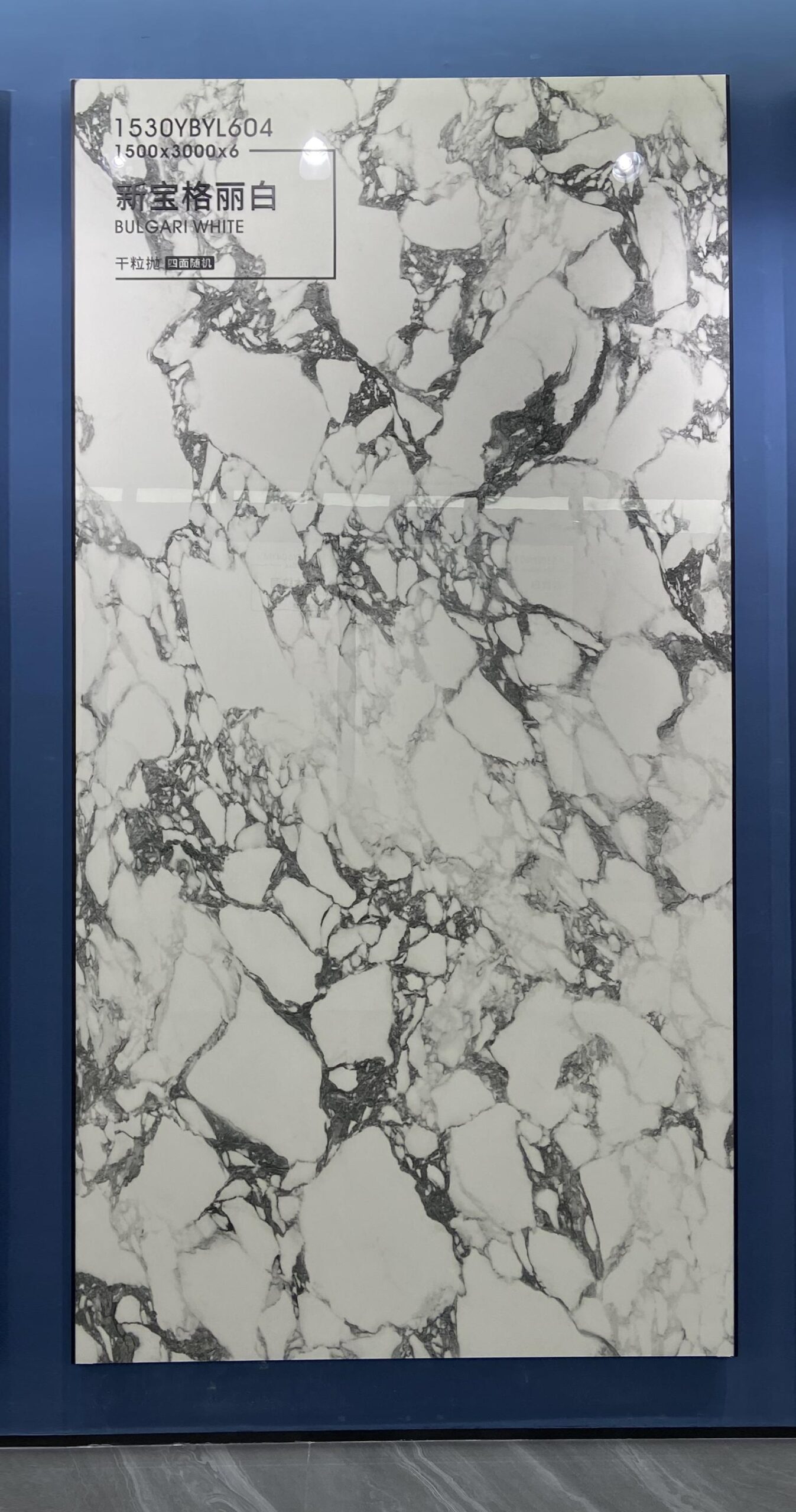
Start with a physical sample rather than choosing from a screen. Compare the background colour, veining direction, surface finish and how the slab looks under the bathroom lighting. For a small room, a quiet pattern may be easier to coordinate with sanitaryware; a stronger marble effect can work well on one feature wall.
Ask the supplier for the available slab dimensions, thickness options, edge guidance and recommended applications. Confirm whether the same design is available for the vanity top or floor so that transitions can be planned before fabrication. If you are comparing sintered stone with porcelain, review our sintered stone buying guide for a basic material overview.
2. Measure before ordering
Prepare a measured drawing for every wall, not only the overall room width. Mark corners, windows, doors, niches, mixer outlets, shower controls, sockets and ventilation openings. Measure from fixed reference points and check the dimensions again after waterproofing and substrate work are complete.
Large panels can reduce grout maintenance, but they do not remove the need for movement joints and carefully sealed penetrations. Decide where joints will fall so they are balanced and, where possible, kept away from direct spray. Allow the fabricator to confirm the final cutting layout and include a sensible allowance for handling or replacement.
3. Treat fabrication and installation as one package
Bathroom panels are only as reliable as their support. The wall should be sound, flat, dry and suitable for the specified adhesive system. Uneven areas may need correction before installation. Do not assume that a general tiling method is suitable for every slab format or thickness.
- Use a final template for plumbing and electrical openings.
- Confirm lifting routes, door widths and installation sequence.
- Protect finished edges during transport and handling.
- Use an installer who can make clean cuts and support the panel continuously.
- Seal corners and penetrations with products compatible with the wet-area system.
For projects outside Accra or Kumasi, coordinate delivery dates, site storage and access conditions early. A written scope should state who is responsible for templating, cutting, delivery, installation, sealing and any breakage risk.
4. Plan cleaning and long-term care
Most bathroom surfaces stay easier to maintain when water is removed regularly and ventilation is effective. Use a soft cloth or non-abrasive pad with a neutral cleaner recommended for the selected finish. Avoid aggressive acids, abrasive powders and untested chemicals, especially on textured or polished surfaces.
Inspect silicone lines and junctions periodically. If a joint opens or water reaches behind the panel, repair it promptly rather than waiting for staining or substrate damage. Good detailing at the shower base and around fixtures matters more than choosing a fashionable colour.

5. Questions to ask a Ghana supplier
- Can I see the actual slab or a current sample from the proposed batch?
- What slab size, thickness and finish are available?
- Who will produce the templates and cut-outs?
- What wall preparation and adhesive system does the installer require?
- How will the slabs be packed, delivered and inspected on arrival?
- Does the quotation include installation, sealing and waste allowance?
FAQ
Are sintered stone panels suitable for a shower wall?
They can be suitable when the selected product, substrate, adhesive, joints and waterproofing system are specified for the application. Confirm the complete installation method with the supplier and installer.
Can panels be cut for bathroom fittings?
Yes, but cut-outs should be based on verified templates and made with appropriate equipment. Avoid last-minute site cutting without protection and support.
How do I compare quotations?
Compare the full delivered scope, not only the price per square metre. Include slab quantity, fabrication, edge work, delivery, installation, sealing and the treatment of breakage or replacement.
Choose with the whole project in mind
The best sintered stone bathroom wall panels in Ghana are the ones that match the design, site conditions and installation capability. Request samples, confirm the measured layout and make responsibilities clear before production. Contact BJS sintered stone sales for product recommendations, samples, and project support.