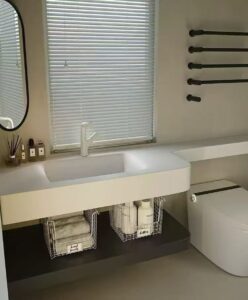
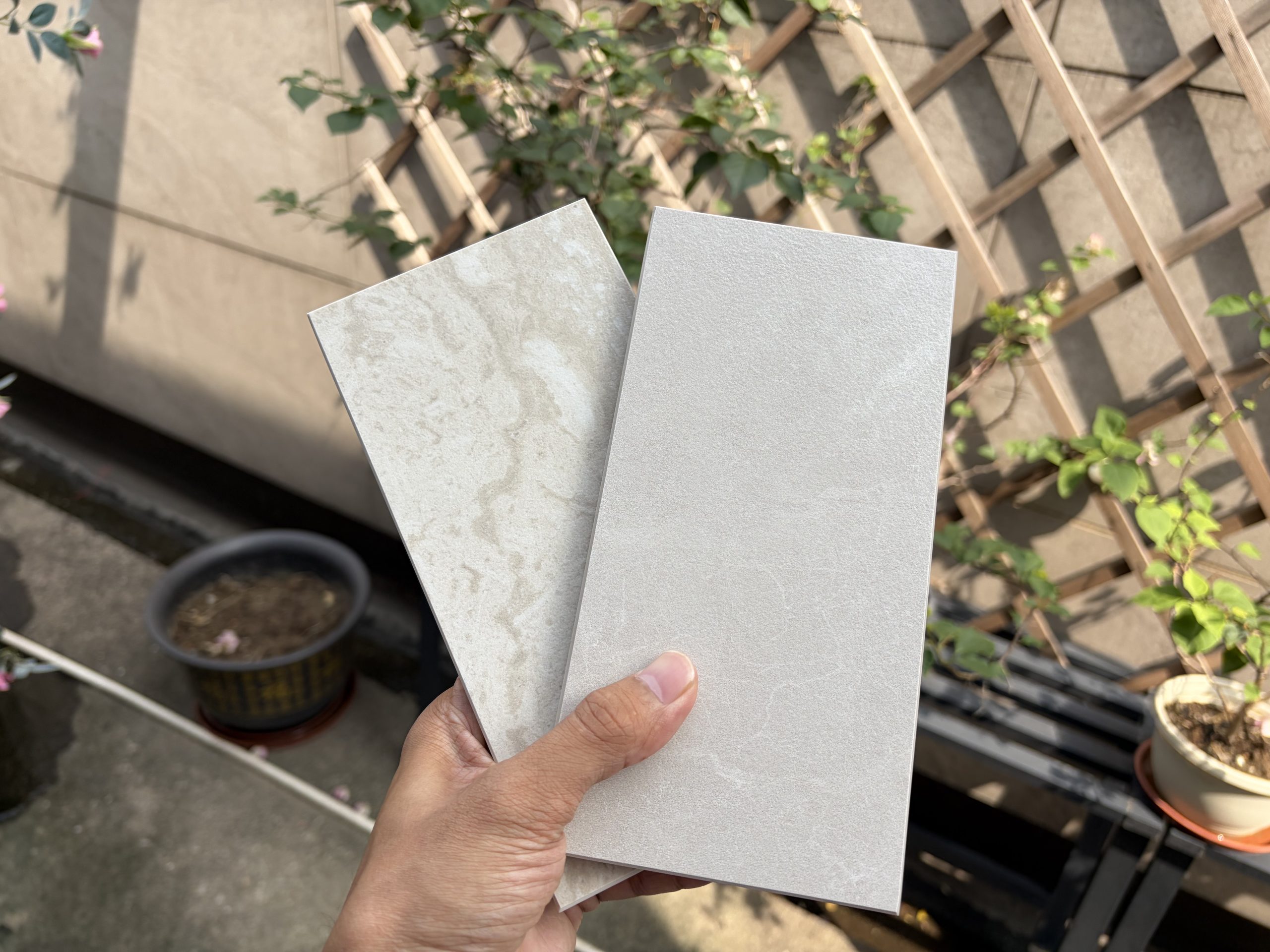
For many interior decoration companies, contractors, and project builders, ceramic tiles are already a very familiar material. They are widely used for floors, walls, bathrooms, kitchens, and many commercial spaces.
But in recent years, another material has become more popular in high-end residential and commercial projects: sintered stone slab.
At first glance, sintered stone slabs and ceramic tiles may look similar. Both are manufactured under high temperature, both can have marble-look designs, and both are used for interior surfaces. However, they are not the same product.
The difference is not only about size. It is also about application, visual effect, strength, processing ability, and the final value of the project.
In this article, we will explain the main differences between sintered stone slabs and ceramic tiles in a simple and practical way.
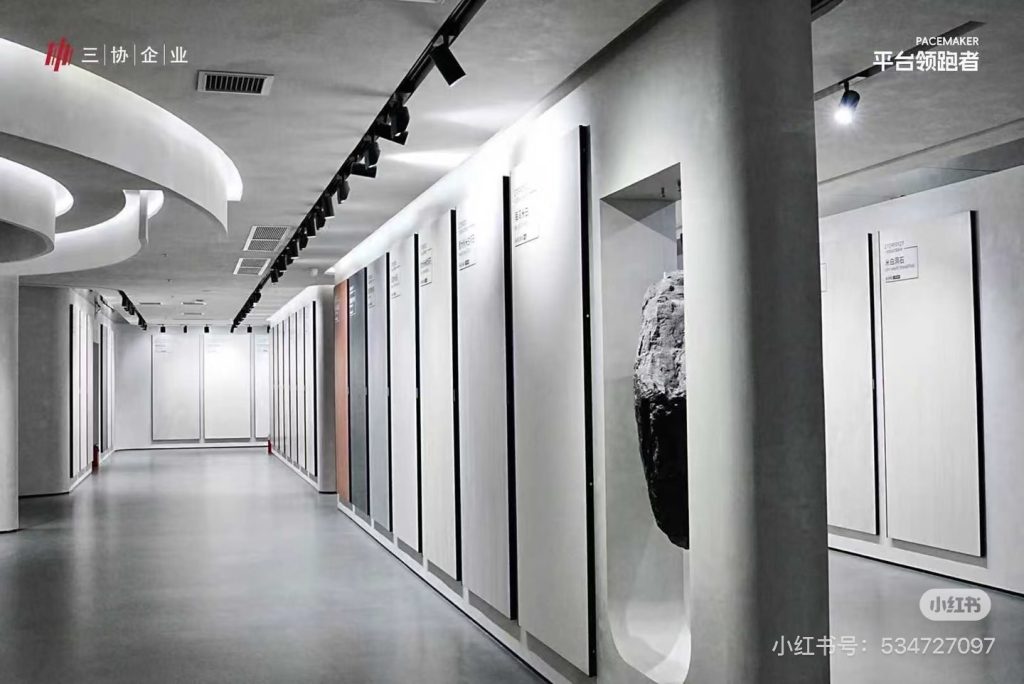
What Is a Sintered Stone Slab?
A sintered stone slab is a large-format surface material made from natural minerals, pressed under high pressure and fired at high temperature. It is designed to offer the look of natural stone while providing better resistance to scratches, stains, heat, and daily wear.
Sintered stone slabs are often used for:
- Kitchen countertops
- Bathroom vanity tops
- Dining tables
- Wall cladding
- Floor applications
- Commercial reception counters
- Column wrapping
- Furniture surfaces
- Custom fabrication projects
Compared with traditional tiles, sintered stone slabs are usually much larger in size. Common large formats include sizes such as 1600 × 3200 mm, 1200 × 2400 mm, and other project-based dimensions.
Because of their large size and premium stone-like appearance, sintered stone slabs are often used when the project needs a more seamless, modern, and high-end visual effect.
What Are Ceramic Tiles?
Ceramic tiles are one of the most common building materials in the world. They are made from clay and other minerals, then shaped and fired in a kiln.
Ceramic tiles are widely used for:
- Residential flooring
- Bathroom walls
- Kitchen walls
- Commercial floors
- Public area wall cladding
- General construction projects
Ceramic tiles are usually smaller than sintered stone slabs. Common tile sizes include 600 × 600 mm, 600 × 1200 mm, 750 × 1500 mm, and similar formats.
Ceramic tiles are practical, cost-effective, and easy to install. For many standard construction projects, they are still a very good choice.
However, when the project requires a premium appearance, fewer joints, large continuous patterns, or custom furniture applications, ceramic tiles may not be enough.
Key Differences Between Sintered Stone Slabs and Ceramic Tiles
1. Size and Visual Effect
The first and most obvious difference is the size.
Ceramic tiles are usually installed piece by piece, with many grout lines between them. This is acceptable for many standard floor and wall projects, but it can break the continuity of the design.
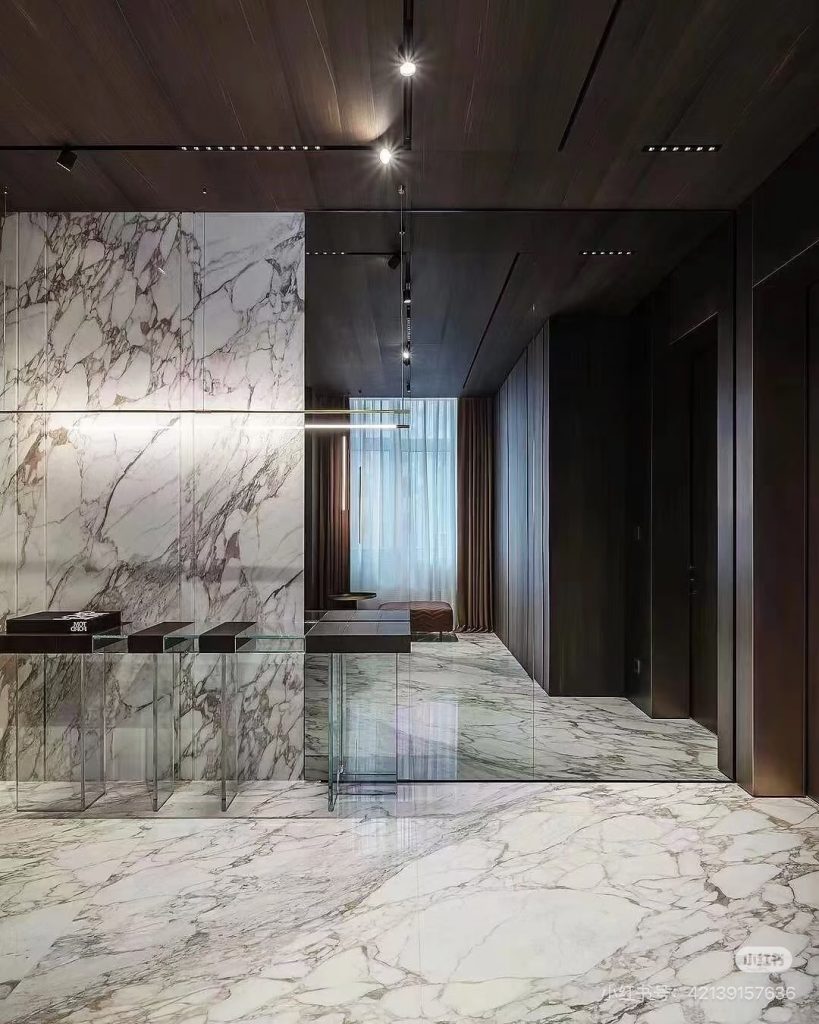
A sintered stone slab is much larger. It can cover a bigger surface area with fewer joints. This makes the final space look cleaner, more luxurious, and more modern.
For example, if a contractor is working on a hotel lobby wall, a luxury villa living room, or a commercial reception counter, large-format sintered stone can create a more impressive visual effect than small ceramic tiles.
Fewer joints also mean the surface is easier to clean and looks more like natural marble or large natural stone.
2. Strength and Performance
Both ceramic tiles and sintered stone are fired materials, but sintered stone slabs are usually designed for higher-performance applications.
A quality sintered stone slab offers strong resistance to:
- Scratches
- Heat
- Stains
- Water absorption
- UV exposure
- Daily cleaning chemicals
This makes it suitable not only for walls and floors, but also for countertops, furniture tops, and commercial-use surfaces.
Ceramic tiles are also durable for normal flooring and wall applications. But most ceramic tiles are not designed for countertop fabrication, edge processing, or heavy custom furniture use.
For example, if you need to make a kitchen island, bathroom vanity, dining table, or reception desk, sintered stone is usually a better choice than ceramic tiles.

3. Application Range
Ceramic tiles are mainly used for flat wall and floor installation.
Sintered stone slabs can be used in more ways.
A sintered stone slab can be cut, processed, and fabricated into different finished products, such as:
- Countertops
- Table tops
- Vanity tops
- Cabinet panels
- Wall panels
- Stair treads
- Integrated basins
- Commercial counters
- Wrapped columns
This is an important difference for interior decoration companies and contractors.
If your project only needs regular wall or floor covering, ceramic tiles may be enough. But if your project includes custom design, furniture surfaces, stone-look counters, or large decorative panels, sintered stone offers more possibilities.
4. Installation Method
Ceramic tiles are usually installed with tile adhesive or cement-based materials. The installation process is familiar to most construction teams.
Sintered stone slabs require more professional handling because of their large size. The installation may need:
- Proper lifting tools
- Experienced installers
- Correct adhesive system
- Flat substrate preparation
- Professional cutting equipment
- Careful transportation and handling
This does not mean sintered stone is difficult to use. It means the project team should treat it as a large-format slab material, not as a small tile.
For contractors, this is very important. Good installation planning can reduce breakage, improve final quality, and protect the project schedule.
5. Design Value for Interior Projects
Ceramic tiles are practical. Sintered stone slabs are more design-oriented.
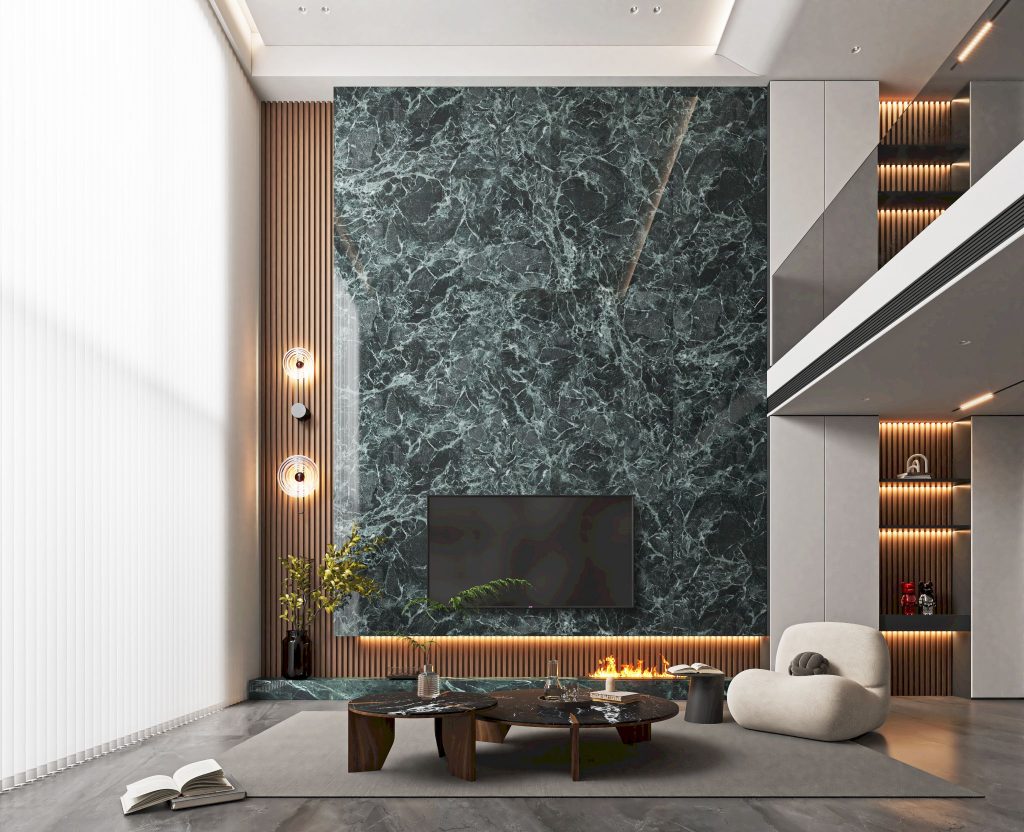
With a large-format sintered stone slab, designers can create a more continuous marble-look effect. The veining can flow across large wall panels, countertops, islands, and furniture surfaces.
This is why sintered stone is often used in:
- Luxury apartments
- Villas
- Hotels
- Restaurants
- Office lobbies
- Commercial showrooms
- High-end retail stores
For interior decoration companies, sintered stone can help upgrade the project image. It gives clients a premium look without using expensive and high-maintenance natural marble.
6. Cost and Project Positioning
Ceramic tiles are usually more cost-effective for standard construction projects. They are easier to source, easier to install, and suitable for large-area flooring or wall projects with a controlled budget.
Sintered stone slabs usually have a higher material and installation cost. But they also bring higher design value and more application options.
So the question is not simply “Which one is cheaper?”
The better question is:
What kind of project are you doing?
For standard bathrooms, basic flooring, or budget wall covering, ceramic tiles may be the better choice.
For premium interiors, commercial counters, large feature walls, kitchen islands, and customized surfaces, sintered stone slabs can bring better value.
When Should You Use Ceramic Tiles?
Ceramic tiles are a good choice when the project needs:
- Standard floor installation
- Bathroom wall covering
- Budget-friendly material
- Simple construction
- Small or medium-sized areas
- Fast and familiar installation
For many general construction projects, ceramic tiles are still practical and reliable.
They are especially suitable when the client does not require a large seamless effect or customized stone fabrication.
When Should You Use Sintered Stone Slabs?
You should consider sintered stone slabs when the project needs:
- Large-format wall cladding
- Luxury marble-look effect
- Kitchen countertops
- Bathroom vanity tops
- Commercial reception counters
- Dining tables or furniture surfaces
- Column wrapping
- Fewer joints
- Better stain and heat resistance
- Custom fabrication
For contractors and interior companies, sintered stone is especially useful when you want to offer clients a higher-end material solution.
It is not only a wall or floor material. It can become part of the whole interior system, from walls to furniture to countertops.
Which One Is Better for Contractors and Interior Companies?
There is no single answer.
Ceramic tiles and sintered stone slabs serve different project needs.
Ceramic tiles are better for standard construction, budget control, and common wall and floor applications.
Sintered stone slabs are better for premium interiors, large-format design, custom fabrication, and high-value decorative surfaces.
For contractors, the most important thing is to choose the right material according to the project positioning.
If your client wants a simple and cost-effective wall or floor finish, ceramic tiles are a practical option.
If your client wants a high-end stone-like surface with fewer joints, better performance, and more design flexibility, a sintered stone slab is a stronger solution.
Final Thoughts
Sintered stone slabs and ceramic tiles may look similar at first, but they are used in different ways.
Ceramic tiles are practical, economical, and suitable for standard wall and floor applications.
Sintered stone slabs offer larger sizes, fewer joints, better design continuity, and more possibilities for countertops, furniture, commercial counters, and luxury interiors.
For interior decoration companies, contractors, and project builders, understanding this difference can help you recommend the right material to your clients and improve the final project value.
Contact BJS for Sintered Stone Slab Solutions
BJS supplies sintered stone slabs for international interior projects, contractors, fabricators, and decoration companies.
We offer a wide range of colors, sizes, finishes, and application solutions for walls, floors, countertops, furniture, and commercial spaces.
Whether you are working on a villa, hotel, apartment, showroom, restaurant, or commercial project, BJS can help you choose the right sintered stone slab for your design and budget.
Contact BJS today to get our catalog, samples, and project quotation.